
There’s a strange irony at play on Rivian’s shop floor: heavy presses and robots shape metal and weld frames, yet it’s code, not steel, that staved off a worse quarter. The company’s June results read like a modern carmaker’s parable — physical manufacturing bleeding cash while digital sales stitch the balance sheet back together.
The quiet savior nobody expected
Rivian reported total revenue of €1.54 billion for the quarter, comfortably ahead of analysts’ €1.40 billion estimates. The real headline, though, was not the dollars — pardon, euros — rolling across the ledger; it was where those euros came from. Vehicle revenue still matters, but digital services and software are now the division moving the needle.

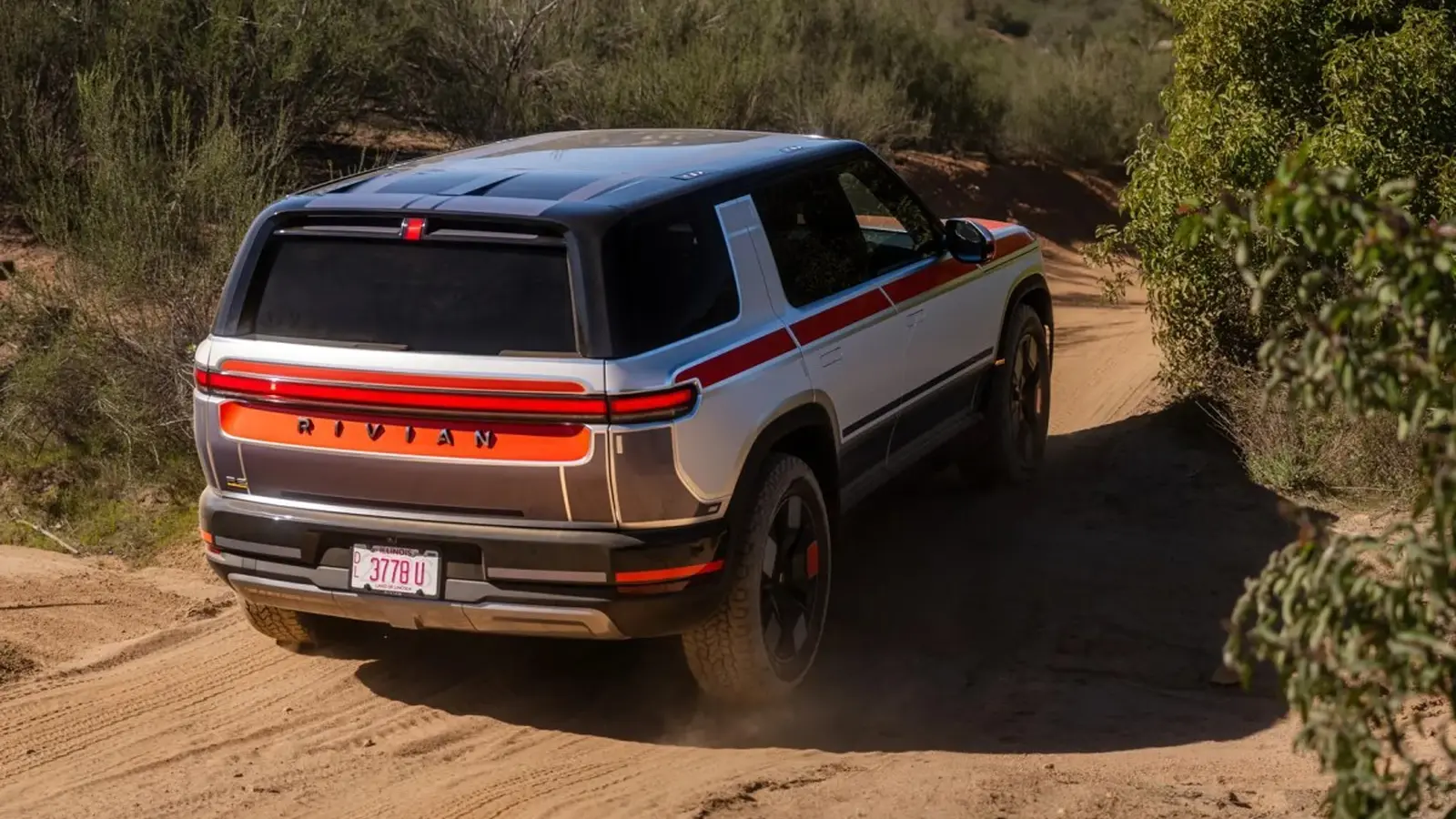
The R2 SUV finally reached early customers on June 9, and Rivian is betting that this smaller, more affordable model will be the bridge from niche to mainstream. Priced under €46,500, the R2 aims squarely at buyers who want genuine SUV capability without a luxury sticker. The market’s reaction was audible: the company hosted a record 57,000 demo drives in the quarter, and many of those drives turned into firm orders.

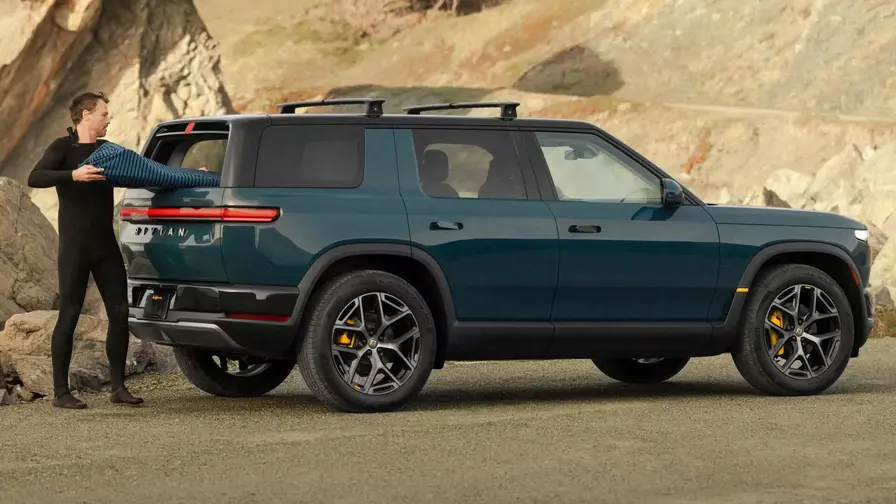
Park an R2 next to a Tesla Model Y or a Hyundai Ioniq 5 and the difference is obvious. Rivian leans into the boxy, outdoorsy aesthetic; at 185.6 inches long and 66.9 inches tall, the R2 feels like an honest SUV. Ground clearance matters when you plan to go off the beaten path, and the R2’s 9.8 inches of clearance gives it an old-school stance that separates it from more suburban-minded rivals.

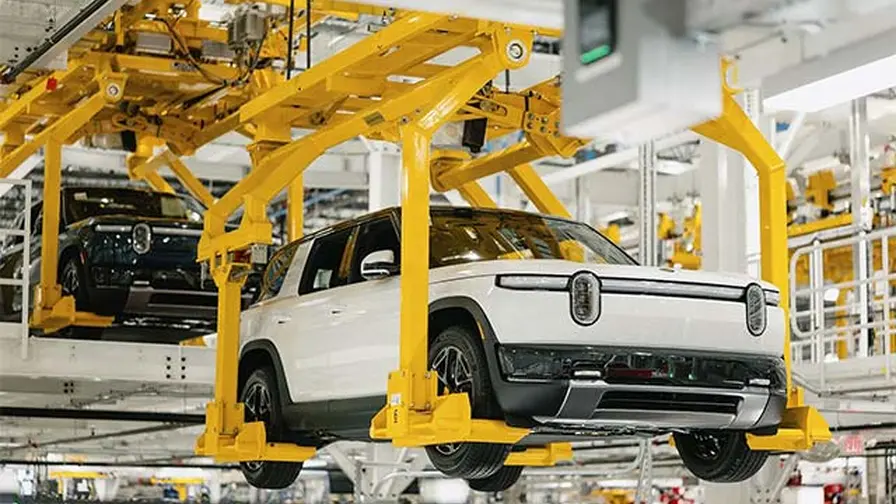
That halo, however, comes with steep upfront costs. Vehicle manufacturing generated €1.06 billion in revenue this quarter but ran a gross loss of about €33.5 million. Getting a new assembly line humming is an expensive business; Rivian absorbed roughly €93 million in introductory manufacturing costs just to bring the R2 line online.
The picture clouds further when you remove regulatory crutches. The company recorded €100.4 million in revenue from selling compliance credits. Subtract that and the automotive division’s loss widens to roughly €130 million, a reminder that factories burn cash before scale smooths the math.

Why software suddenly feels like the core business
Now for the twist: Rivian’s software and services unit produced €479 million in revenue, a 37 percent year-over-year rise, and more importantly it posted margins that made investors smile. A joint venture with Volkswagen contributed €286.4 million of that haul, and software alone delivered about €200 million in gross profit this quarter. Those high margins lifted consolidated gross profit to around €166.5 million, turning what looked like a fragile quarter into one with real breathing room.
Think about that for a second. Building a chassis eats machine hours and capital. Selling a connected service, an over-the-air feature, or fleet software costs almost nothing to replicate once it’s built. That mix — heavy-cost production plus high-margin digital sales — is the modern automaker’s tightrope.

Rivian’s management is leaning into scale. They nudged full-year delivery guidance up to 65,000–70,000 vehicles, an increase of 3,000 units. That sounds bold until you do the math: with 22,559 vehicles delivered in the first half, the company now must deliver between 42,000 and 47,000 units in the second half alone. In plain terms: nearly double the current pace over the next two quarters. It’s a logistical sprint that will demand flawless factory performance and no major supply surprises.
Still, the finance team trimmed some targets. Full-year adjusted EBITDA loss guidance was narrowed to a range of €1.67 billion to €1.86 billion, while capital expenditure plans sit at an expected €1.58 billion to €1.67 billion. Those are big numbers, but they reflect a clearer plan to move from boutique builder to higher-volume producer.

To fund the shift, Rivian has assembled what executives call a war chest: about €13.02 billion in available capital. That pile includes a €1.21 billion stock sale, €930 million of non-recourse debt from Volkswagen, and a €232.5 million equity injection from Uber. Free cash flow was negative €789.6 million this quarter as inventory for the R2 built up, but the company still holds roughly €4.94 billion in cash and short-term investments.
Factoring all lines, the net loss for the period stood at €778.4 million, or about €0.59 per share. Not pretty on its face, but the market took a pragmatic view: adjusted EBITDA came in better than feared, and premarket trading ticked up. Investors seem to be buying the argument that recurring digital revenue can underwrite the heavy lifting of manufacturing.
Rivian’s history shows how pivotal this moment is. The company proved it could design desirable premium machines with the R1T and R1S, but scaling those successes taught painful lessons about cash burn. The R2’s bill of materials was redesigned to cost roughly half of an R1, a necessary step if Rivian wants to be a true mass-market player.
There’s no finish line yet. Turning rising gross margins into sustained profits while doubling factory output in a few months is a tall order. But for now the narrative has shifted. Rivian isn’t just a maker of adventurous EVs; it’s also a software company that happens to build trucks. And that distinction is the difference between a red quarter and one that, at least for now, stays in the black.

“Cars are evolving faster than ever. I cover electric vehicles, smart mobility, and the future of transportation worldwide.”

Discussion
Leave a Comment
Comments
No comments yet. Be the first.