

Imagine a crowded market in Jakarta where shoppers linger longer at midrange phone stalls than ever before. A subtle shift is happening across Southeast Asia; wallets are tightening and the smartphone map is being redrawn.
Counterpoint Research reports the region's smartphone shipments fell 15 percent in the second quarter year on year. Rising device prices are the obvious culprit. Brands that leaned into value models found their footing slipping, while those that focused on stronger midrange and premium offers managed to hold or even expand ground.
Samsung emerged on top with a 24 percent share and the only brand to post year on year shipment growth, up 6 percent. Xiaomi sits behind at 18 percent, Oppo at 17 percent, Transsion, the parent of Tecno and Infinix, at 15 percent, and Apple at 9 percent.
There are small but telling movements under the surface. Samsung climbed from a 19 percent share the previous year. Xiaomi stayed steady. Oppo retreated from 22 percent. Transsion and Apple inched forward from 14 percent and 8 percent respectively. Numbers, yes, but they point to a deeper consumer recalibration.
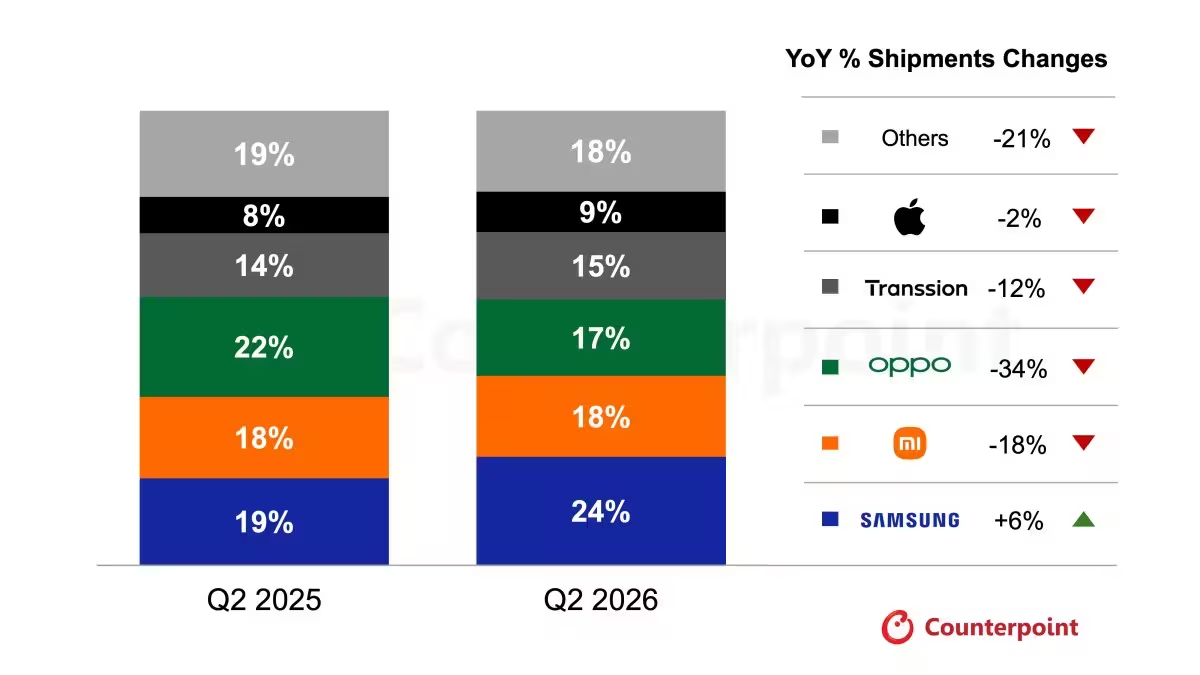
When price brackets rewrite demand
Which segments took the hit? The budget end collapsed. Shipments of phones priced below roughly €138 plunged 38 percent year on year. The €230 to €459 tier also fell, down 11 percent. Yet a surprising countertrend appeared higher up the ladder. The €460 to €643 bracket jumped by 74 percent, and devices above about €644 rose 18 percent.
Why the divergence? Buyers are trading up in some cases, choosing fewer but pricier phones that promise better longevity and features. At the same time, the entry level market is contracting because affordable models are getting more expensive to produce. The result is a market split: fewer units overall but stronger momentum in higher price bands.
Counterpoint expects pressure to continue into the second half. Price flexibility will be constrained. Consumers will remain cautious. In plain terms, more shipment declines are likely unless brands find new ways to reconnect with cost-conscious buyers or to justify premium spending.
So what should industry watchers watch for next? Product mix shifts. Smarter promotions that do not erode margins. And regional strategies that recognize Southeast Asia is no single market but a collage of price sensitivity, carrier influence, and local brand loyalty.
It is a transitional moment. For manufacturers, an invitation to rethink where they place their bets. For consumers, a funneling of choice toward fewer, more capable devices. For the market, a pause that could presage a very different competitive picture by year end.


“I love exploring gadgets, apps, and trends that redefine how we connect, work, and play in a digital world.”

Discussion
Leave a Comment
Comments
No comments yet. Be the first.