
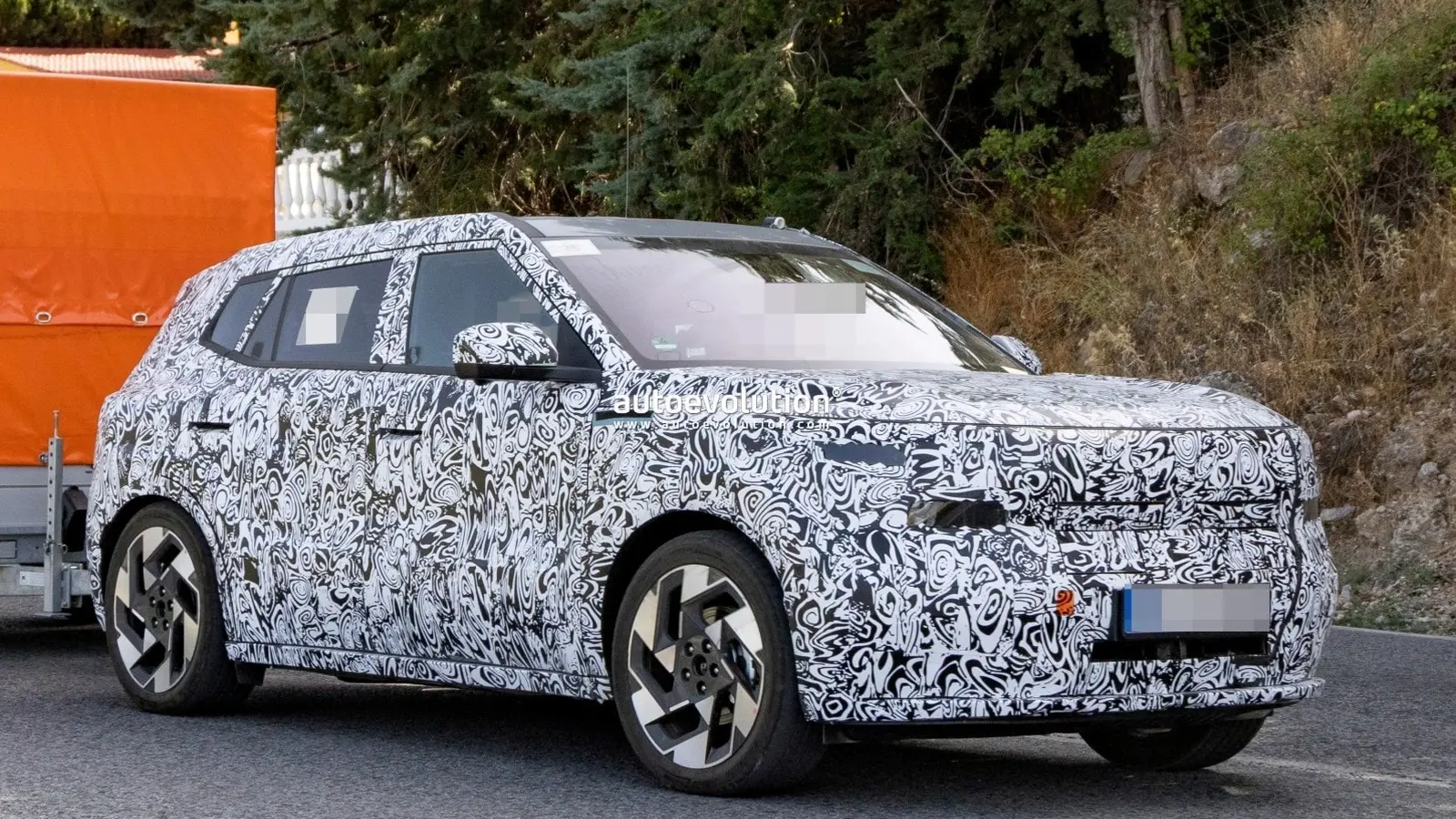
High up in the Spanish hills, under a blistering sun and behind a skin of camouflage, the next Kona is quietly revealing its new stance. It looks less like the rounded city crossover we know and more like a compact utility with attitude.
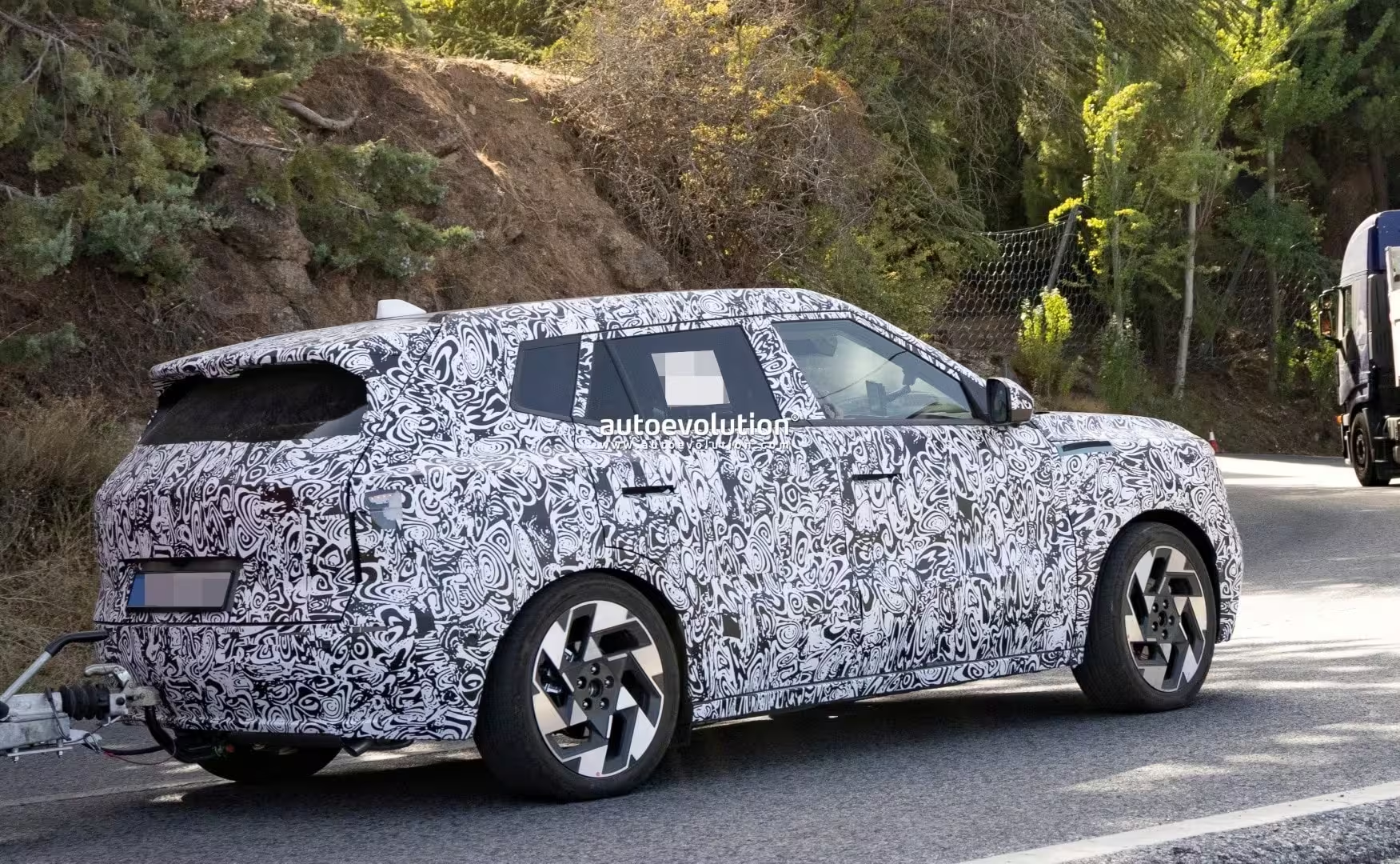
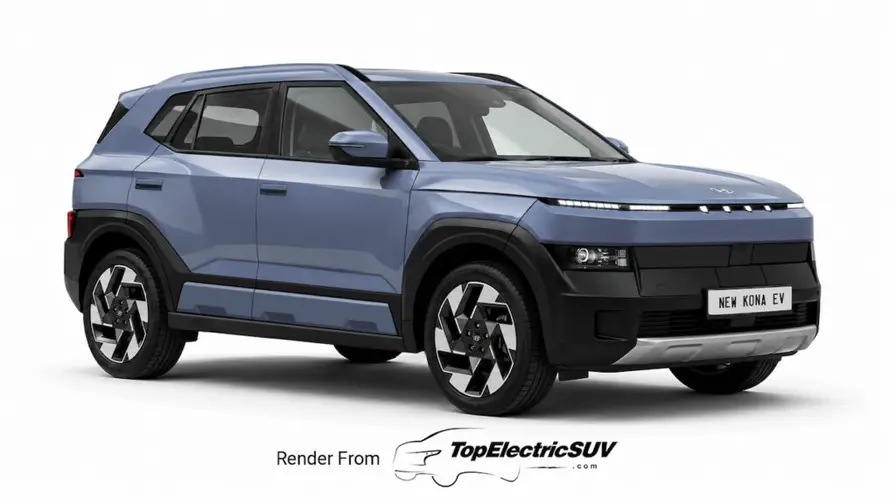
The hood sits higher, the face reads bluffer, and the wheel arches have traded soft curves for squared-off, chunky forms. Those arches echo the Crater concept and nudge the Kona toward a tougher aesthetic that borrows cues from the Venue and Tucson. A rising beltline and a rakish windshield sharpen its profile while aero-minded wheel designs hint at efficiency goals beneath the makeover.

From the front we can make out a shark-nose treatment with lower-mounted headlights and a slim upper light bar. Around back, the taillights drift toward the center of the tailgate to widen the visual stance. There’s also a broad liftgate and, tellingly, a visible exhaust outlet tucked below the bumper, so gasoline propulsion is staying on the menu.
The hybrid detail that could matter most
Styling is only part of the story. Under the skin Hyundai appears to be reaching into the Kia parts bin for a very notable powertrain: the 1.6-liter self-charging hybrid used in the redesigned Kia Seltos. That setup is rated at about 152 horsepower, roughly 113 kW, with an optional all-wheel-drive module that adds a rear electric motor to lift output to roughly 176 horsepower, about 132 kW.

Numbers are one thing, but the intriguing wrinkle is vehicle-to-load capability inside a hybrid package. The Seltos showed how V2L, usually an EV feature, can work with a hybrid system. The Kona is expected to follow, allowing cabin-side V2L power up to 3.52 kilowatts. There’s also a Stay Mode that lets the V2L system draw from the traction battery while the engine is off, so you can run appliances or tools without idling the motor. That functionality could make the Kona Hybrid stand out in a crowded segment.
Inside, the cabin is being simplified and modernized. Expect a minimalist dash anchored by a Pleos Connect touchscreen running Android Automotive. Hyundai’s take on this stack includes Gleo AI, an app ecosystem, phone-style menus, and multi-window operation, all aimed at making the cockpit feel more like a connected living space than a cluttered instrument panel.

These spy shots place the Kona’s reinvention somewhere between rugged and refined. It still carries an internal combustion heart, but its hybrid hardware and interior tech give it new reasons to be noticed. The question now is whether Hyundai will bring this hybrid with interior V2L to the United States, where that feature could be a genuine differentiator. For now, the company has not confirmed U.S. plans, so we watch, and wait, as the camo slowly peels back.

“Cars are evolving faster than ever. I cover electric vehicles, smart mobility, and the future of transportation worldwide.”

Discussion
Leave a Comment
Comments (2)
Styling is a bit mashup-y, feels like Venue + Tucson. V2L in a hybrid tho, smart move. hope they bring Stay Mode to the US, imo it'd sell
If they really shove V2L into a hybrid that's clever, but is the US gonna get it? kinda doubt it with regs and ICE still visible... curious tho