
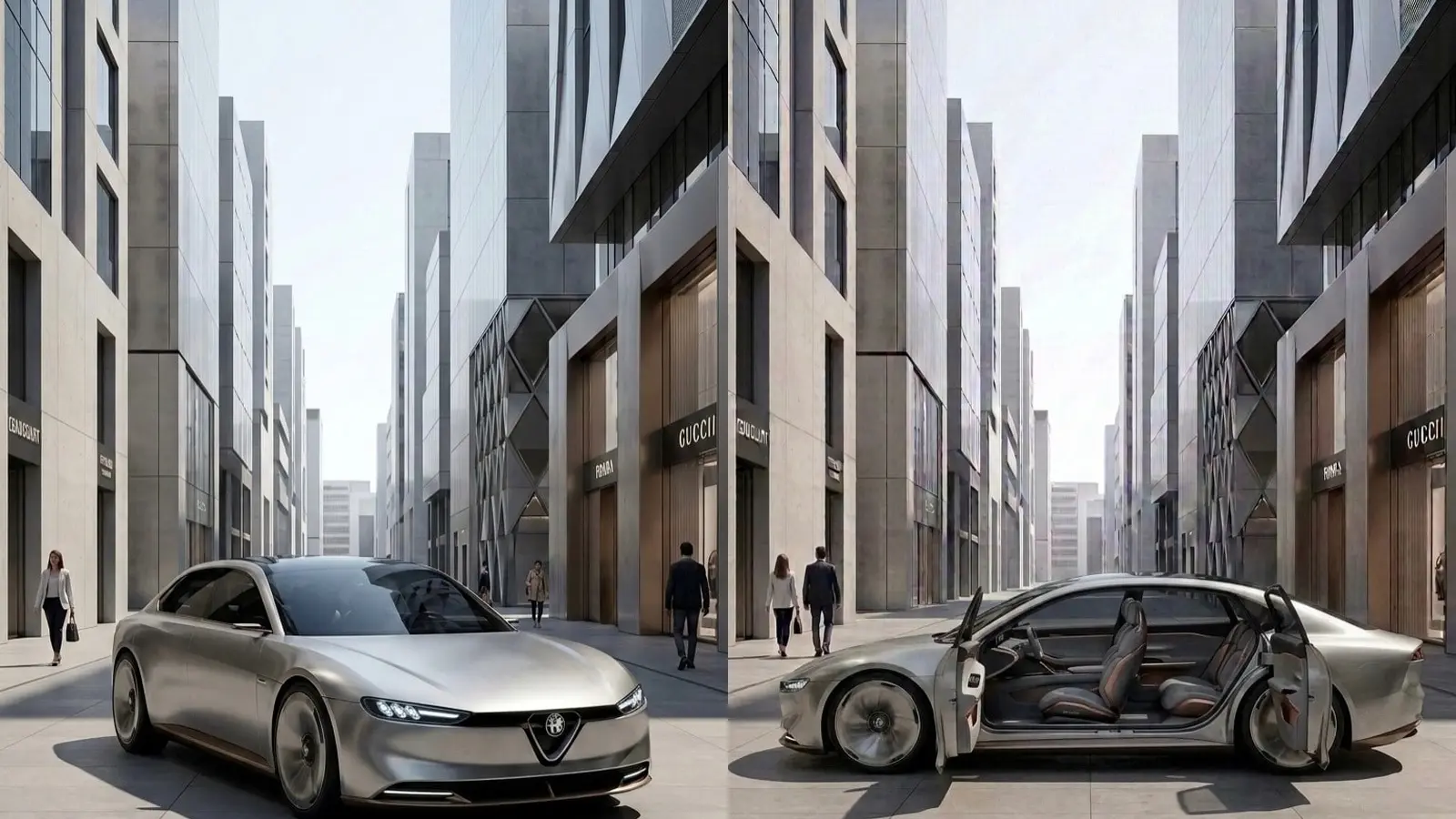
You step up to a Giulia and the side opens like a theater curtain. No upright B‑pillar to block the view. It’s a cinematic moment—more lounge than back seat.
When Italian temperament meets a Korean idea
Genesis shook the room in San Francisco with the Neolun showcar and its production GV90. Big battery. Big output. Big ambitions: a 123.5 kilowatt-hour pack, roughly 490 kilowatts of combined motor power (about 657 horsepower) and 800 newton metres of torque, with an internally tested range near 500 kilometres for the seven-seat GV90. Those headlines are one thing. The detail that stuck was the absence of a B‑pillar, a pillarless coach door profile that turns ingress into theater and interior space into a proper lounge.
That theatricality landed in an unexpected place: the feeds of Bruno, known online as brunoand_cars. He took the GV90’s pillarless idea and grafted it onto a fantasy next‑generation Alfa Romeo Giulia. The result is less hot‑hatch and more executive coupe-sedan—soft curves, satin silver paint, concave full-face alloy wheels and rear-hinged doors that fold wide to reveal a four-seat, lounge-style cabin.

The backstory is simple and a little stubborn. The Giulia that shops know as Type 952 debuted in 2015 and has been evolving rather than being replaced. It still rides on the Giorgio platform, and plans for an Alfa EV successor were shelved by Stellantis. So this is a fix of imagination: take a familiar silhouette, lift the drama, and reframe the Giulia as something quietly luxurious rather than overtly sporty.
Bruno’s CGI is persuasive because it respects proportions. The new LED signatures and restrained bodywork keep it recognizably Alfa, while the coach doors rewrite how you experience the interior. Four purposeful seats, a broad, uncluttered cabin, ambient lighting tuned for calm—these are cues borrowed from high-end limousines rather than compact sport sedans.

Is it a trend or a trick? There’s precedent—Rolls-Royce and a handful of ultra-luxury brands have used rear-hinged doors to dramatic effect for decades. What Genesis did was make that drama mainstream on a large electric SUV, and now we’re seeing designers ask: why not smaller cars too?
There are practical questions. Pillarless openings demand engineering compromises for stiffness and safety. Electronics, airbags and sealing have to be rethought. Costs climb. But for buyers chasing theater and exclusivity, those trade-offs can be worth it.

Bruno’s Giulia CGI is not a press release. It’s a provocation—a what-if that forces a conversation about the future language of premium cars. Will coach doors migrate from flagship SUVs into executive sedans and niche sports cars? Maybe. Will they stay a rare flourish, reserved for those who want to make an entrance? That seems likely too.
Either way, the image of an Alfa opening like a private salon is hard to shake. It asks us to imagine a different kind of Giulia: one that trades sideways bravado for composed presence. Elegant. Slightly theatrical. Purely Italian in spirit.

“I cover automotive innovation, electric vehicles, and the future of mobility — where technology meets sustainability.”

Discussion
Leave a Comment
Comments
No comments yet. Be the first.