
The opening bell in Shanghai felt different this week. A relatively young DRAM manufacturer shot up more than 470 percent on its first day on the STAR Market, vaulting CXMT into the top spot by market value among Chinese-listed firms.
That surge pushed the company’s valuation to roughly 449 billion euros, an extraordinary rise that arrived even as global technology stocks have been stumbling. How did a single listing rewrite perceptions so quickly?
From Hefei's fabs to the global stage
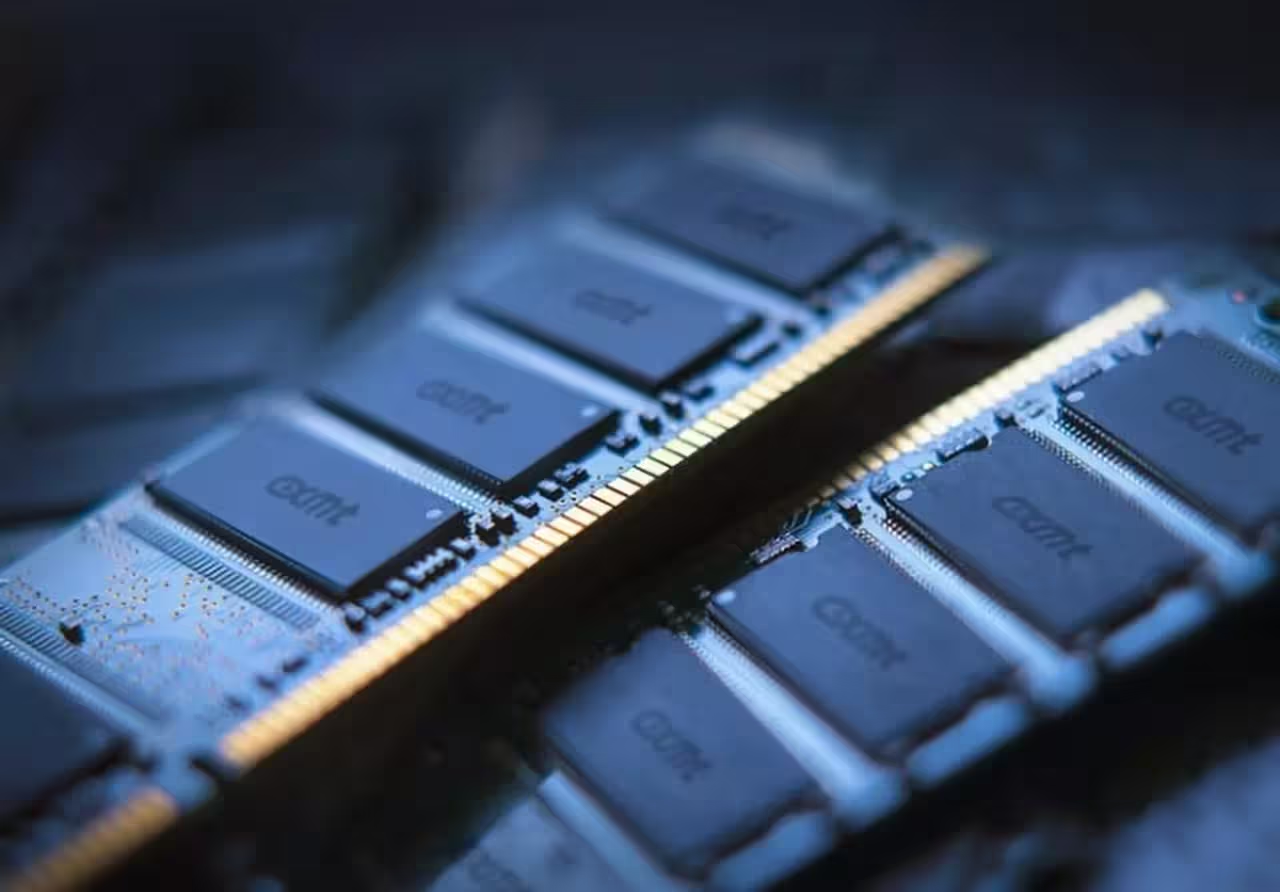
Founded in 2016 by Zhou Yiming and based in Hefei, Anhui, CXMT specializes in DRAM chips — the memory that powers AI training clusters, smartphones, laptops and tablets. The firm says most of the cash raised from the IPO will fund production capacity and expanded research and development. Short sentence. Big ambition.
Investors are betting on supply diversification. For years, the global memory market has been dominated by three giants: Samsung Electronics, SK Hynix and Micron, which together control roughly 90 percent of output. CXMT’s listing is a reminder that challengers can still capture attention — and capital — when the sector looks ripe for change.
The timing also matters. Chinese equity markets had recently shed more than 1.38 trillion euros in market value, leaving nerves frayed. A breakout listing like CXMT’s is one of those rare confidence signals: it suggests appetite remains for China-based technology names, even amid wider sell-offs.
And the ripple effects did not stop in Shanghai. Across the Pacific, SK Hynix completed a major New York share sale, bringing in about 24.4 billion euros. The company sold 177.9 million shares at roughly 137 euros apiece, marking the largest U.S. listing by a foreign firm to date. SK Hynix, a key supplier to Nvidia and a central player in AI-driven demand, briefly crossed a market capitalization of about 920 billion euros in May.
So what’s next? Expect capacity investments, patent races and a sharper focus on supply-chain resilience. Some of that will be incremental. Some could reshape how memory supply is sourced around the world. The IPO has already changed the conversation: China can incubate big memory makers, and money will follow credible bets.
Short-term volatility will remain. Long-term, this is a reminder that semiconductor narratives are not fixed. New entrants, aggressive investment and the AI-driven hunger for memory keep the sector unpredictable — and interesting.

“I cover emerging technologies, digital innovation, and the intersection of tech and everyday life. My goal is to make complex trends accessible and inspiring.”

Discussion
Leave a Comment
Comments
No comments yet. Be the first.