
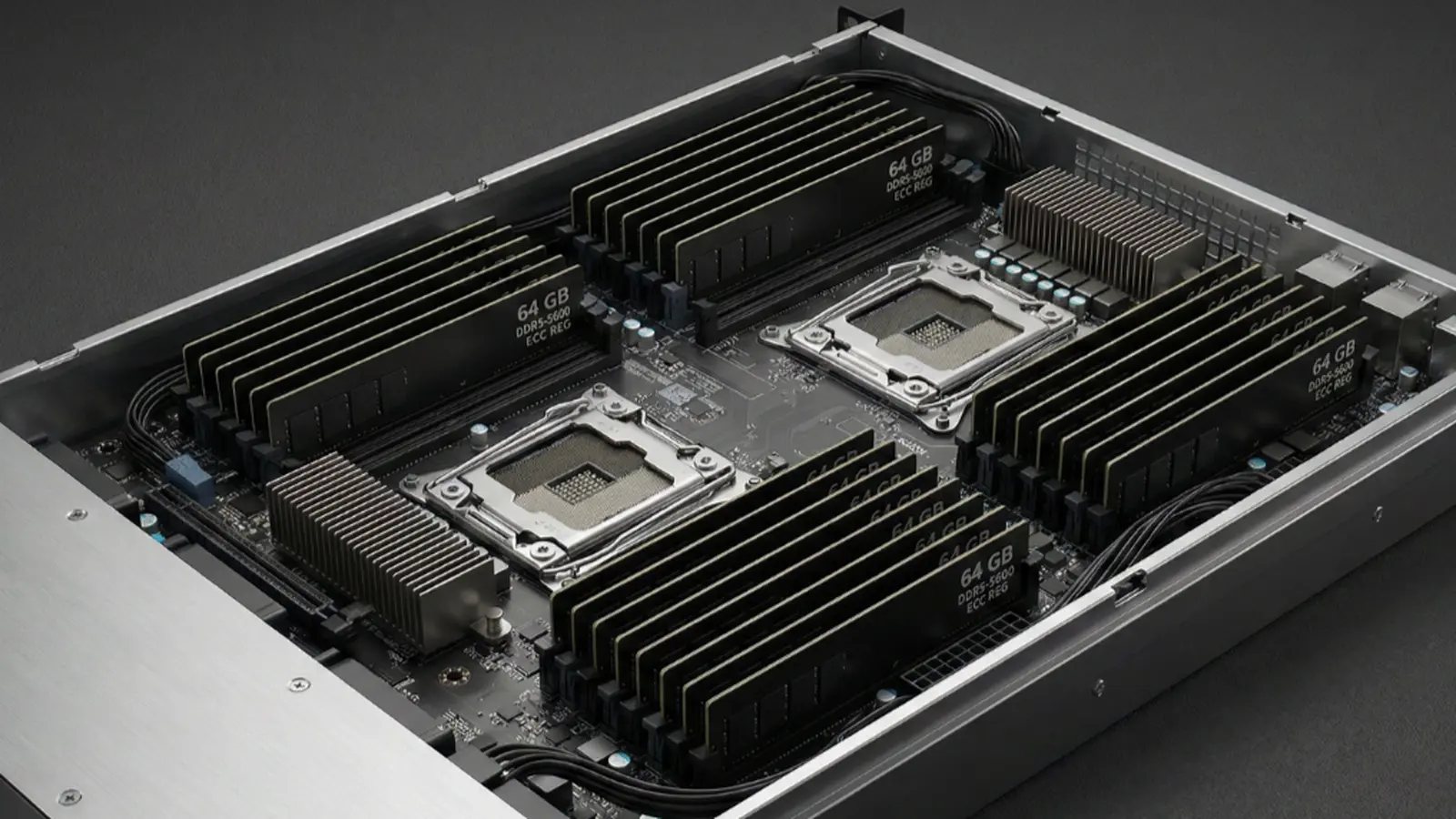
Big racks. Bright LEDs. Rooms filled with a soft, constant hum. Somewhere in those data centers, Samsung's memory chips are doing the heavy lifting behind the generative AI boom.
Why memory suddenly matters more than ever
Market researcher Omdia puts the scale of the shift into numbers: global DRAM revenue jumped to about €89.3 billion in Q1 2026, an 85.3% increase from the previous quarter. Samsung led the charge, pulling in roughly €34.4 billion in DRAM sales, a staggering 95.4% quarter-over-quarter rise that pushed its share to 38.6 percent.
Competitors felt the pressure. SK Hynix logged around €25.8 billion and saw its share slip to 28.8 percent. Micron held third place with about €20.0 billion and 22.4 percent of the market, despite posting strong growth of its own. China’s Changxin Memory Technologies nearly tripled quarterly revenue to about €6.7 billion, lifting its slice of the pie to 7.6 percent as Beijing pours resources into domestic chip capacity.
.avif)
So what changed? Simple: the workload changed. Large language models and other generative AI systems demand huge pools of fast, specialized memory. High Bandwidth Memory and advanced DDR5 have become the components data centers are hunting for. Shipments climbed. Average selling prices moved higher. The boom in server-focused DRAM has, for now, overridden weakness in the more commoditized consumer segments.
Samsung's strategy shows in these figures. The company leaned into server and AI-focused products rather than chasing the ebb and flow of consumer DRAM. That bet paid off handsomely this quarter. It’s not just volume; it’s where the volumes are sold and at what price.
What comes next — caution and competition
Investors and analysts are excited, but not blind. Memory markets are famously cyclical. New capacity and softer demand can flatten prices fast. Industry watchers warn that as suppliers ramp production to meet this surge, the tide could turn and growth rates may cool.
Still, for Samsung the quarter is a reminder of why its memory division matters more than ever. The company’s investments in advanced DRAM tech — driven by the clear economics of AI workloads — position it to capture high-margin opportunities. But staying on top will mean managing supply timing, preserving ASPs, and keeping pace with specialized memory types like HBM.
In short: the race for AI memory is on, and leadership is fragile. One quarter can flip market share. One price correction can re-level the field. Watch the servers. They tell the story.
Samsung has reclaimed the DRAM lead by betting on AI and server memory — but the next chapter will be written by supply moves and price swings.

“I love exploring gadgets, apps, and trends that redefine how we connect, work, and play in a digital world.”

Discussion
Leave a Comment
Comments
No comments yet. Be the first.