
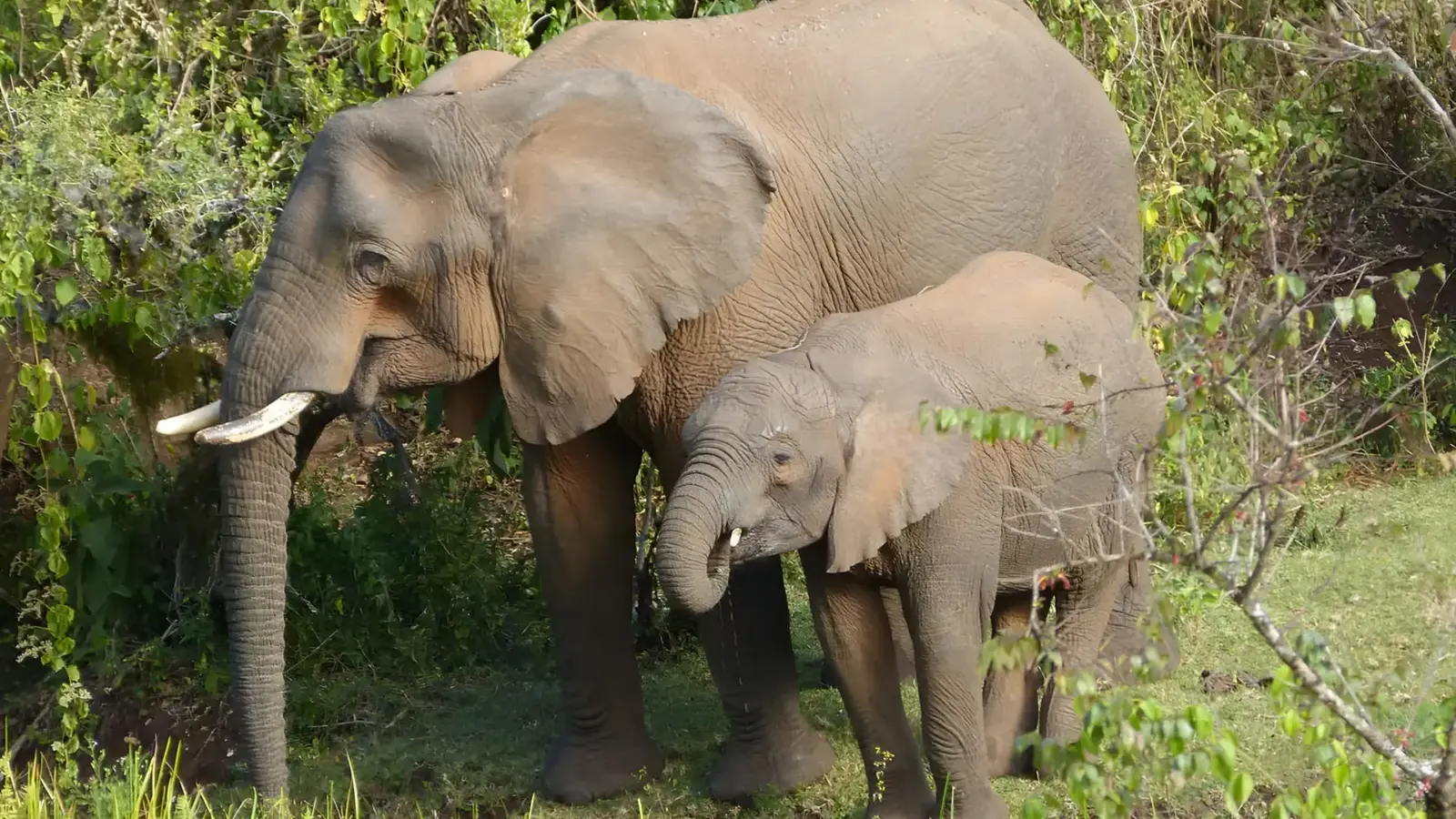
A mother elephant chews leaves and roots, mixes them with her milk, and feeds the result to a calf. To human eyes it looks like tender caregiving. To scientists it reads like a deliberate medical intervention.
Care, chemistry and kilometers walked for a cure
Researchers working near Mount Elgon in Kenya have collected decades of local observation and paired it with systematic interviews to reveal something striking: African elephants deliberately seek out certain plants and mineral sources when ill, and in some cases they extend that care to their young. These behaviors go beyond opportunistic munching. Some elephants travel long distances for specific botanicals. Others alter how they process plant material, such as chewing and combining it with milk, before delivering it to a calf.
Local members of the Sabaot community reported use of 35 plant species and four kinds of soils or minerals by elephants in the Mount Elgon region. While community knowledge labeled 25 of those plants as medicinal, the research team applied stricter criteria. They identified eight species for which use by sick elephants differed reliably from use by healthy individuals. That pattern points to targeted self-treatment rather than chance feeding.
Why does this matter? Because it expands our understanding of animal self-medication, a field also known by the technical term zoopharmacognosy. Until now, detailed evidence of such behaviors existed for animals like chimpanzees and Asian elephants, but documented complexity among African elephants has been limited. These findings show not only self-care but also what researchers call allotherapeutic behavior: using medicine to treat others.
Observations also confirm earlier notes about the species' mineral-seeking habits. Elephants near Mount Elgon sometimes descend into caves, reaching depths of up to 200 meters, to lick mineral-rich soils. These excursions show that diet and foraging strategies are about more than calories; they are about chemistry, too.
What the study found and why it holds weight
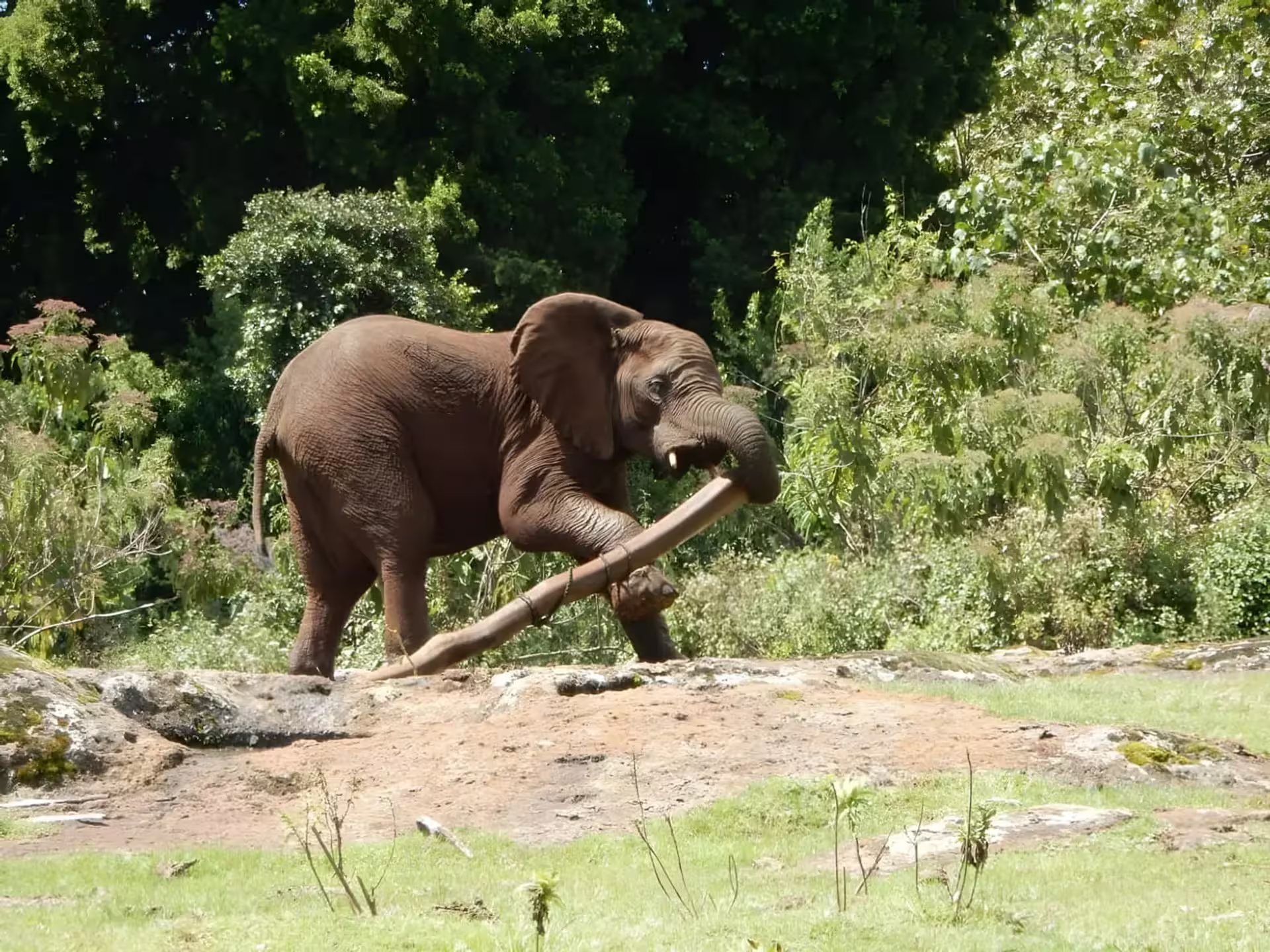
Field interviews and ethnobotanical crosschecks were central to the study. Locals described patterns no casual visitor would notice: ailing elephants changing their foraging routes, seeking specific trees or roots, or carrying bark and twigs that might contain beneficial compounds. The researchers were cautious. They did not equate local naming with proven pharmacology. Instead, they focused on behaviors that correlated reliably with sickness.
For example, some elephants consumed small amounts of rare plants and went to unusual lengths to find them. Others displayed preparatory behavior—chewing plant parts before applying them. The most eye-catching claim was maternal care that resembles pharmacological dosing. Nursing females were observed to masticate leaves or roots and mix the pulp with milk, then offer the mixture to their calves. Local people suggested the practice may address digestive complaints, but researchers emphasize the need for follow-up chemical analyses and clinical observation to confirm function.

Michael Huffman, a primatologist cited in community interviews, notes that many animal species show forms of self-medication, yet the degree of sophistication varies. He points out that helping group members through pharmacological means is rarer. Whether elephants are responding to learned cultural transmission within herds or to instinctual cues remains an open question.
The paper, published in Scientific Reports, argues that plant availability in Mount Elgon is a shared resource for both humans and elephants. About 87 percent of the plants elephants use medicinally are also used in local traditional medicine. That overlap underscores a dual dependence: the health of elephants and people in the region is linked to the same botanical diversity.
Expert Insight
Dr. Amina Njoroge, an ecologist at the University of Nairobi who was not involved in the study, commented: "These behaviors suggest a cultural layer to elephant ecology. Mothers teaching calves about which plants to seek would mean knowledge passes between generations, not just genes. That has big implications for conservation—if those plants disappear, so could the practical knowledge elephants rely on."
Her view highlights a conservation pivot. Protecting habitat is not just about preserving numbers. It is about preserving the ecological information embedded in plant communities and animal behavior.
Implications for conservation and research
There are three practical takeaways. First, habitat loss that strips out particular medicinal species could have health consequences for elephants beyond nutrition—potentially increasing disease vulnerability or mortality among calves. Second, the overlap between human and elephant medicinal plant use suggests an opportunity for collaborative conservation strategies that align local livelihoods with wildlife health. Third, the behavioral cues identified in this study point to follow-up work: chemical assays of candidate plants, observational studies linking plant intake to measurable health outcomes in elephants, and investigations into how such knowledge spreads within and between herds.
Methodologically, the study demonstrates the value of blending local ecological knowledge with scientific scrutiny. Ethnobotany helped generate leads; controlled behavioral comparisons narrowed the list to the most promising species. The next steps will require interdisciplinary teams—botanists, pharmacologists, veterinarians, and behavioral ecologists—to test hypotheses raised by field reports.
Conclusion
Elephants in the Mount Elgon area appear to use a toolbox of plants and minerals for self-medication and, importantly, for treating their young. This behavior sits at the crossroads of animal cognition, cultural transmission, and ecosystem services. Protecting the plants elephants rely on is therefore a conservation priority with implications for both wildlife health and human communities that share the same botanical resources.

“The cosmos has always fascinated me. I write about space missions, astronomy, and the technologies pushing humanity beyond Earth.”

Discussion
Leave a Comment
Comments (2)
is this even proven? sounds neat but could be cultural mimicry or taste preference, where's the chemical evidence, if that's real then show data pls
wow didnt expect elephants to mix plant pulp with milk for calves… kinda beautiful and scary tho, protect the plants before it's too late