

Imagine a newborn Sun surrounded by a glowing, churning disk where the first solid things in our planetary neighborhood were taking shape. Not a snowbank of ice. Not a soup of organics. Instead, tiny fired beads of rock ruled the day.
A new study led by researchers at Yale University has pulled back the curtain on how the earliest planetesimals in the solar system accreted their material. The headline is crisp: the first solid bodies were overwhelmingly made of chondrules, millimeter scale silicate beads created by rapid heating, and contained remarkably little of the icy, volatile-rich dust called matrix.
The molten memory of vanished beads
Chondrules are tiny but consequential. They show up across primitive meteorites and are a visible fingerprint of high temperature events in the protoplanetary disk. But there is a problem for anyone trying to reconstruct the solar system’s opening act. Many of the oldest parent bodies that formed in the first million years had enough internal heat to melt completely. That melting erased the chondrules themselves.
So how do you find a recipe that no longer exists in plain sight? The Yale team worked backward. They analyzed iron meteorites that are fragments of fully melted parent bodies. Even though the physical beads were gone, chemical traces survived the furnace and carry a record of what those bodies originally contained.
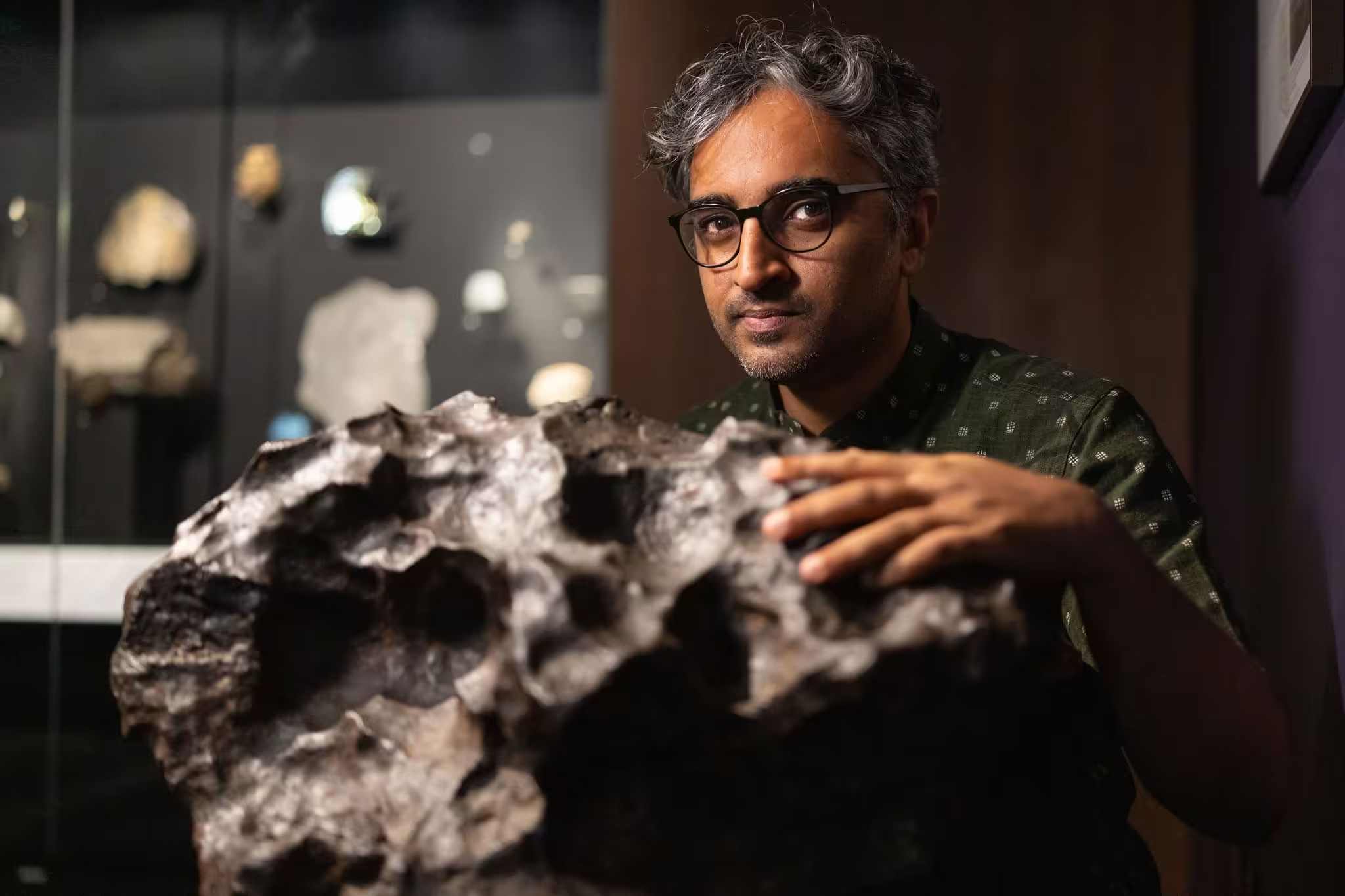
Damanveer Grewal.
Two chemical detectives
To recover the vanished mixture the researchers used two independent geochemical tracers that point to matrix abundance. Sulfur tends to concentrate in matrix. The oxidation state of iron tells a parallel story because it reflects how much water ice and oxidized dust a body accreted.
Chemical tracers used
- Sulfur concentrations as a proxy for matrix content.
- Iron oxidation state to estimate water and oxidized dust fractions.
Both tracers converged on the same surprising range. The original matrix content in the first-generation planetesimals appears to have been only about 8 percent to 17 percent. Put another way, the earliest solids were roughly 83 percent to 92 percent chondrules. Those numbers are lower than the matrix fractions seen in any known chondrite meteorite that still preserves chondrules.

"These ubiquitous little beads of rock are the basic building blocks from which the planets themselves were eventually assembled," said Damanveer Grewal, the paper's first author and an assistant professor of Earth and planetary sciences at Yale. "And now we know they were already being sorted and incorporated into the first generation of solid bodies from the very start."
The study, published on September 18 in Nature Astronomy, pushes this chondrule dominance back to within the first million years after the solar system began. Previous chemical and textural evidence for selective assembly tended to come from objects that formed two to four million years in.
Why the result matters
The implications are practical and conceptual. Practically, the finding helps explain why very old chondrules are scarce in the meteorite record: the beads were quickly swept up into early planetesimals that later melted, erasing their original textures while leaving chemical fingerprints. Conceptually, the result implies that sorting processes in the protoplanetary disk favored hot, solid droplets over sticky, icy dust much earlier than many models assumed.
Radioactive aluminum 26 is the obvious furnace in this story. Young planetesimals that captured enough aluminum 26 warmed from the inside and melted, a process that obliterated chondrules but preserved bulk chemical signals. The Yale team's approach turns that destructive heating into a diagnostic tool.
That has consequences for how we think about where and when volatile-rich materials were available for assembling planetary bodies. Later-forming carbonaceous chondrites, which are richer in matrix and volatiles, likely accreted in conditions or regions of the disk that favored retention of icy dust. The first generation, by contrast, seems to have been assembled in a chondrule-rich environment.
Expert Insight
"The chemical breadcrumbs are convincing," said Dr. Lina Ortega, a planetary scientist at the European Space Agency, speaking here as an independent commentator. "Finding consistent signals in two independent tracers greatly strengthens the case that early planetesimal formation was selective. This forces us to refine models of disk dynamics and solid transport in the first million years."
Ortega added, "It also underscores the value of melted bodies. They are not just lost archives. With the right tools they can reveal the ingredients of planetary assembly in ways that intact meteorites cannot."
Damanveer Grewal noted another human-scale moment in the work. "You can hold chondrites in your hand and know they began as part of a process that started billions of years ago," he said. "It is a timescale that is hard to wrap your head around."
Conclusion
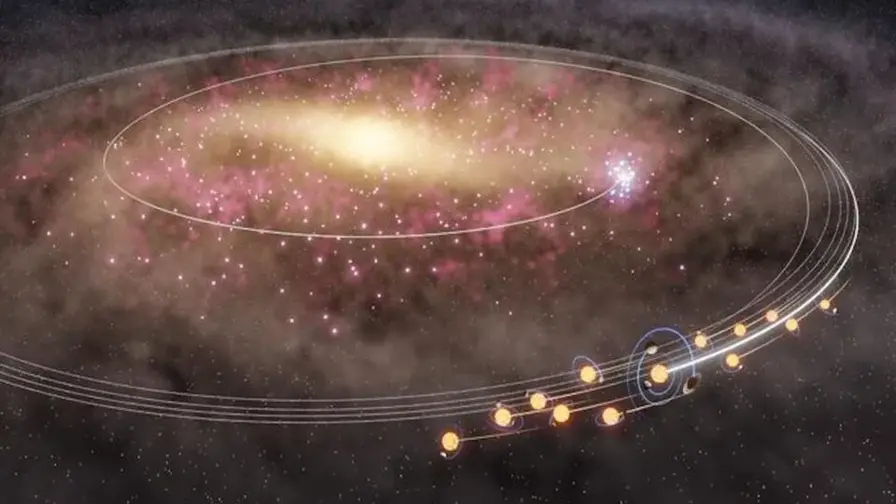
The early solar system appears to have been a place where heat and motion favored the making and rapid collection of molten beads. Those beads became the dominant building blocks for the first solid bodies in the outer regions. By reading subtle chemical clues left behind in melted parent bodies, scientists have moved the timeline for this selective assembly to the very beginning of planetary construction. The result refines our picture of the protoplanetary disk and provides a sharper context for the later arrival of wetter, more volatile-rich materials that would shape other classes of meteorites and, ultimately, planets.

“My work centers on sustainability, energy, and environmental science — examining how innovation can lead to a greener future.”

Discussion
Leave a Comment
Comments
No comments yet. Be the first.