
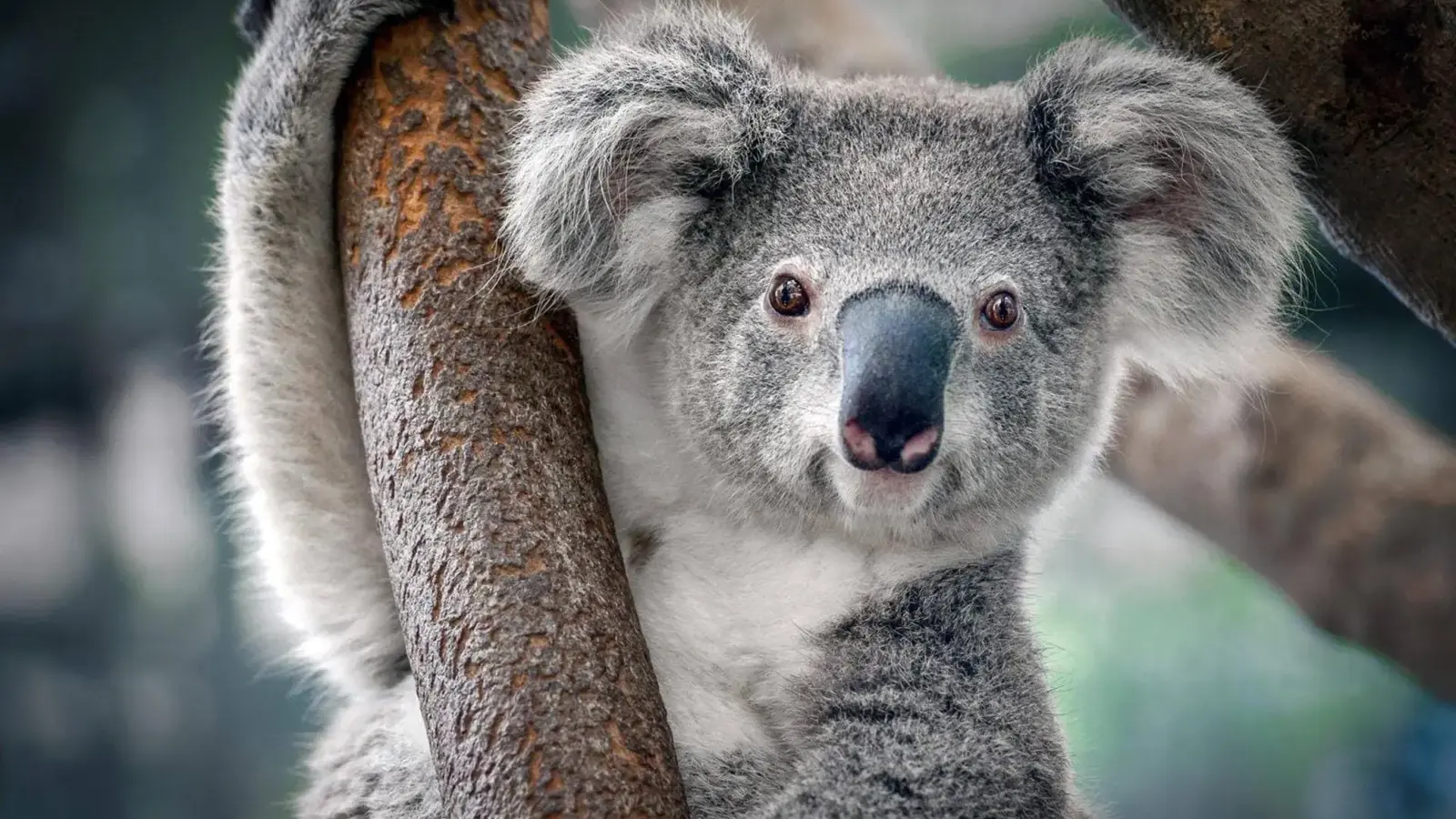
Imagine a handful of animals clinging to survival while an entire continent reshaped itself around them. That is the genetic story now emerging for Australia's koalas: a species that almost vanished long before humans ever set foot on the continent.
A genomic time machine
Researchers have reconstructed the koala's past using DNA as their chronicle. By directly measuring the rate at which new genetic mutations appear in modern koalas, the team traced population dynamics back roughly 100,000 years. The result overturns a simple narrative that blamed human arrival for the species' deep historical decline. Instead, the steep drop in koala numbers aligns with dramatic climatic upheaval during the late Pleistocene.
To get there, scientists sequenced hundreds of genomes. They examined four parent–offspring pairs to count spontaneous mutations and then applied that mutation rate across a dataset of 457 koala genomes. The measured mutation rate came out at about half the human rate, a crucial calibration that lets geneticists convert DNA changes into calendar years with greater confidence. With that clock, the team rebuilt the koala's demographic history and pinpointed when genetic diversity collapsed to dangerously low levels.

When climate, not people, drove the crash
Previous hypotheses placed the most severe koala decline after humans arrived in Australia roughly 65,000 years ago. The new genomic analysis tells a different story. The decline began near 100,000 years ago and tightened into an extreme bottleneck around 60,000 years ago, leaving only a small remnant population. Those survivors carried the lineage that would give rise to all modern koalas.
Why did this happen? The Pleistocene was a time of repeated ice ages and warm intervals. In Australia, shifting tectonics and a northward drift gradually dried the continent over millions of years. Recurrent glacial cycles made ecosystems more fragile, increased the frequency of fires, and expanded drier habitats. Around 70,000 years ago the semi-arid Nullarbor plain spread, fragmenting once-continuous koala habitat and isolating populations. The western populations appear to have succumbed, while a small eastern group endured.
Genomes preserve signals that fossils rarely can. When bones and sites are scarce or ambiguous, DNA reveals population size, splits, and the timing of demographic events. In this study, repeated contractions and recoveries show a species repeatedly battered by climate variability, not a single human-caused extinction pulse. That said, the modern threats koalas face—habitat loss, urban expansion, wildfire, disease—are very much driven by people and now compound the legacy of ancient decline.
What the numbers mean for conservation
The study's lead author, PhD candidate Toby Kowax, framed the findings simply: "This work rewrites the genetic timeline for koalas in Australia." Knowing the true mutation rate matters because it sharpens estimates of how small those ancient populations were, and how much genetic diversity they lost. Lower genetic diversity reduces a population's adaptive capacity to novel stresses—disease, heatwaves, changing food sources.

Conservationists already flagged koalas as at risk in key jurisdictions. Since 2022 the species has been listed as vulnerable in several Australian states and territories, including Queensland, New South Wales, and the Australian Capital Territory. The genomic reconstruction adds urgency: present-day management must account for both a long history of climate-driven bottlenecks and a diminished genetic toolkit.
- Primary contemporary threats: habitat destruction, urban sprawl, wildfire, disease.
- Genomic threats: reduced genetic diversity and historical inbreeding.
- Conservation levers: habitat connectivity, targeted translocations, disease monitoring.
Beyond listing and local protections, the results inform practical choices. If a population shows dangerously low diversity, managers might consider carefully planned genetic rescue or translocation to boost variability. Conversely, intervention without genomic insight can unintentionally mix locally adapted lineages. The new mutation-rate calibration gives practitioners the timeline needed to weigh these trade-offs.
Expert Insight
"Genomes are like layered histories," says Dr. Anjali Mehra, a conservation geneticist not involved in the study. "When you can anchor mutation rates to calendar time, you finally see when populations truly contracted and why. For koalas, the picture is clear: climate shaped their fate long before humans arrived, but today's human pressures could finish what ancient variability began. That makes conservation decisions both urgent and delicate."
Dr. Mehra stresses a pragmatic outlook. Short-term actions—restoring corridors between remnant forests, protecting breeding habitat, and monitoring diseases such as chlamydia—can buy time. Long-term resilience will rely on combining genomic monitoring with habitat policy that forestalls further fragmentation.
Broader context and future work
This study is the first direct measurement of mutation rate for koalas and, more broadly, for grazing marsupials within the same order that includes kangaroos and wombats. That baseline will underlie future population models and help researchers forecast how koalas might respond to accelerating climate change. The team is expanding genomic sampling across the species' range, aiming to map local adaptation and identify genetic corridors worth protecting.
Published in Molecular Biology and Evolution, the research does more than rewrite history. It supplies a practical toolset: a calibrated genetic clock, a refined timeline of demographic collapse, and a clearer picture of where conservation resources will have the most impact. The koala's past speaks plainly. The future will depend on how we listen.
Conclusion
Koalas are survivors of ancient climate shocks, but their long-term persistence is not guaranteed. Genomic evidence shows a severe bottleneck beginning about 100,000 years ago and a critical trough near 60,000 years ago—events driven by environmental change rather than early human activity. Today, human-driven threats layer on top of that history. Using genetic data to guide conservation offers the best chance of keeping koalas on the landscape for centuries to come.

“My work centers on sustainability, energy, and environmental science — examining how innovation can lead to a greener future.”

Discussion
Leave a Comment
Comments (3)
Interesting, climate shaped their decline ages ago, yet todays humans still could finish them. Habitat corridors, careful translocations, disease control matter. wish ppl acted faster
Is this even true? 4 parent-offspring pairs feels small to pin a timeline, idk maybe ok but curious about sampling bias...
wow that timeline is wild, didn't expect koalas to almost vanish long before humans. Sad and worried, so much to fix asap