

A tiny chemical used to expand blood stem cells in the lab has opened an unexpected window into how some aggressive childhood brain tumors may form. The molecule, known as UM171, does not cause cancer, but it mimics a cellular effect seen in a subgroup of pediatric brain cancers, and that mimicry has become a powerful investigative tool.
Researchers at Lund University traced the molecule's action to a cellular pathway that is also disrupted by mutations in the KBTBD4 gene. That overlap gave scientists a way to model mechanisms that are otherwise hard to reproduce, because the tumors appear to originate during early brain development when immature cells fail to mature and instead keep dividing.
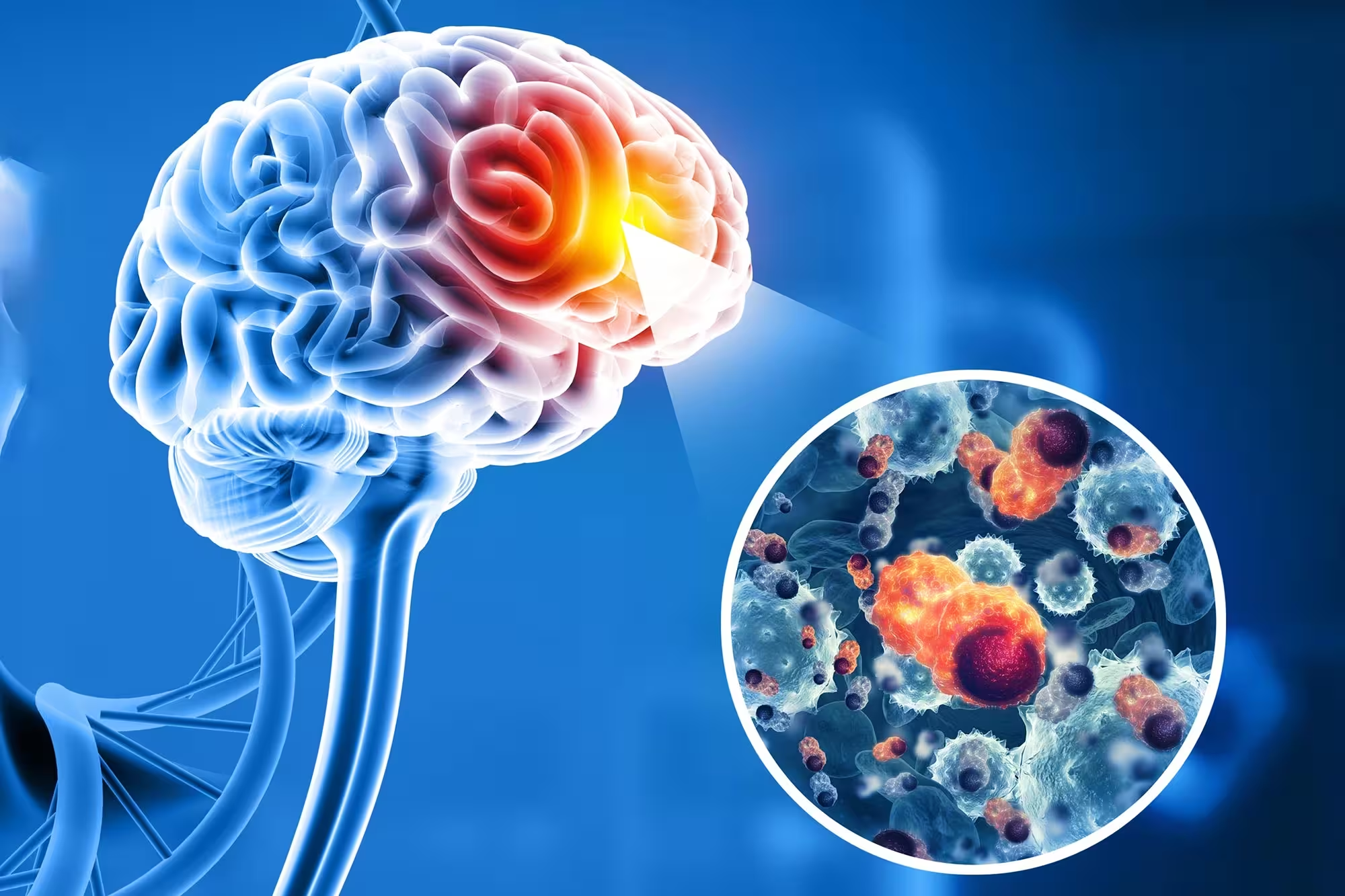
Researchers found that certain brain tumor mutations may keep developing cells trapped in a stem-like state.
From a lab reagent to a cancer clue
UM171 was developed to boost the number of blood stem cells available for transplantation. It helps those cells divide while preserving their stem-like identity so they do not prematurely become mature blood cells. For clinicians working on blood disorders, that is a game changer. For cancer biologists, it became a probe.
How does a small molecule used in hematology link to pediatric brain tumors? The answer lies in protein regulation. UM171 targets a protein complex involving KBTBD4 and triggers the degradation of another multi-protein assembly called CoREST, which controls gene expression that steers cells toward differentiation. In short: CoREST helps immature cells mature. Break it down and cells can remain immature.
Mutations in KBTBD4, found in a subset of embryonal brain tumors such as medulloblastoma, produce a similar downstream effect. The result appears to be a chronic deficit of CoREST, which keeps cells locked in a stem-like state. When immature neural cells fail to exit that state during development, they can accumulate and form tumors.
A strategy for testing existing drugs
Once the mechanistic parallel was clear, the team used it to screen for compounds that might restore the balance. The screen pointed to HDAC inhibitors, a class of drugs that alter gene activity by changing how DNA-packaging proteins are modified. Some HDAC inhibitors are already approved for other indications, which makes them attractive candidates for repurposing.
That does not mean a ready-made therapy is sitting on a shelf. The experiments so far were performed in lab models using blood stem cells exposed to UM171 to simulate the CoREST disruption caused by KBTBD4 mutations. The next step is to test whether HDAC inhibitors counteract the same defect in actual tumor cells and in animal models. If they do, clinical trials could follow, guided by molecular markers that identify which tumors carry the KBTBD4 alteration.
.webp "Engineered Progenitor Cells Offer Scalable Cancer Therapy")
Medulloblastoma is the most common malignant brain tumor in children. These tumors are grouped as embryonal because they arise from immature cells in the developing brain. In Sweden, about 15 to 20 children receive a medulloblastoma diagnosis each year. Tumors with KBTBD4 mutations form only a fraction of cases, but they are difficult to study because their roots lie in early developmental stages.
Why this approach matters
- It turns a stem-cell reagent into a disease model, enabling experiments that are otherwise impractical.
- It highlights shared molecular consequences between a reversible chemical perturbation and irreversible genetic change.
- It opens the possibility of repurposing drugs that already have safety data, speeding translation if efficacy is shown.
Rohit Sivaprasad, a doctoral student involved in the work, emphasized the contrast between temporary and permanent effects. UM171 produces a short-lived reduction in CoREST, while KBTBD4 mutations can produce a sustained deficit, leaving cells in a stem-like state and potentially contributing to tumor development.

Agatheeswaran Subramaniam, research group leader at Lund University, Sweden.
Expert Insight
"This is the kind of translational idea that links basic biology to possible clinical paths," says Dr. Lina Ortega, a pediatric neuro-oncology researcher not involved in the Lund study. "Using a stem-cell molecule to model a developmental block gives us a controlled way to test compounds. The challenge will be proving the effect in tumor tissue and then showing benefit without unacceptable toxicity."
The discovery illustrates a broader theme in modern cancer research: mechanisms are often shared across contexts. A pathway that controls whether a blood progenitor matures or remains a stem cell may be repurposed, by mutation, in the developing brain. Identifying those shared nodal points creates opportunities for targeted interventions.
At the same time, the work is a reminder of how incremental progress in the lab can point to new clinical hypotheses. The Lund team describes a promising lead, but the path from bench to bedside is long. Tests in tumor cell lines and animal models must validate whether HDAC inhibitors can reverse the effects of KBTBD4 mutations in situ and whether such reversal translates to slowed tumor growth or improved survival.
Conclusion
The UM171 story is a striking example of scientific serendipity. A molecule crafted to improve blood stem cell yields became a probe that exposes how certain pediatric brain tumors hijack developmental programs. If follow-up studies confirm that HDAC inhibitors can correct the molecular defect in tumors, researchers will have a shorter route to clinical trials thanks to existing drug data. For families and clinicians confronting embryonal brain cancers, that kind of shortcut could be meaningful, provided the promise survives rigorous testing.

“My work centers on sustainability, energy, and environmental science — examining how innovation can lead to a greener future.”

Discussion
Leave a Comment
Comments
No comments yet. Be the first.