

Under the glossy paint and carbon fiber lies a quiet battleground: the wiring harness. Short, nimble, and surprisingly consequential. Automakers are now treating electrical cables like parts of the suspension—anything that can be slimmed down will be.
Rising vehicle weights from batteries and hybrid systems have pushed engineers to squeeze grams wherever they can. At the same time, copper prices have been under pressure because data centers and renewable projects are voracious consumers. Those two trends collided and nudged several manufacturers toward aluminum as a practical alternative for conductors.

Small wires, big consequences
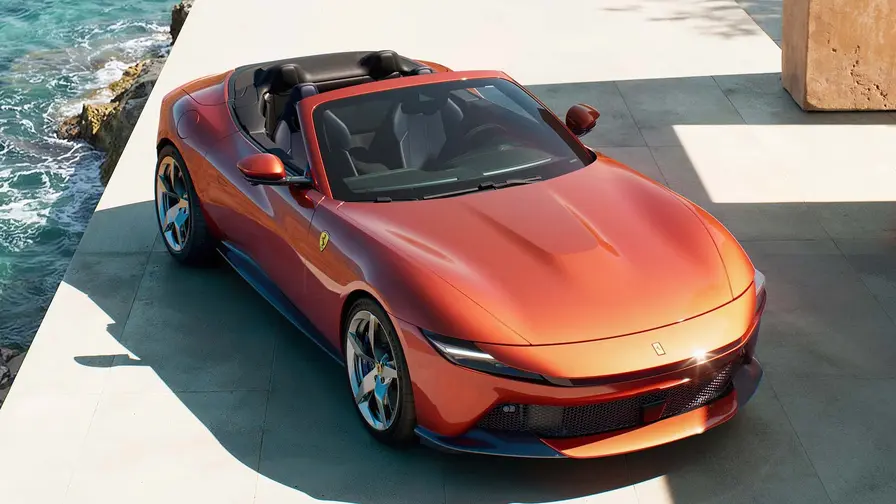
Reuters reported that Ferrari and BMW have joined the ranks of makers shifting to aluminum wiring, following earlier moves by Tesla and many Chinese brands. For Ferrari this was not a theoretical exercise. The 296 range adopted aluminum wiring in 2025 as a testbed, and the switch trimmed the weight of the wiring harness by roughly 15 to 20 percent after engineers rethought cable cross-sections.
Ferrari says the change was driven by weight targets rather than cost cutting. That rings true when you consider Maranello’s obsession with power-to-weight ratios; every gram still matters in a supercar. BMW’s transition, by contrast, has roots stretching back more than a decade. The Munich firm first trialed aluminum conductors in the 1 Series in 2011 and has steadily broadened their use across plug-in hybrids and battery-electric models, including newer eDrive architectures.
Tesla has already been using aluminum in several models, and its stainless-steel truck concept further underlined an aluminum-focused approach for wiring. Chinese automakers have leaned into the material too, using lighter harnesses to reduce both mass and production cost, according to teardown analyses. Insiders also say groups like Stellantis are experimenting with mixed-metal harnesses to keep cost volatility in check.
There’s a technical compromise, though. Aluminum conducts at about 61 percent of copper’s efficiency, which forces engineers to increase conductor cross-section to match electrical performance. Thicker cables are harder to route in the tight confines of modern vehicle architecture. But aluminum is around 3.3 times lighter than copper, and even after upsizing the cable to maintain throughput, the net mass advantage remains compelling.

That balance—larger diameter but lower mass—reshapes wiring design. Connectors, corrosion protection, and thermal behavior must be revisited. Suppliers and vehicle makers are reengineering terminals and insulation systems to ensure long-term reliability and serviceability.
Weight reduction has become a strategic lever; swapping copper for aluminum is one of the newest tools on the table.
Will copper reclaim its role if prices cool or new conductor materials emerge? Possibly. For now, aluminum gives carmakers a measurable way to cut mass and stabilise production costs without redesigning entire powertrains. And in an industry where margins and kilograms both matter, that’s enough to change the wiring loom forever.

“I cover automotive innovation, electric vehicles, and the future of mobility — where technology meets sustainability.”

Discussion
Leave a Comment
Comments (2)
Sounds clever but is aluminum futureproof? Larger cables, heat issues, repair costs... or will copper bounce back if prices fall??
No way, replacing copper with aluminum actually makes sense, love the grams-first mindset! But connectors gotta be bulletproof, corrosion worries me..