
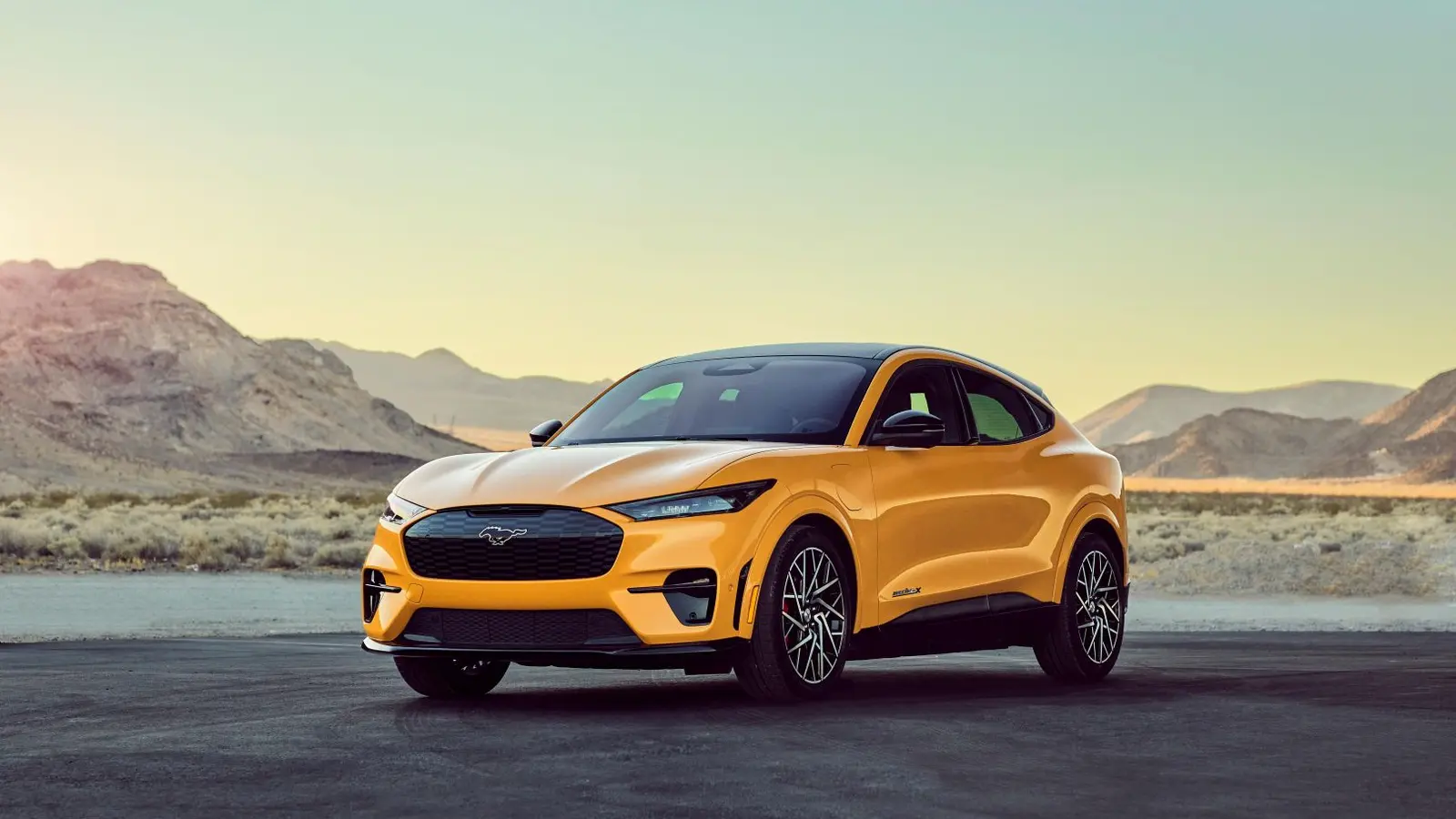
Walk the Cuautitlán assembly floor and you will still see the Mustang Mach-E gliding past workers and robots as if nothing has changed. It looks familiar. It still turns heads. But under the skin, Ford has quietly shifted priorities.
Ford will not migrate the Mach-E to its upcoming UEV architecture. That decision reads like a strategic trimming: invest where margins and volume matter most, and let niche or higher-cost models run out their cycle on existing underpinnings.
A hard choice with soft edges
Earlier this year the F-150 Lightning's fate hinted at where the company might go. Production paused after supply-chain disruptions, restarted briefly, then Ford announced a more permanent withdrawal for the electric pickup. The Lightning will give way to an extended-range EV and a suite of lower-cost zero-emission vehicles built on the new Universal Electric Vehicle platform. The first of those is a midsize truck aimed at roughly €27,900.

So where does that leave the Mach-E? It remains in the lineup. Sales argue in its favor: in the last year the Mach-E outsold the traditional Mustang coupe and convertible combined, proving that an electric crossover with Mustang branding can find buyers. Still, Ford has no public plan for a next-generation Mach-E on the UEV. The current model will receive annual updates, and it will continue to be produced in Mexico.
Production in Cuautitlán carries baggage. Mexican-assembled vehicles face a 25% import tariff introduced by the previous U.S. administration. That levy applies to wholesale factory cost rather than sticker price, and Ford has absorbed much of that bill to avoid shocking buyers with a sudden price jump. Even so, margins tighten. The entry-level Mach-E Select starts at about €35,150, while the Rally trim reaches roughly €53,630.

Cost control has crept into the Mach-E's spec sheets. Features like the frunk have moved from standard equipment to optional, and small conveniences such as seatback map pockets have been trimmed in some trims. Those are deliberate nudges: keep the car desirable, keep production efficient, and make room on the balance sheet for a big bet on affordable EVs.
Competition is fierce. The Mach-E locks horns with the Tesla Model Y and a new generation of well-reviewed rivals from Korea and Europe. The market is crowded, prices are compressing, and buyers increasingly chase value rather than vanity. Ford's answer is clear: scale what sells cheaply on the UEV, and let the Mach-E be what it is for now—a capable, mid-tier electric crossover that will be refreshed, but not reborn on a new platform.
That does not spell immediate doom. Automakers often run models through long tails: steady updates, gradual feature pruning, and occasional special editions to keep interest alive. The Mach-E will likely follow that familiar arc until Ford decides whether to replace it with a UEV-born successor or retire the nameplate altogether.

So should Mach-E owners panic? No. Buyers should be pragmatic. If you love the car now, it remains a competitive choice. If you want the latest, most affordable Ford EV architecture and pricing, watch for the upcoming UEV models instead. Either way, Ford's pivot is a reminder: in the transition to electrification, scale and cost sometimes matter more than cachet.
Competitors to watch:
- Tesla Model Y
- Hyundai Ioniq 5
- Kia EV6

“I cover automotive innovation, electric vehicles, and the future of mobility — where technology meets sustainability.”

Discussion
Leave a Comment
Comments (2)
Is this even true? So they'll keep selling Mach-E without a UEV next gen, while dumping Lightning... smells like cost cutting not strategy. odd move
Wow, didnt expect Ford to sideline the Mach-E like that. Still a cool car, but feels like corporate math over passion. Fingers crossed for a special run!