
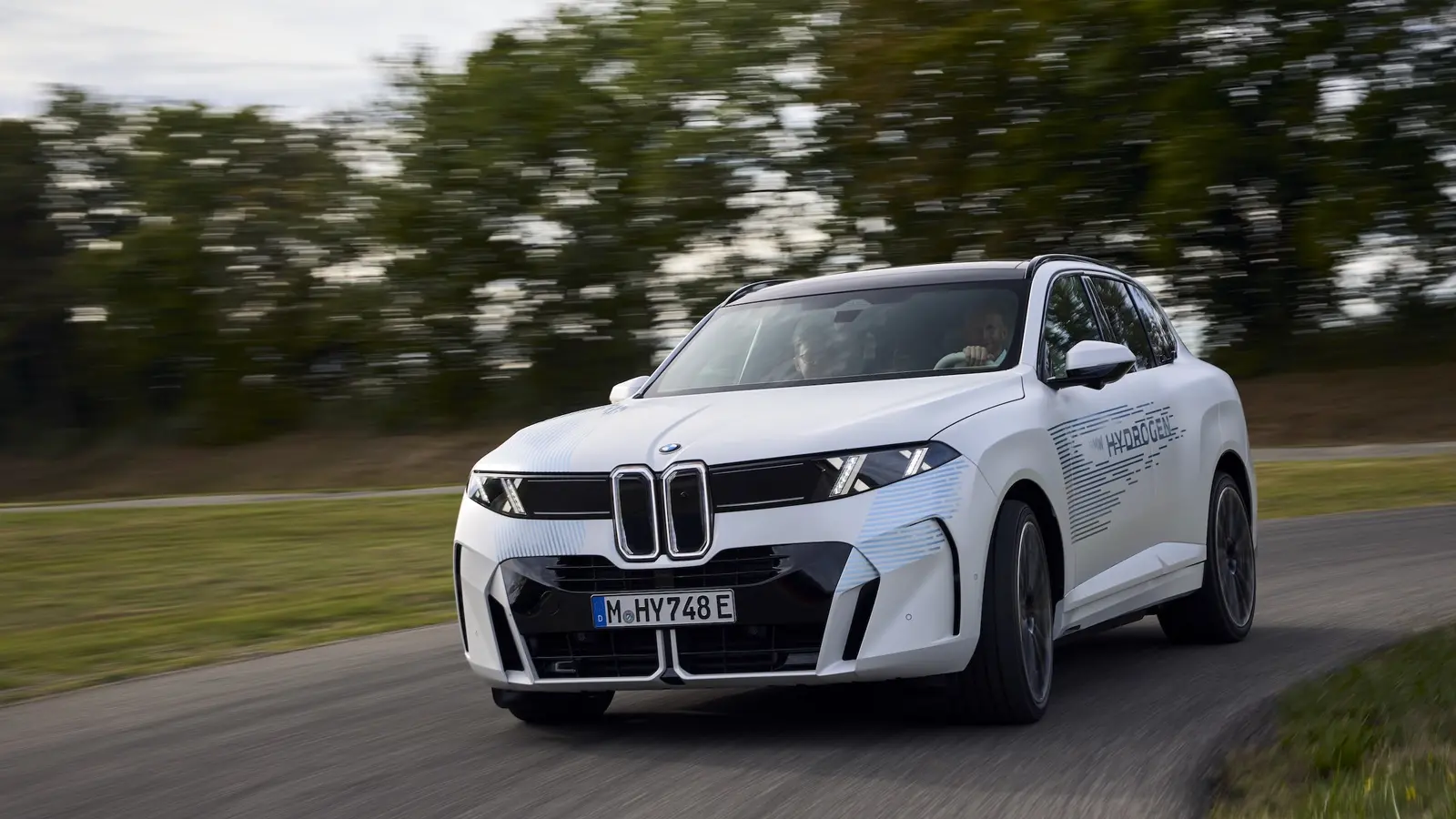
A BMW X5 glides past a roadside hydrogen pump, prototype stickers still clinging to the doors. It feels like a movie moment, but this is development work: BMW has taken its iX5 Hydrogen out of the test lab and onto open asphalt to see how the fuel-cell SUV behaves when the weather, weight and real drivers intervene.
Built to be driven, not just measured
These early public-road runs are about stress and surprise. Engineers want answers you can’t get on a dyno: how the fuel cell responds to long climbs, how the battery supports hard accelerations, and whether the car still carries that unmistakable BMW steering and throttle feel. The iX5 packs a third-generation fuel cell co-developed with Toyota, but BMW is keeping vehicle integration, software and final assembly firmly in-house. That includes the so-called Energy Master control unit, billed as the vehicle’s ultra-intelligent brain for power distribution and energy recovery.
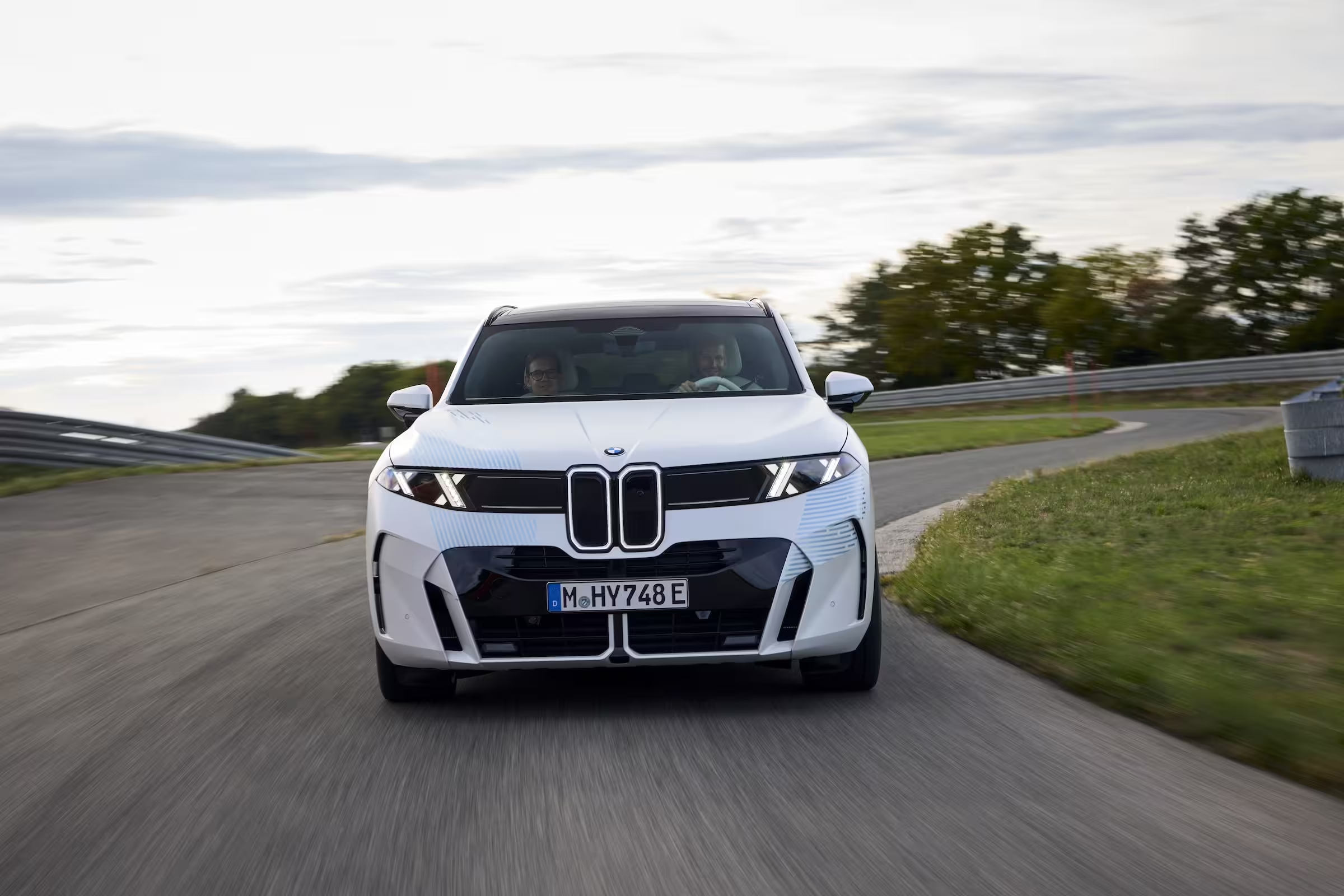
Acceleration won’t be a snooze. The team is aiming for a 0–100 kph sprint in under five seconds, which tells you BMW isn’t treating hydrogen as a mere eco badge. Efficiency matters, but so do the checks in the performance column.
Prototype assembly moved through Munich’s Hydrogen Competence Center before the heavier lifting shifts to Austria. BMW is installing test benches and production tooling at its Steyr plant, where series production of the fuel cell systems will take place, while key components — including the Energy Master unit — will be manufactured in Landshut. These steps are about locking down repeatable processes: the difference between a one-off demo and a car you can buy off the line.
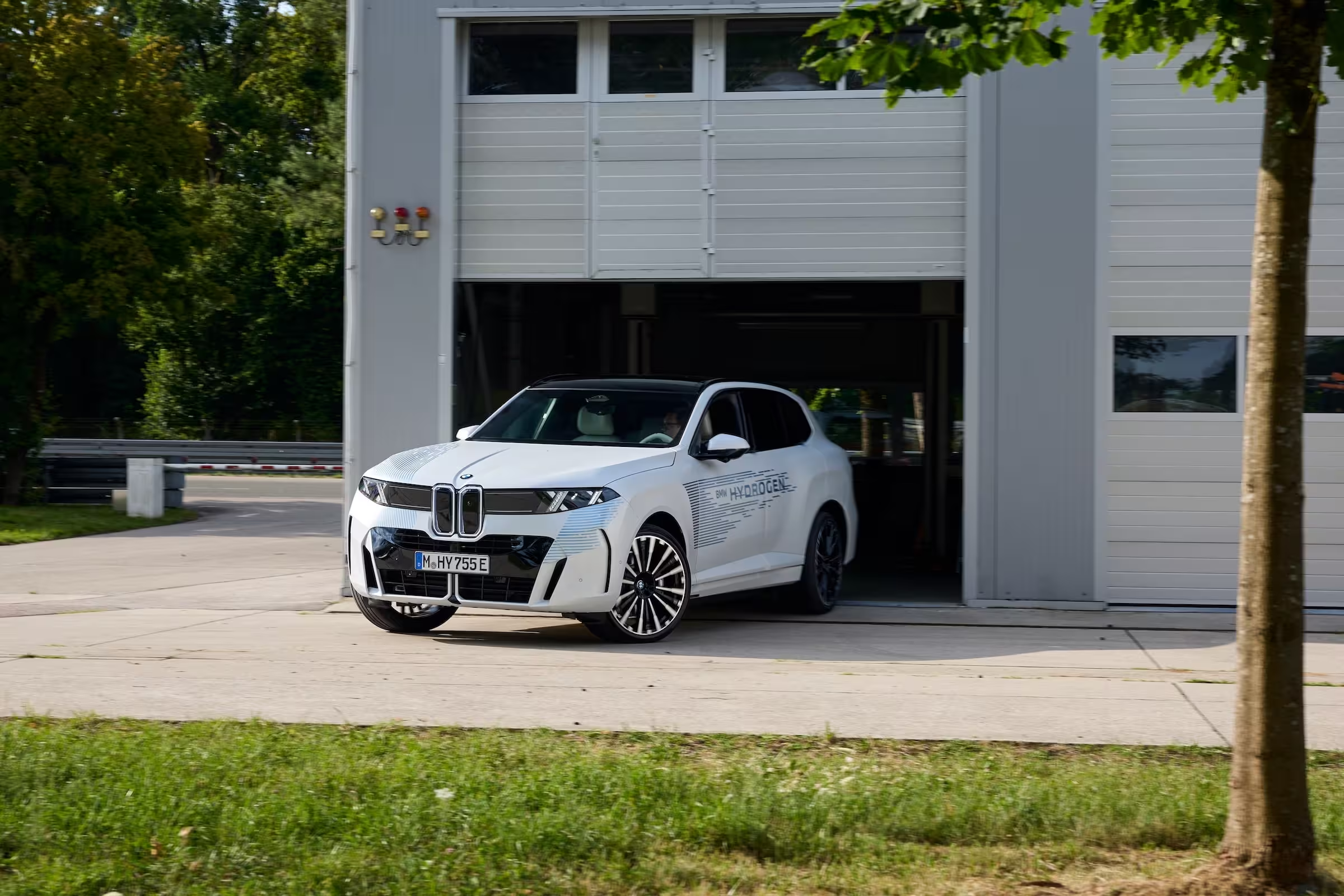
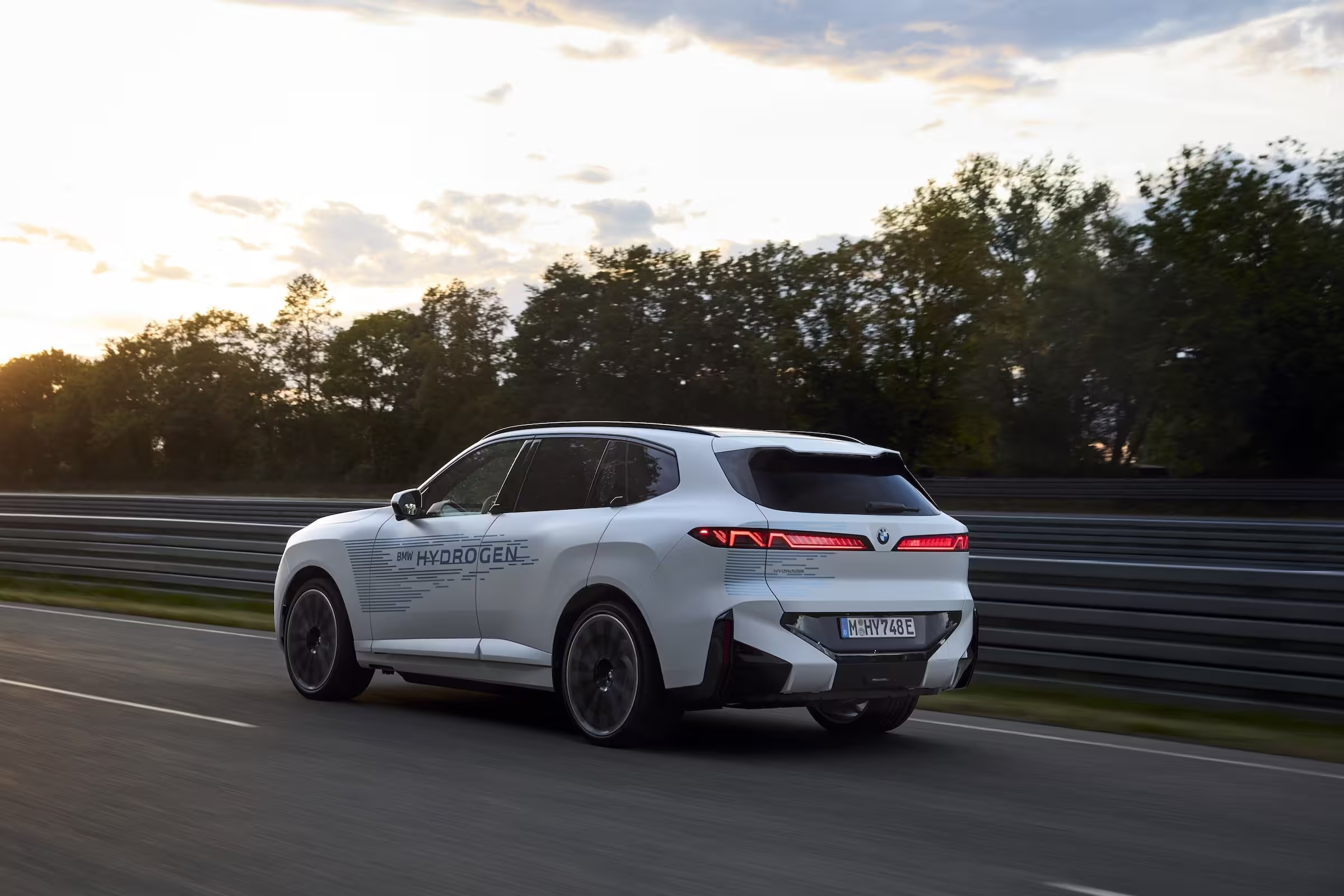
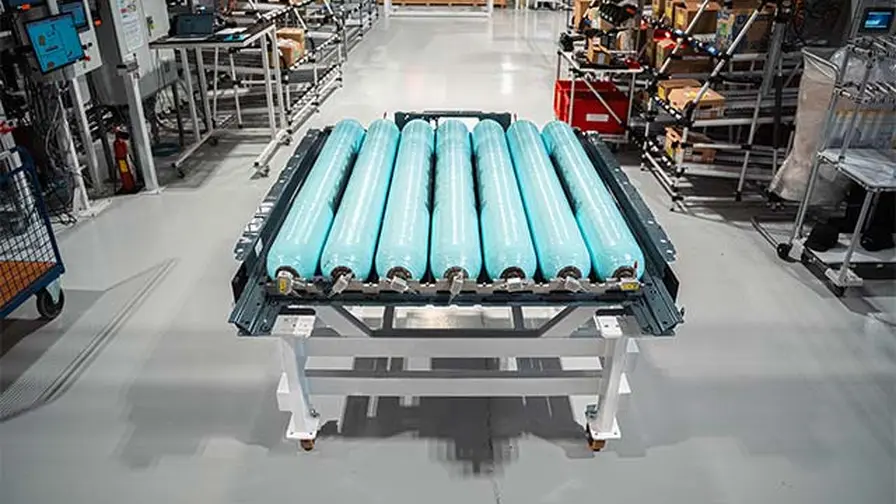
BMW has set a 750-kilometre targeted range for the iX5 Hydrogen, enabled by a compact flat hydrogen storage layout and the Gen3 fuel cell. Exact battery capacity and final horsepower and torque figures remain under wraps for now. Expect BMW to reveal those numbers as the launch approaches; production is not expected before 2028.
Funding for the project is substantial: 191 million euros from the German Federal Ministry of Transport plus another 82 million euros from the state of Bavaria. That public backing underscores how much governments are betting on hydrogen as part of a diversified zero-emission strategy.
Where will buyers actually see these cars first? Hydrogen refuelling infrastructure still lags behind chargers for battery EVs, so BMW is likely to debut the iX5 Hydrogen in markets with more mature networks — think Japan and South Korea — before widening availability.
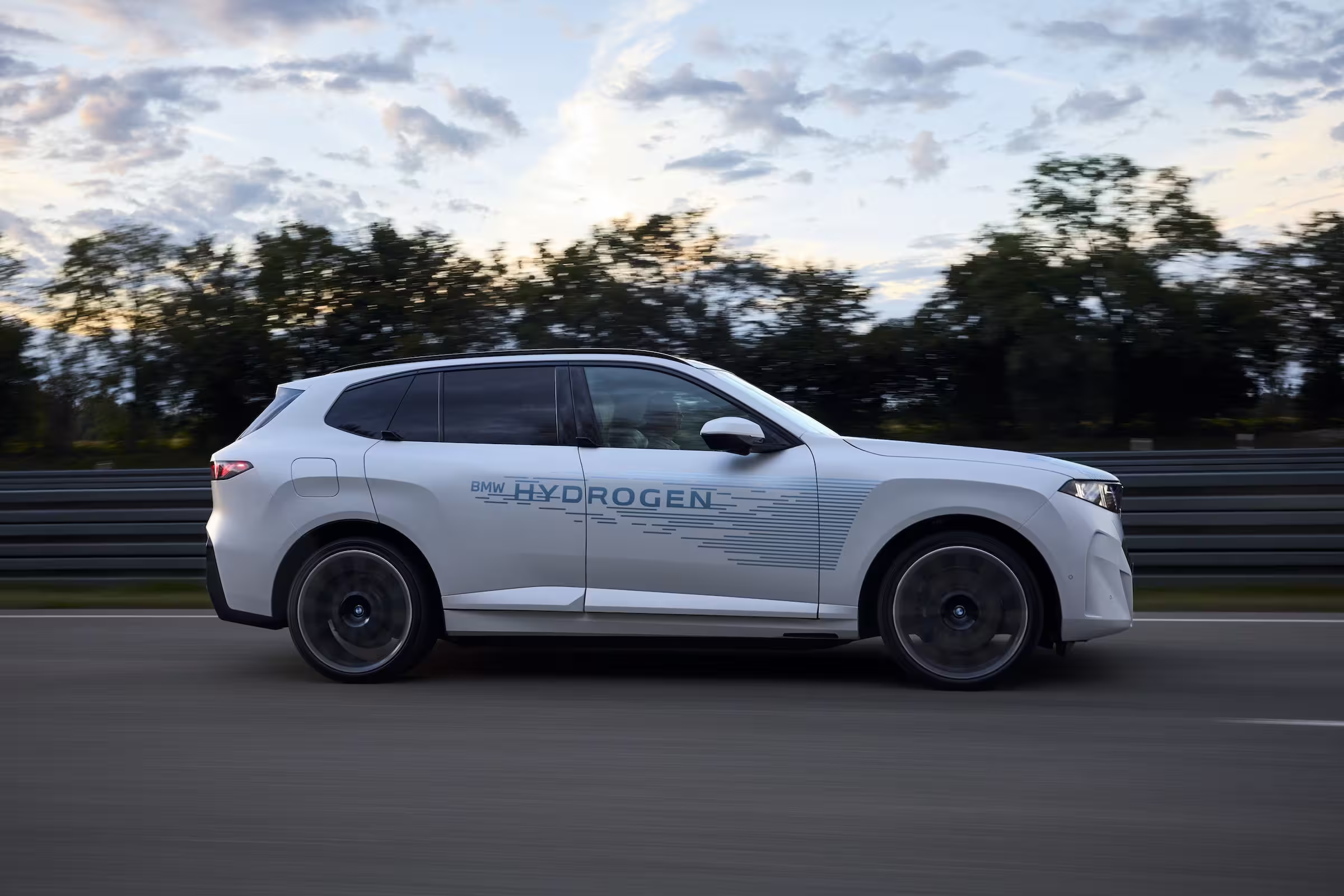
There’s still mystery to unpack. BMW’s playbook reserves headline specs for later, but the shift from lab to open road is the clearest sign yet that hydrogen SUVs could move from niche experiments to genuine showroom contenders. Watch the fuel-cell space closely; the iX5 is trying to turn a tech story into an everyday vehicle reality.

“I cover automotive innovation, electric vehicles, and the future of mobility — where technology meets sustainability.”

Discussion
Leave a Comment
Comments (2)
Wow under 5s 0-100? If they pull that off with 750km range, I might actually want one. But 2028 tho, that's ages away... feels like a slow tease
Looks cool but where are the stations? 750 km is nice on paper, real life refuels will matter. BMW seems serious tho, curious how softw updates handle it