
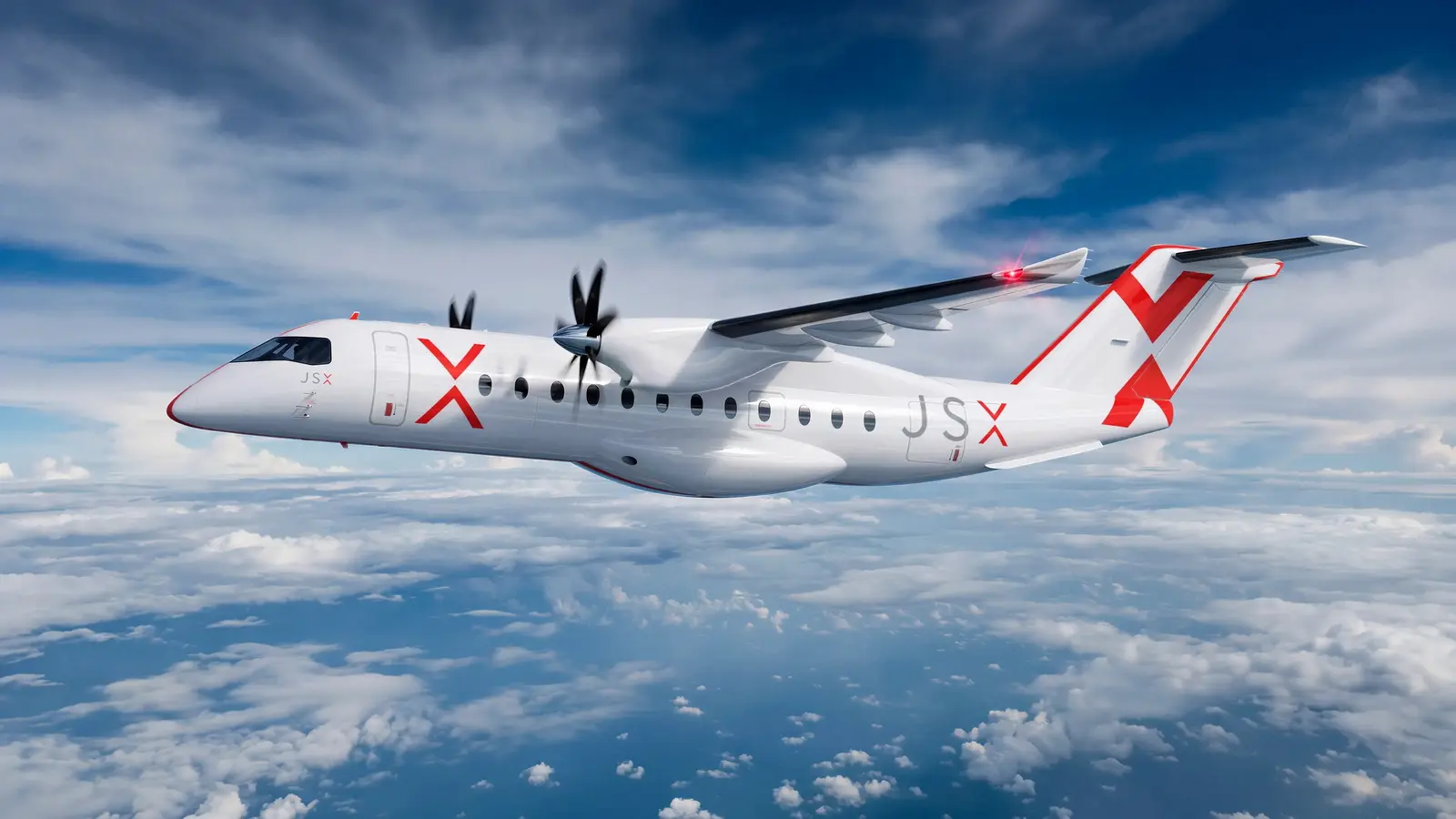
Heart Aerospace has revised its regional airliner project again, moving to a 36-seat hybrid-electric design the company calls the ES-36 and describing it as its first production aircraft. The announcement, made in September, follows earlier concepts for a 19-seat all-electric ES-19 and a 30-seat ES-30. Heart says the ES-36 carries six more passengers than the prior 30-seat concept and that a deposit-backed purchase agreement from U.S. regional carrier JSX covers 50 aircraft, with options for 50 more.
Design, capacity and operational claims
The ES-36 keeps the same maximum takeoff weight as the previous concept, a figure Heart has not disclosed, while increasing payload by 1,415 pounds (642 kg) — about 20 percent more than before. The airframe has been aerodynamically optimized for the higher passenger and cargo capacity, and the wingspan is now 95 feet (29 meters), 11 feet (3.3 meters) shorter than on the ES-30 concept.

Heart reduced the number of engine nacelles and propellers from four on the earlier concept to two on the ES-36. A nacelle is the housing that contains an engine or propulsion unit. The company says the simpler configuration should lower complexity and maintenance costs and expects at least 40 percent lower operating costs than existing aircraft, a claim Heart attributes to the new design.
Powertrain, range and charging
The ES-36 uses a twin series-hybrid powertrain. In this arrangement the propellers are driven by two electric motors, each rated at 1.65 megawatts, and each motor is paired with a megawatt-class turbogenerator. Heart says the turbogenerators are powered by commercial gas turbines of undisclosed make and act as range extenders by generating electricity to supplement the onboard batteries.
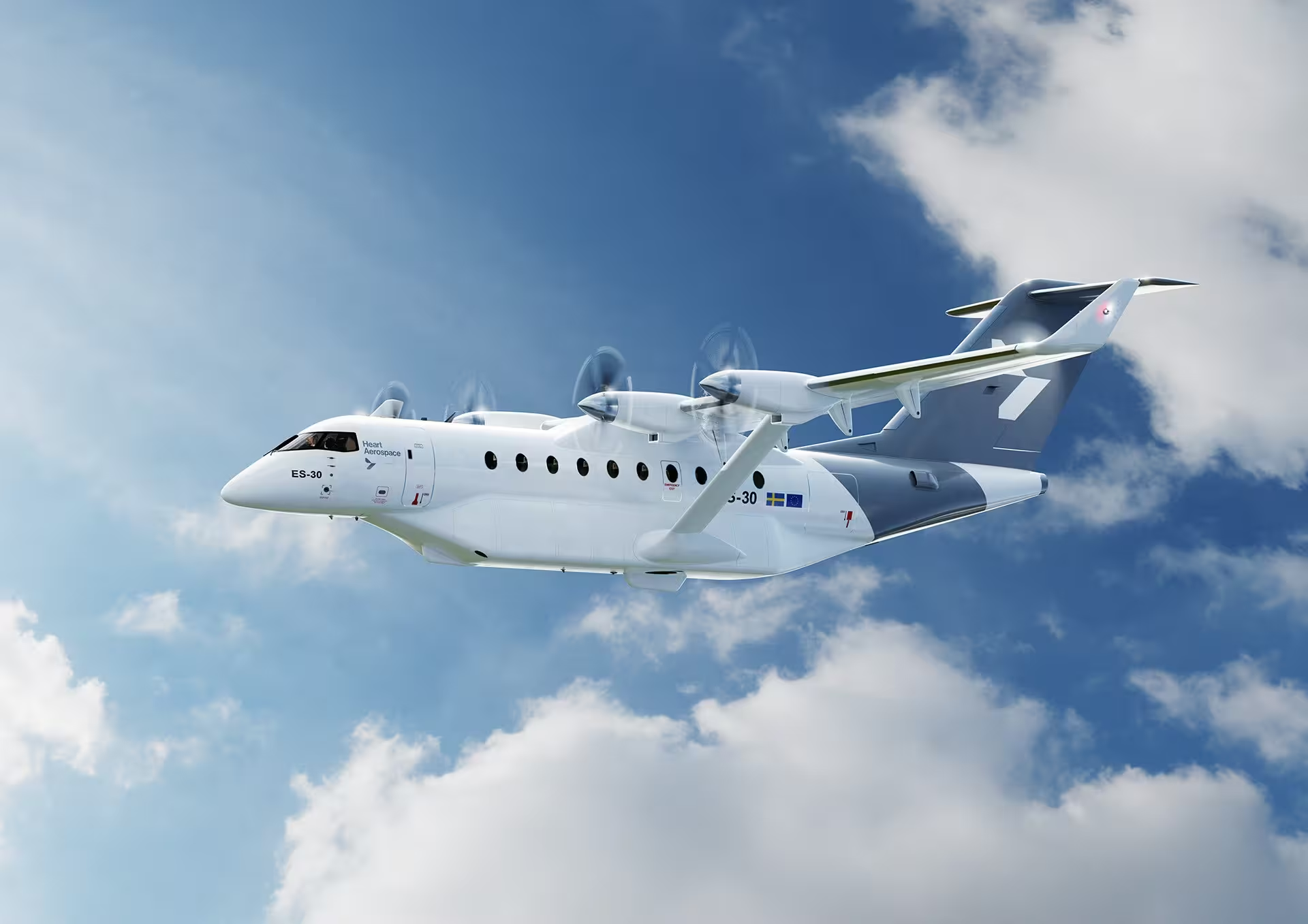
Heart states the batteries can only be charged on the ground and require about 30 minutes to reach capacity. The manufacturer gives an all-electric range of up to 125 miles (200 km) on battery power alone; when the turbogenerators operate as range extenders the range increases to 745 miles (1,200 km).
Heart credits lessons from its X1 full-scale demonstrator for the ES-36 revisions. The X1, which first flew in August, is described by the company as the largest battery-electric aircraft flown to date and the world’s first electric airliner prototype to take flight, and Heart says experience with that demonstrator informed the design changes now embodied in the ES-36.
It is too early to say where JSX will deploy any ES-36s. Heart and JSX note the type is aimed at short-haul corridors and cite examples in JSX’s network, including Santa Monica, Westchester County, Naples and Napa Valley, without committing to specific routes or basing plans.
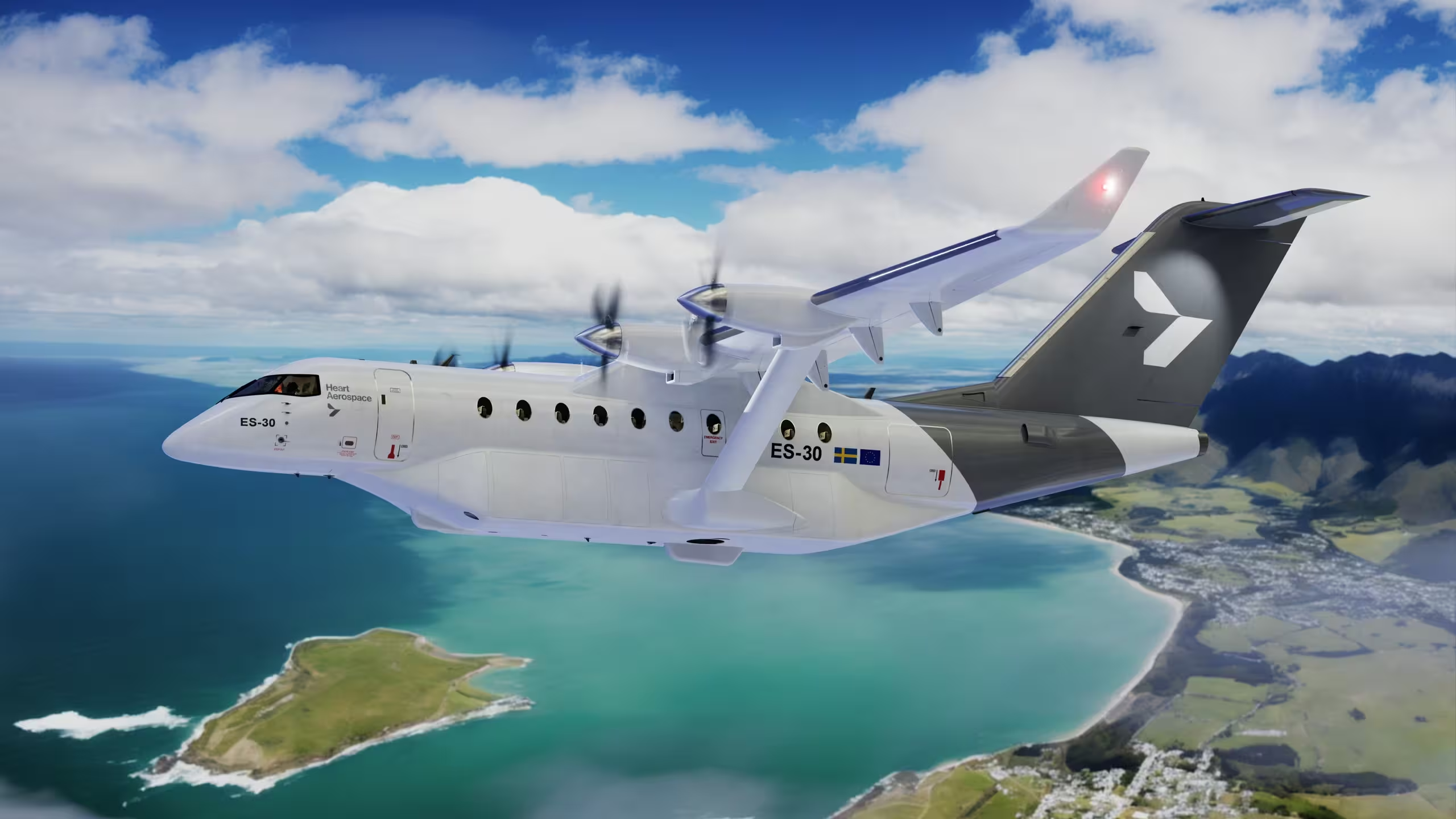
Heart says it is building the first ES-36 prototype at its Los Angeles facility and plans a first flight in the second half of 2028. The company will pursue FAA Part 25 certification, which covers passenger transport aircraft with ten or more seats, and says successful testing and certification would pave the way to commercial operations roughly three years later. Heart currently expects the ES-36 to enter service in 2031.
Heart says the ES-36 will offer at least 40 percent lower operating costs than existing regional aircraft.

“I cover automotive innovation, electric vehicles, and the future of mobility — where technology meets sustainability.”

Discussion
Leave a Comment
Comments (1)
Two props not four, 36 seats, 40% lower ops costs? Sounds promising but where's the battery tech details... 30 min charging seems optimistic. who makes those turbogenerators?