
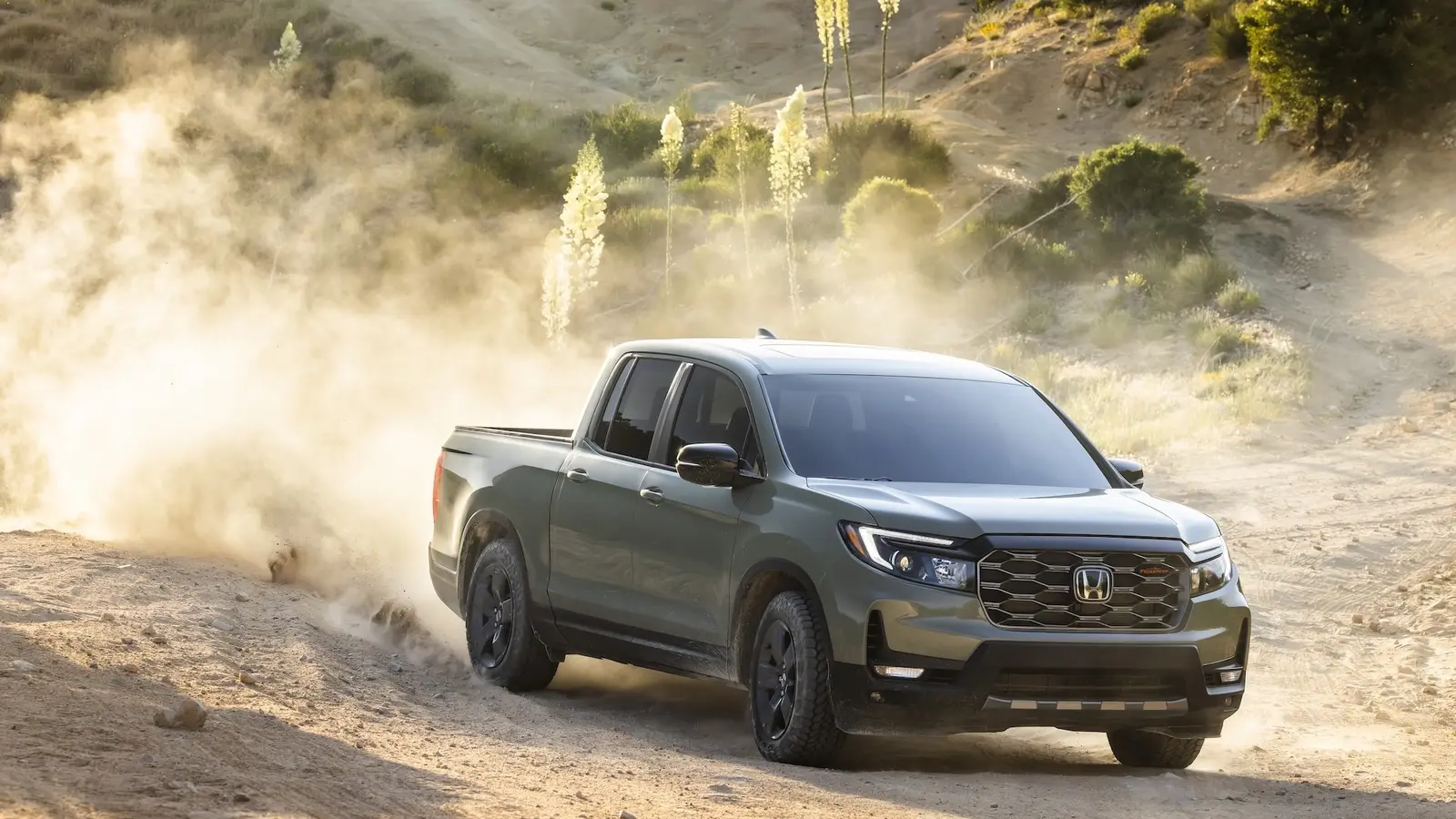
Imagine a Ridgeline that looks like it learned how to be a truck without losing its personality. That glimpse Honda teased recently felt like a promise: cleaner lines, an upright grille and headlights reduced to thin slashes—nothing flashy, but purposeful.
A stiffer stance, not a complete reinvention
The company has quietly confirmed development of a new-generation Ridgeline, with an official reveal slated for 2028. Production of the current model will pause later this year to clear the way for the redesign, and the next Ridgeline will be built at Honda's Alabama plant. That location matters; building domestically keeps the pickup clear of import tariffs and aligns it with the Passport, Pilot and Odyssey that roll off the same line.
Design duties are split between Honda's Southern California styling studio and the Auto Development Center in Ohio, a pairing that suggests the new Ridgeline will lean into ruggedness while retaining everyday usability. The teaser shows straight, angular surfaces and a flat hood—a more conventional approach that should broaden the truck's appeal without erasing what makes a Ridgeline a Ridgeline.

Styling cues appear to borrow from the Passport, keeping familiar proportions: a midsize footprint, a wide stance and a bed that balances utility with comfort. Will Honda change the packaging enough to alter interior space or payload? Probably not dramatically, but the details will matter for buyers who use their truck for both work and family life.
On the move, the current Ridgeline is powered by a 3.5-liter V6 producing 280 horsepower and 262 pound-feet of torque, which is about 355 newton-metres. Power flows through a nine-speed automatic and Honda's I-VTM4 all-wheel-drive system. Rumors point to a revised V6 for the new model and some form of electrification—hybridization seems likely rather than a full electric conversion—so expect better efficiency and possibly improved low-end torque for towing.

Teasers rarely show everything, but Honda's message is clear: tougher look, familiar practicality, smarter technology. If the company follows through on electronics and driver aids, the Ridgeline could stand out for offering near-luxury tech in a segment crowded with work-focused rivals.

Price will be a key plot point. Today the base Sport version of the Ridgeline starts at around €37,918 while the Black Edition Two-Tone sits near €44,517. Expect some upward movement when the new generation arrives to reflect added capability and tech, but Honda will need to keep value in focus to remain competitive against the Ford Ranger, Chevrolet Colorado, Toyota Tacoma and Nissan Frontier.
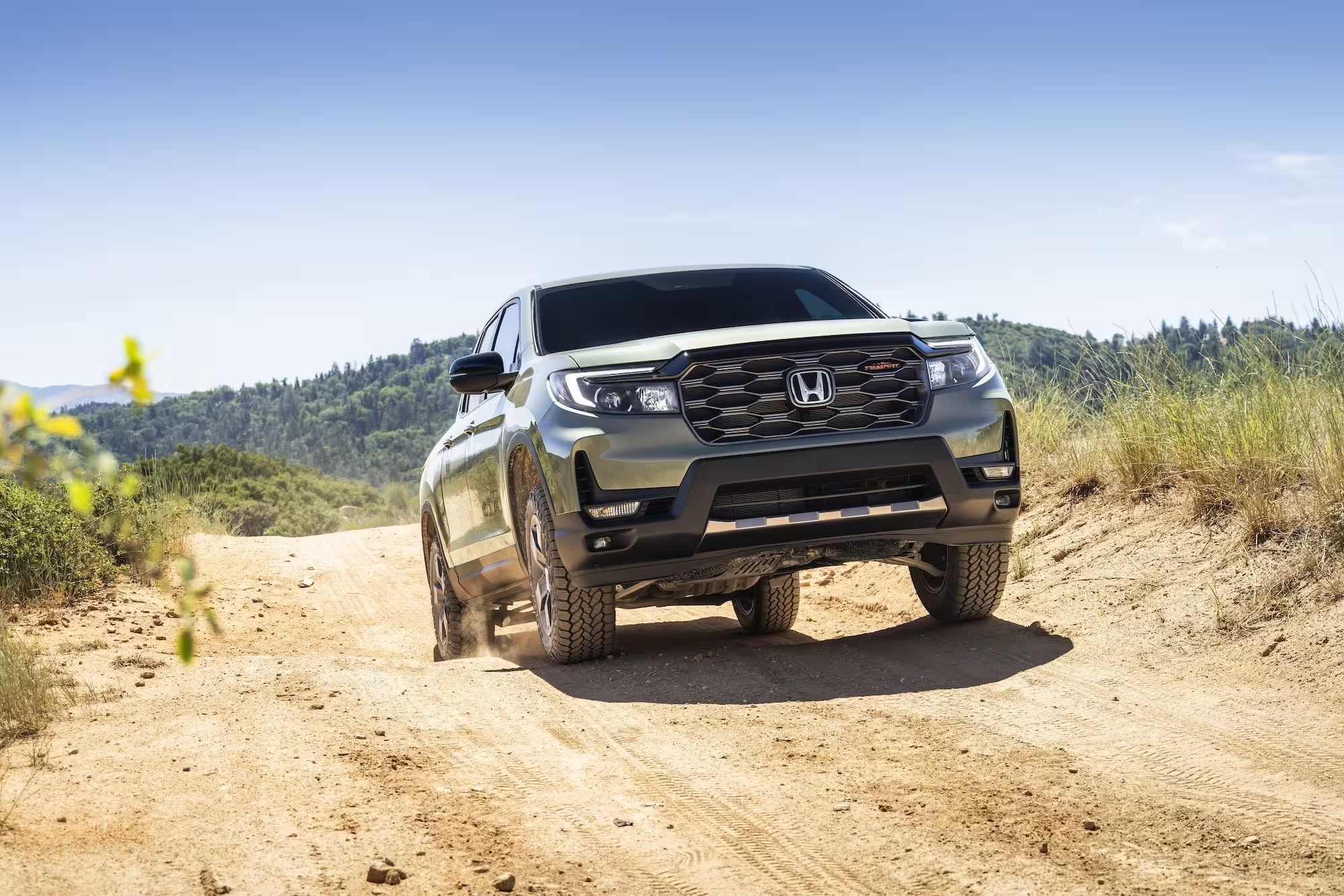
Production of the new model will not begin before 2028, so there is a gap to manage between the pause in current-generation manufacturing later this year and the start of the next chapter. In the meantime Honda has left just enough in the shadows to keep enthusiasts guessing, and enough clues to set realistic expectations.
Expect a smarter, tougher Ridgeline when it returns in 2028.

“I cover automotive innovation, electric vehicles, and the future of mobility — where technology meets sustainability.”

Discussion
Leave a Comment
Comments (2)
Pause production now, reveal in 2028? sounds risky. Price creep and only a mild hybrid? is that enough to compete, really?
Ooooh this looks meaner but still comfy? Honda actually kept the Ridgeline soul, nice. 2028 feels so far, gonna miss the current ones...