
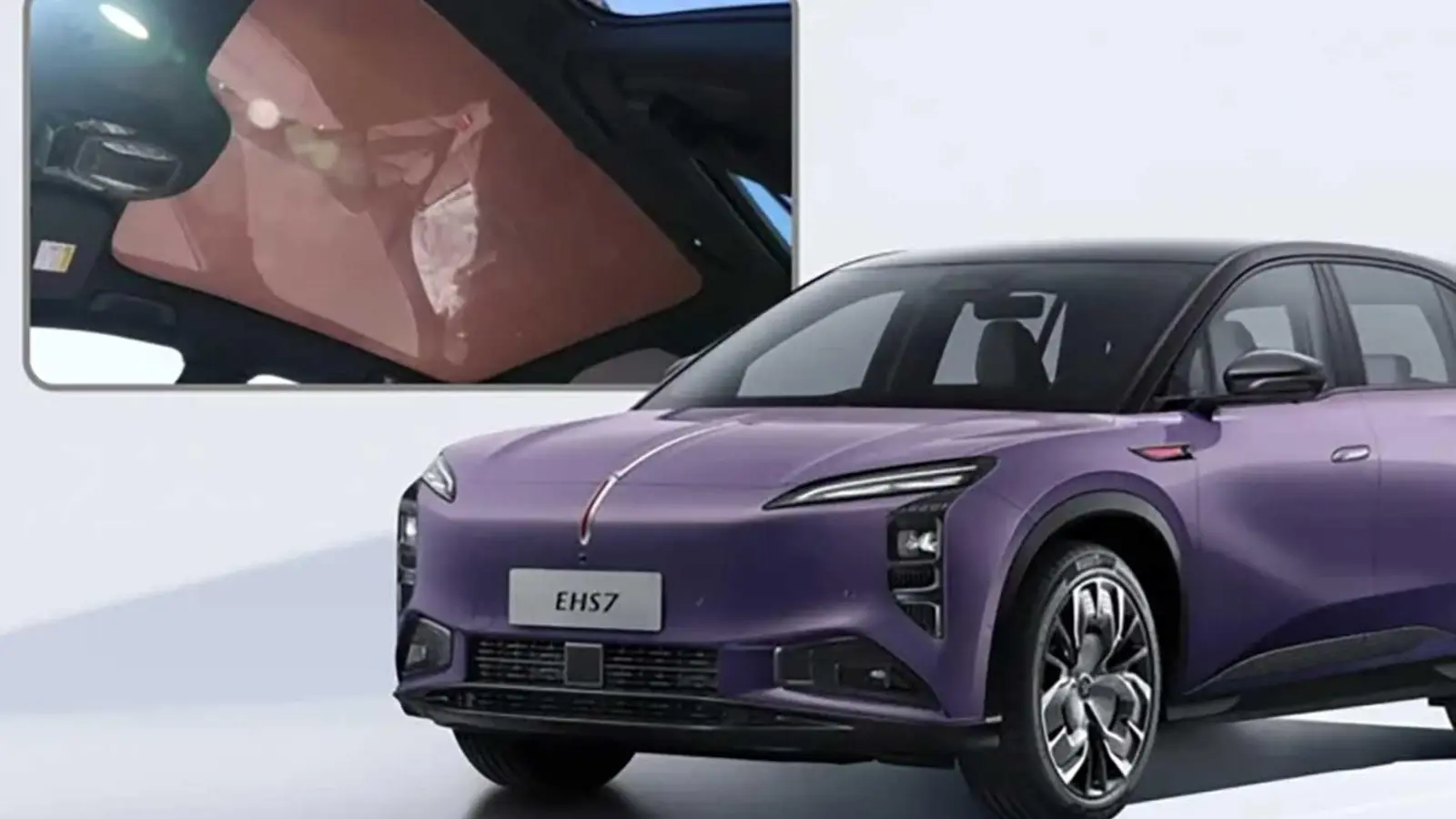
Leave it in the sun and the roof starts working like a quiet power plant. It sounds like a thought experiment, but Hongqi just unveiled a prototype that brings that idea dangerously close to reality.
The breakthrough is not just slapping panels on glass. Engineers embedded perovskite photovoltaic cells directly into a panoramic sunroof — a lightweight, thin, and flexible material family that sidesteps the brittleness and lower yield of traditional crystalline silicon. Perovskite cells can be made in different colors, manufactured cheaply, and convert sunlight to electricity with impressive efficiency.
How it performs on the road
Hongqi says the prototype produces about 300 watts in good sunlight and can generate roughly 400 kWh of clean energy per year. That’s enough to run low-voltage systems — cabin climate, a small fridge, infotainment — without touching the traction battery. The sunroof sits atop the brand’s EHS7 electric SUV, a roomy five-seater that measures 4,925 mm long, 1,950 mm wide and 1,680 mm tall, with a 339-horsepower powertrain and a stated range of 475 kilometers.

Perovskite isn’t magic. It’s fragile when exposed to water, oxygen and ultraviolet light, and glass roofs are curved, which complicates manufacturing and sealing. Hongqi’s R&D team says it has overcome those hurdles in the prototype, creating a durable laminated roofing system that protects the cells while preserving the sunroof’s transparency and form.
On a practical level, Hongqi believes adding photovoltaic elements to the hood as well could yield about 10 kWh per day — roughly enough to add up to 80 kilometers of range each day under ideal conditions. The company claims that level of generation would cover more than 85 percent of typical daily trips for Chinese drivers, though no commercial launch date has been announced.

Think of it as range insurance you don’t have to plug in. Small, steady charges from the roof and bonnet won’t replace a full charge, but they can clip daily energy needs and shave stops at chargers.
Hongqi is betting big on drivetrain and battery innovation. Reports say future models may adopt BYD’s ultra-fast charging tech that can move a battery from 10 to 97 percent in nine minutes, and the company is testing solid-state battery prototypes with an energy density around 380 Wh/kg. Meanwhile, Hongqi delivered 15,445 vehicles to Chinese customers in July 2026, evidence the brand still moves at scale.

Will a solar roof change the EV market? Not overnight. But if perovskite panels can be made reliably and at volume, integrated PV could become a low-cost way to boost everyday convenience, reduce charging frequency, and edge cars a little closer to being energy-positive over a lifetime.

“I cover automotive innovation, electric vehicles, and the future of mobility — where technology meets sustainability.”

Discussion
Leave a Comment
Comments
No comments yet. Be the first.