
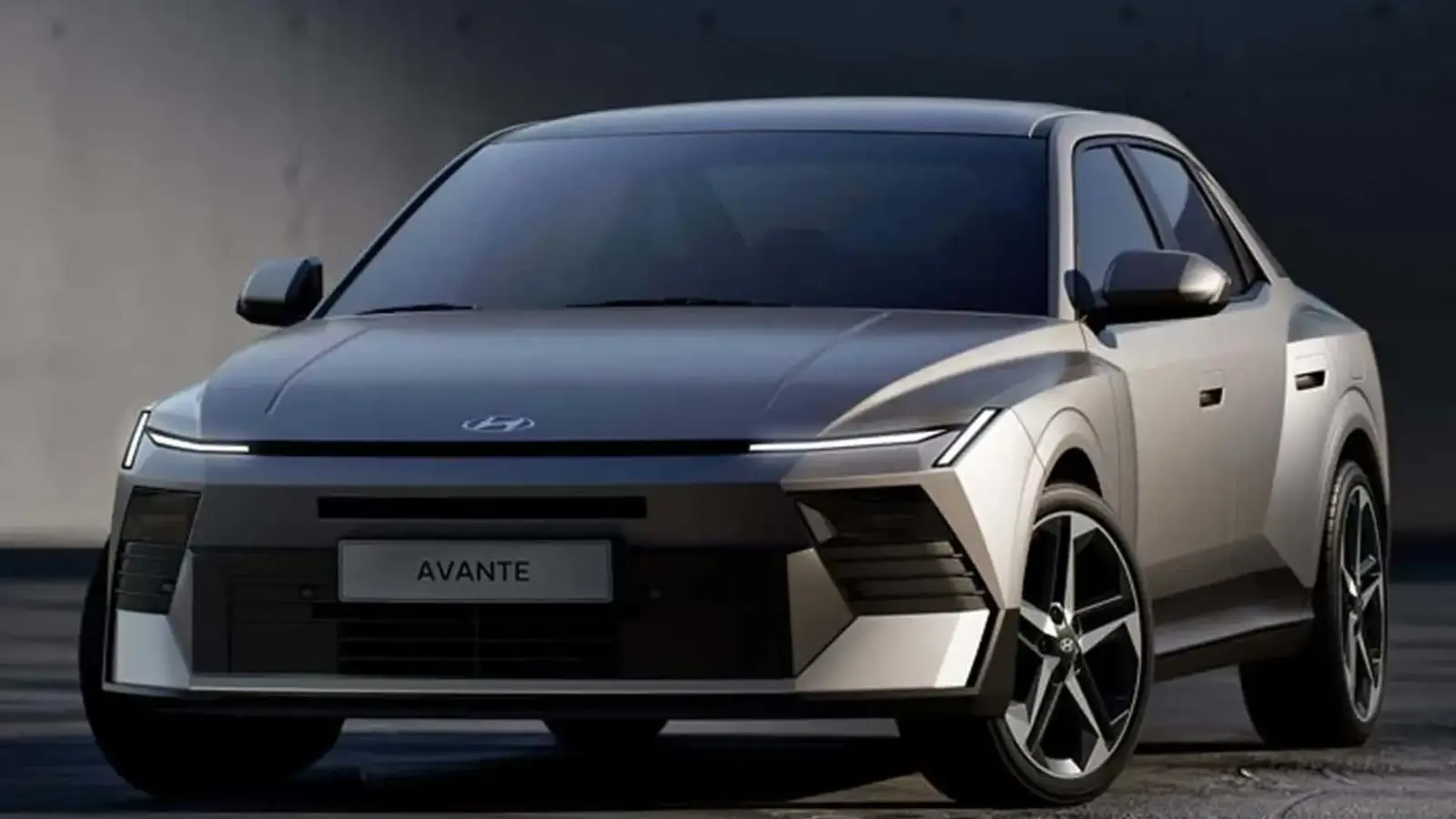
You walk into the Busan Motor Show and the new Elantra stops you in your tracks. It looks familiar and utterly unlike the car it replaces. Sharp creases, a pronounced ducktail, and H-shaped lights give the eighth-generation Elantra a sharper, almost sculptural silhouette that reads more like a compact executive than a compact sedan.
Art of Steel on the outside, roomier on the inside
Hyundai's latest design language, dubbed Art of Steel, favors hard edges and angled surfaces. The result: a bolder face, a stretched profile thanks to a small rear-quarter window, and two-tone 18-inch wheels with a five-spoke motif that suit the new lines. Length grows by 55 millimeters to 4,765 millimeters, the wheelbase is 30 millimeters longer, and the car sits 30 millimeters wider while measuring 1,425 millimeters tall. In everyday terms, the Elantra now edges into the space once occupied by midsize sedans like the Sonata.

Those dimensional gains aren't just for the spec sheet. Rear-seat legroom improves noticeably. The cabin feels less cramped. You notice it the moment you sit down.
Inside: soft surfaces, big screens, and a cleaner console
Step inside and Hyundai aims to outclass the segment. The dashboard uses soft, cushion-like patterns across the passenger side that suggest a more premium car. Ambient lighting traces the dash and door panels, adding a modern, lived-in glow. Opposite the driver sits a compact horizontal digital instrument cluster, while the centerpiece is Hyundai's new Pleos infotainment system built on Android.

Pleos comes standard with a 12.9-inch touchscreen; buyers can option up to a 14.6-inch unit. Crucially, Hyundai retains a row of physical controls beneath the screen for core functions, and the steering wheel no longer carries the old emblem — it now features four dots referencing the Morse code for H. Moving the shifter to behind the wheel frees the center console, which now hosts two wireless charging pads and cleaner storage solutions.

If you prize practical tech, there's a neat trick here: the Elantra's latest regen-braking tech pairs with a feature called Stay Mode, which lets occupants run climate and infotainment systems from the battery while the car is stopped — a convenience previously reserved mostly for battery-electric models.
Under the skin, Hyundai offers a naturally aspirated 2.0-liter four-cylinder for the Korean market that develops 147 horsepower, up by 25 compared with the previous generation. The sharper-sounding candidate is a 1.6-liter hybrid that produces 155 horsepower and benefits from the updated energy recovery and efficiency tech.

Expect sales to begin in South Korea in the third quarter of this year, with global deliveries slated for 2027. For buyers who wanted a conventional compact sedan but wished it felt larger and smarter, Hyundai has answers. The Elantra's transformation is no small refresh — it's a deliberate step toward a new design era.

“Cars are evolving faster than ever. I cover electric vehicles, smart mobility, and the future of transportation worldwide.”

Discussion
Leave a Comment
Comments (2)
nice move into near-midsize territory, but is this still a true compact? ducktail feels try-hard, practical tech tho
Wow the Elantra actually stopped me at the show, looks way more premium than I expected. H-shaped lights are kinda odd, but rear legroom gains sound legit. If that's real then…