
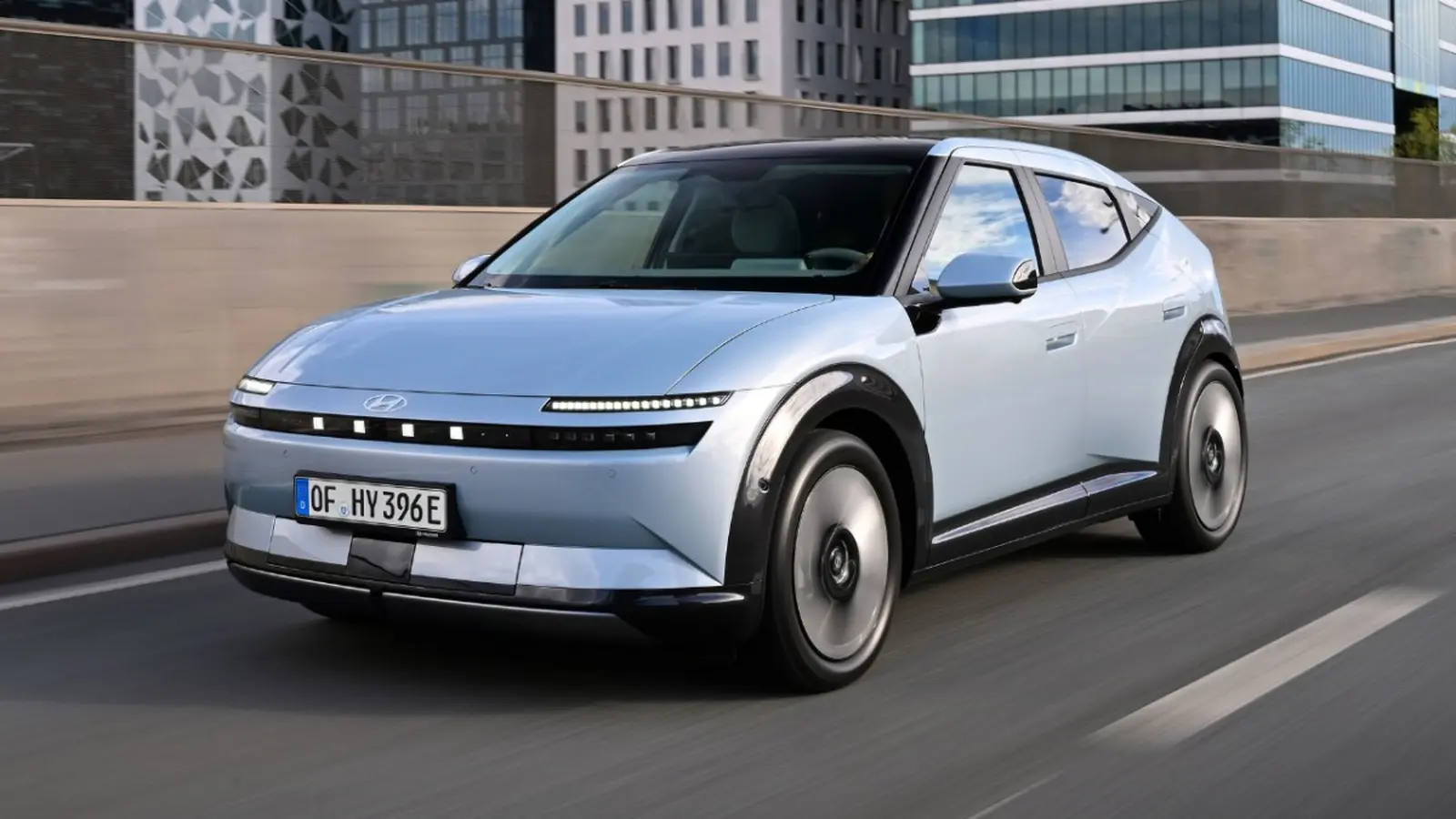
Walk up to the Ioniq 3 and it won’t glare at you. It will nod, almost politely. Gone is the track-ready bravado of the N Line reveal. In its place sits a compact electric hatch that seems designed for everyday life rather than headline-grabbing speed runs.
Less flash, more sense
Hyundai calls this an Aero Hatch, a name that hints at a mash-up of classic hatchback proportions, a fastback roofline and a slightly raised stance. Look closely and you see the thinking: the aggressive black intakes of the sporty variant are replaced by smoother surfaces and an active air intake system that opens only when cooling is needed. The lighting signature remains, with separate LED headlamps and a four-dot motif set into a slim front grille. It’s tidy. It’s deliberate.

Sidelined gloss black mirrors? Swapped for body-coloured ones. Wheels now range from 16 to 18 inches, stepping down from the N Line’s 19s. At the rear there’s a smaller roof spoiler sitting above a double-layer rear glass and a cleaner bumper with a subtle diffuser. Designers removed the sharp aerodynamic fins, and the result is a calmer silhouette that will appeal to mainstream buyers.
Inside, the switch from race-inspired tones to a lighter, airier palette is immediate. The cabin aims for comfort rather than theatre. Materials feel well judged, soft to the touch in the places that matter, and the layout prioritises usability. Long drives, short trips, family school runs: the Ioniq 3 looks ready for them all.
Under the skin sits a 400 volt iteration of Hyundai’s modular E-GMP platform, the same basic architecture used by sibling models from Kia. Engineers tuned chassis, suspension and power delivery for European roads and charging networks rather than for track days. That’s a small but crucial detail. It tells you who this car is for.

Tech gets an obvious upgrade. The Ioniq 3 is the first Hyundai in Europe to ship with Pleos Connect, an Android-based infotainment platform previously seen in the updated Grandeur. Depending on trim, buyers choose between a 12.9 inch and a 14.6 inch centre touchscreen, with an optional slim digital instrument display behind the wheel. An app store opens at launch with around 30 third-party apps and will expand over time. Voice control is handled by Gleo AI, and yes, it talks to you like a modern assistant should.
For those who want the numbers: Hyundai will offer two single-motor variants at launch. The standard model pairs a 42.2 kWh battery with a 108 kW electric motor, delivering an official WLTP range of 344 km. The Long Range version ups the battery to 61 kWh and pushes range to 496 km, but pairs that pack with a slightly gentler 100 kW motor to squeeze the most distance from each charge. In short: one model favours a bit more pep, the other favours efficiency and range.
- Battery options: 42.2 kWh and 61 kWh
- Power: 108 kW standard, 100 kW long range
- Official range: 344 km and 496 km (WLTP)
- Wheel sizes: 16 to 18 inches

Hyundai hasn’t published European pricing yet. Production will start at the Izmit plant in Turkey and customer deliveries are expected during the third quarter of 2026. And if you were hoping for a full-bore, dual-motor N variant with unique chassis bits, don’t write it off; Hyundai hasn’t closed that door.
So what does the Ioniq 3 mean for the market? It strips away theatrics and focuses on what most EV buyers actually ask for: sensible range, comfortable packaging and modern software that grows over time. It’s not flashy. That’s the point.

“Cars are evolving faster than ever. I cover electric vehicles, smart mobility, and the future of transportation worldwide.”

Discussion
Leave a Comment
Comments (2)
Is the 42.2 kWh version really enough for daily life? 344 km WLTP sounds ok but real world.. hill climbs, heating? price will decide
Wow, Hyundai went practical not flashy — kinda refreshing. 496 km range on the long pack? nice. Still curious about charging speeds, price tho...