
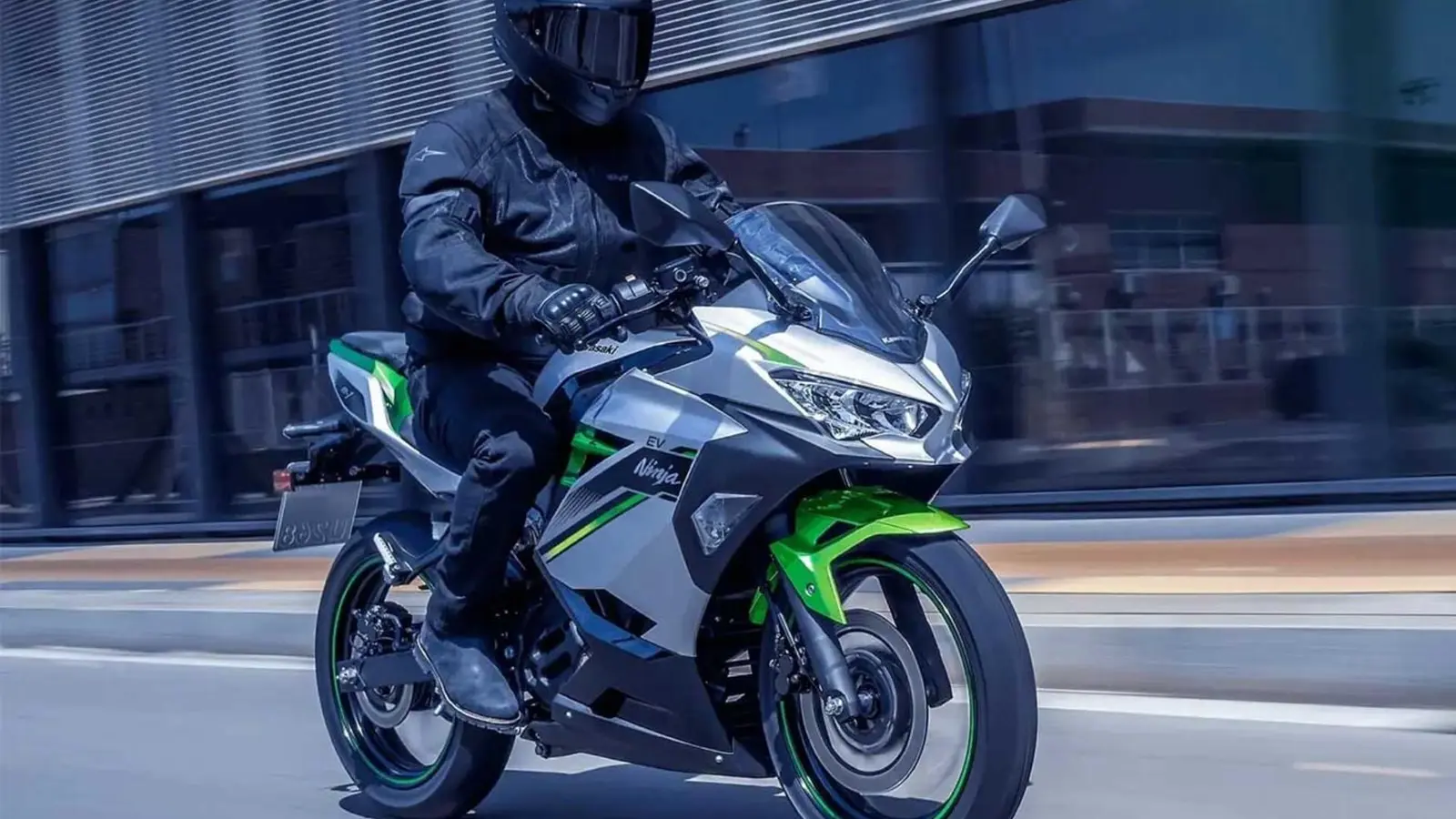
Imagine a young rider rolling up to a city curb: lightweight helmet, eager grin, and a brand-new Kawasaki badge on a compact electric bike. It looks the part—sporty fairing, tidy lines, and the promise of silent, fuss-free commuting. Then the owner glances at the spec sheet and the smile fades.
The Ninja e-1 lands as Kawasaki’s entry-level electric for 2027, offered with ABS and a removable battery. Price? About €7,341. Peak output is modest: roughly 12 horsepower for a brief burst, but the normal delivery sits closer to 7 horsepower, with the high-power e-Boost limited to a 15-second window. Range is equally modest: Kawasaki rates it at around 66 kilometers, and that figure assumes you ride in ECO mode and skip the boost.

Where the math fails
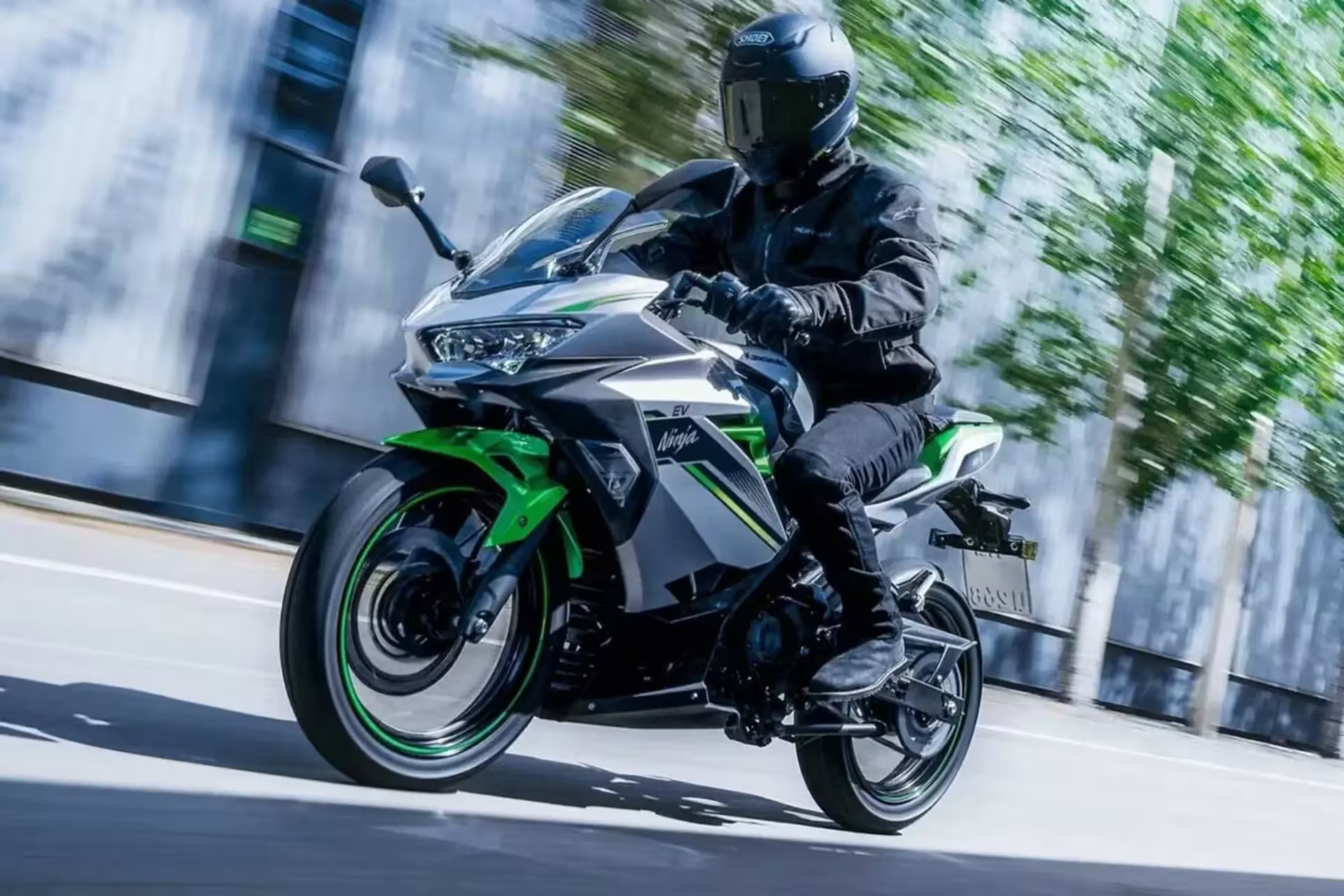
In Europe the story is different. Strict license tiers funnel many new riders toward low-power machines, and the Ninja e-1 was clearly designed to fit A1 rules. It’s quiet, simple, and easy to live with in a dense city. For apartment dwellers the removable batteries are a nice touch: you can carry them upstairs and recharge in about 3.7 hours rather than rely on a dedicated parking outlet. The bike weighs roughly 140 kilograms and includes a walk-assist mode to nudge it around tight spaces, which matters in urban garages.

But cross the Atlantic and logic shifts. In the United States there isn’t a matching power cap on novice riders, and a first-time buyer can choose small-capacity petrol bikes that blow the Ninja e-1 out of the water on price, performance, and range. Kawasaki’s own internal combustion portfolio highlights the problem: the Ninja 300 with ABS lists for about €4,649 and puts out roughly 39 horsepower, the Ninja 500 with ABS is about €5,393 for 51 horsepower, and the Ninja 650 sits near €7,615 with 67 horsepower (or about €7,067 without ABS). Each petrol model will travel at least 275 kilometers on a tank of fuel—far more than the e-1’s quoted urban range.
For most buyers outside Europe’s strict licensing bands, the Ninja e-1 is a tough sell.
That said, the e-1 isn’t without merit. It strips motorcycling to its essentials: twist the throttle, brake, steer. No clutch, no gearbox, no engine noise. For commuters who prize silence, low maintenance and easy charging, it ticks boxes that a tiny petrol bike cannot. The removable battery makes apartment ownership feasible. The minimal controls and light curb weight create a forgiving learning platform for absolute beginners who must, by law, ride a low-power machine.

Ultimately Kawasaki seems to be hedging a bet: the Ninja e-1 won’t convert the masses, but it could carve out a small niche of urban riders who value convenience and the aesthetic of a familiar sportbike silhouette without the fuss of an internal combustion engine. If you live where licenses limit power and you prioritize quiet, compact mobility, the e-1 makes sense. If you live where choice is wider and value and range matter more, there are far stronger alternatives for less money.

“Cars are evolving faster than ever. I cover electric vehicles, smart mobility, and the future of transportation worldwide.”

Discussion
Leave a Comment
Comments (2)
Quick note: I lug batteries up stairs daily, removable pack is clutch. The e-1 would work for my city runs, still wish it had more range tho
So Kawasaki built a Ninja just for A1? In the US this makes little sense, overpriced, low range. No clutch is neat, but who buys it if...