
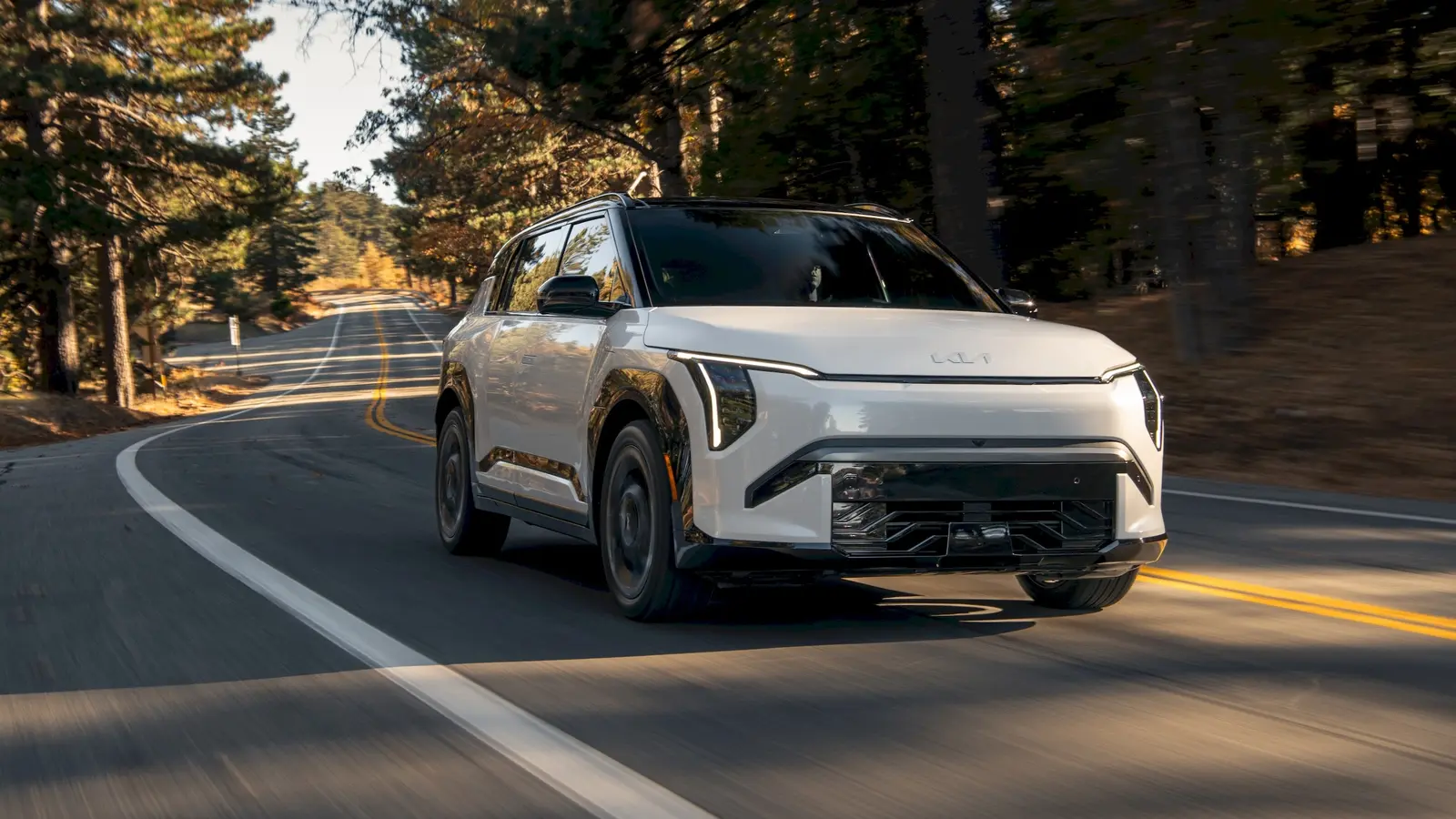
Machines already running. Workers training on new tooling. A compact crossover that has turned into a quiet commercial success is about to change where Kia builds its electric future.
Kia has confirmed an investment of about €600 million to adapt its Pesqueria assembly plant in Nuevo Leon, Mexico, for production of the all-new EV3. The company says series production will begin on August 4, 2026, marking one of the largest battery-electric vehicle investments announced in Mexico this year.

Pesqueria, turned up a notch
The plant is not new to volume work. It churns out as many as 300,000 vehicles a year and has handled a steady stream of high-volume models and exports for markets across the Americas. Instead of building a greenfield factory, Kia is retooling an existing line. That choice keeps capital costs lower and lets the company lean on established supplier relationships in the region.
At launch, about 27 percent of EV3 components are expected to be sourced locally, meaning many parts will still come from South Korea while the Mexican supply chain ramps up. That phased approach eases risk and shortens the time to full production.

Short sentences. Clear logic. Kia is practical. Flexible production lines have long been central to its global manufacturing playbook. The automaker values factories that can switch between conventional, hybrid and battery-electric assembly without losing pace.
Initial output will prioritize the Mexican market, where BEV penetration remains relatively small. Government leaders framed the investment as a push to widen local EV access while strengthening industry jobs. Kia expects the new line to create roughly 500 direct jobs in 2026, with another 1,500 added through 2030 as capacity grows and the supplier base expands.

Exports first, then scale
Think beyond Mexico. The EV3 will anchor Kia’s broader rollout across Latin America and feed into North American plans as demand climbs. Prototypes have already been built at Pesqueria to smooth the production ramp. Exports are a key part of the business case, not a backup plan.
Why Mexico? Competitive labor costs and a mature supplier network are part of the answer. So is geography. Proximity to major markets shortens logistics and strengthens the case for regional manufacturing hubs.
There is risk. Local sourcing will need to deepen quickly to lower costs and protect margins. Yet the strategy is sensible: adapt an existing footprint, use phased localization, and keep the plant versatile enough for future models.

Kia is positioning Pesqueria as a strategic BEV hub for the Americas, not just another assembly line.
For buyers and regional dealers, the move should mean better availability of Kia’s newest electric model and a clearer path for more competitively priced BEVs in markets that have lagged behind Europe and parts of Asia.
In short: a familiar factory gets a new job. The EV3 brings fresh technology and global ambitions to a place that already knows how to make cars at scale.

“Cars are evolving faster than ever. I cover electric vehicles, smart mobility, and the future of transportation worldwide.”

Discussion
Leave a Comment
Comments
No comments yet. Be the first.