
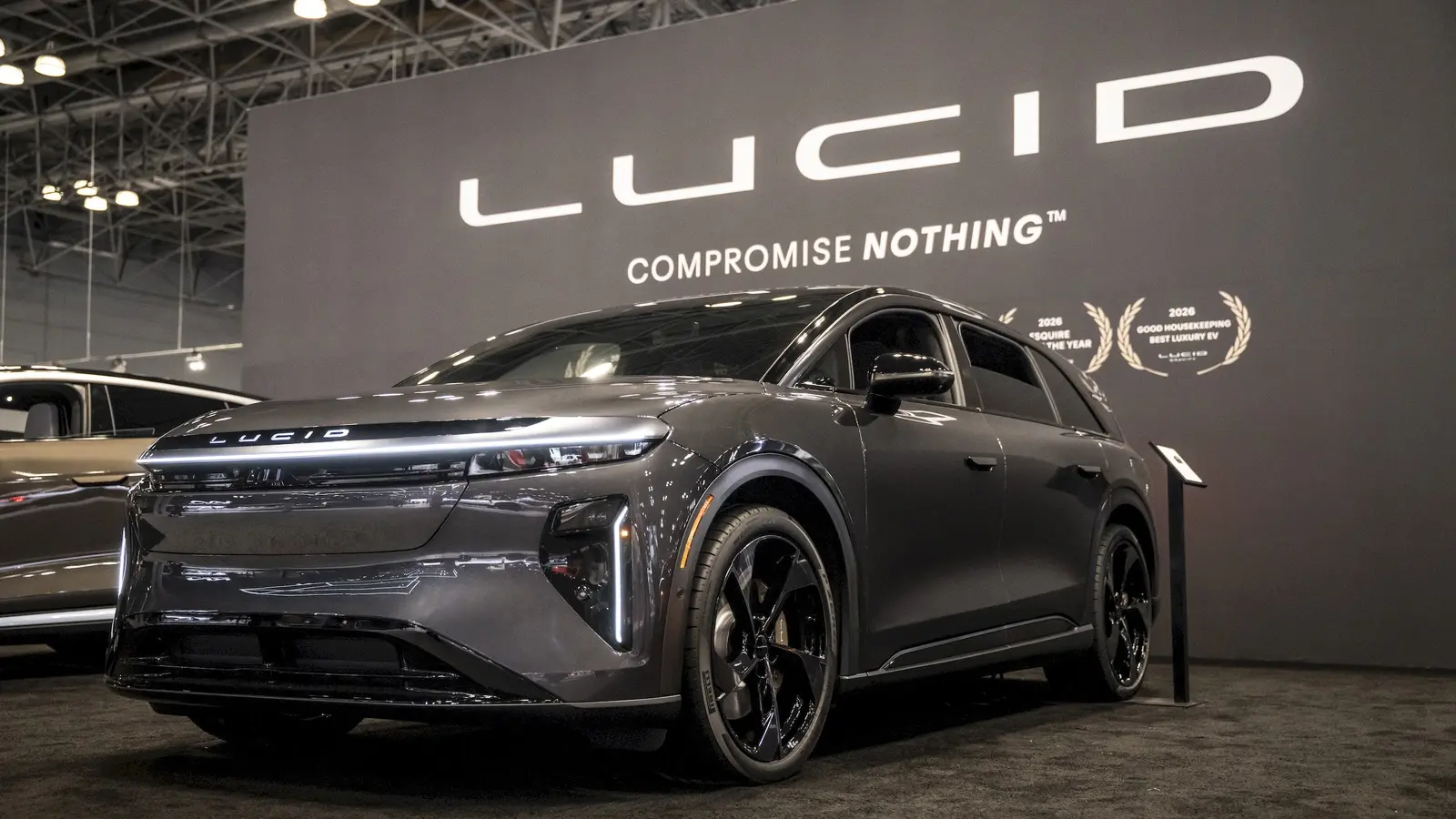
The lights at Lucid's Casa Grande plant have dimmed in a way that feels decisive. Not symbolic—decisive. Management has notified employees that a second shift will be eliminated and, across the United States, nearly one in five roles are gone. The number on the layoff notice is stark: 18 percent of Lucid's US workforce.
That move follows a smaller round in February, when the startup trimmed about 12 percent of staff. This time, the reductions are catalogued in a Form 8-K filed with the SEC and include cuts tied to the AMP-1 production line. Production and sales tell the rest of the story: Lucid built roughly 5,500 cars in a recent quarter but sold just over 3,000. Inventory swelled. Cash vanished.
How fast did it disappear? Lucid reported a cash burn of about €1.30 billion in the quarter, leaving the company with a runway measured in only a couple of quarters. Short-term survival now hinges on cost savings and on whether the coming models can actually sell in a brutal market.

Cosmos: the gamble on affordable demand
Enter the Cosmos: a compact crossover positioned as Lucid's lower-cost lifeline. Expected to start around €46,500, the model targets shoppers who might otherwise choose a Tesla Model Y or newer entries like Rivian's R2. If the Cosmos hits its marks on price, quality and timing, it could change the balance sheet. If it slips, investors will grow increasingly impatient.
There are questions about how these layoffs affect the Cosmos program, and whether Lucid will keep investing in its autonomous partnerships with companies such as Uber and Nuro. The public filings are blunt but not exhaustive; they show cost cuts projected to save roughly €147 million a year. That's meaningful. It is probably not enough.
The company projects annual savings of about €147 million from this round of cuts, but those savings must stretch against heavy capital needs to launch new, cheaper models.
People are leaving. Senior engineering talent has departed recently, including the SVP of Engineering and Software. Leadership shuffled, too: Silvio Napoli, a new CEO from outside the auto world, is now steering the ship. The interim CEO who followed Peter Rawlinson, Marc Winterhoff, was also shown the door as the COO role itself was eliminated in this round.

Investors and analysts are watching closely. EV startups have fallen in a line over the past few years—some collapsed after burning through cash faster than they could find buyers. Lucid sits among the most watched names, alongside Rivian, as the market weeds out companies that cannot match production with demand or extend their cash runway.
There are no easy wins here. Cutting shifts and cutting overhead buys time, not certainty. Bringing a competitive, cheaper SUV to market requires capital for tooling, marketing and scale. Buyers are picky, competition is fierce, and one misstep in the ramp-up could force a restructuring under Chapter 11.
For now, Lucid is trying to buy itself a shot at survival. The next quarters will be brutally revealing: can Cosmos attract buyers quickly enough to swamp the inventory and steady the cash flow? Or will investor patience run dry first? Either outcome will reshape the startup landscape for premium electric brands.

“Cars are evolving faster than ever. I cover electric vehicles, smart mobility, and the future of transportation worldwide.”

Discussion
Leave a Comment
Comments (2)
Is Cosmos going to save them? 147m saved sounds tiny vs tooling costs, feels risky, hmm.
wow, that reads like the slow death of a dream. Cosmos gotta be nailed on price and timing, otherwise ouch. staff cuts suck