
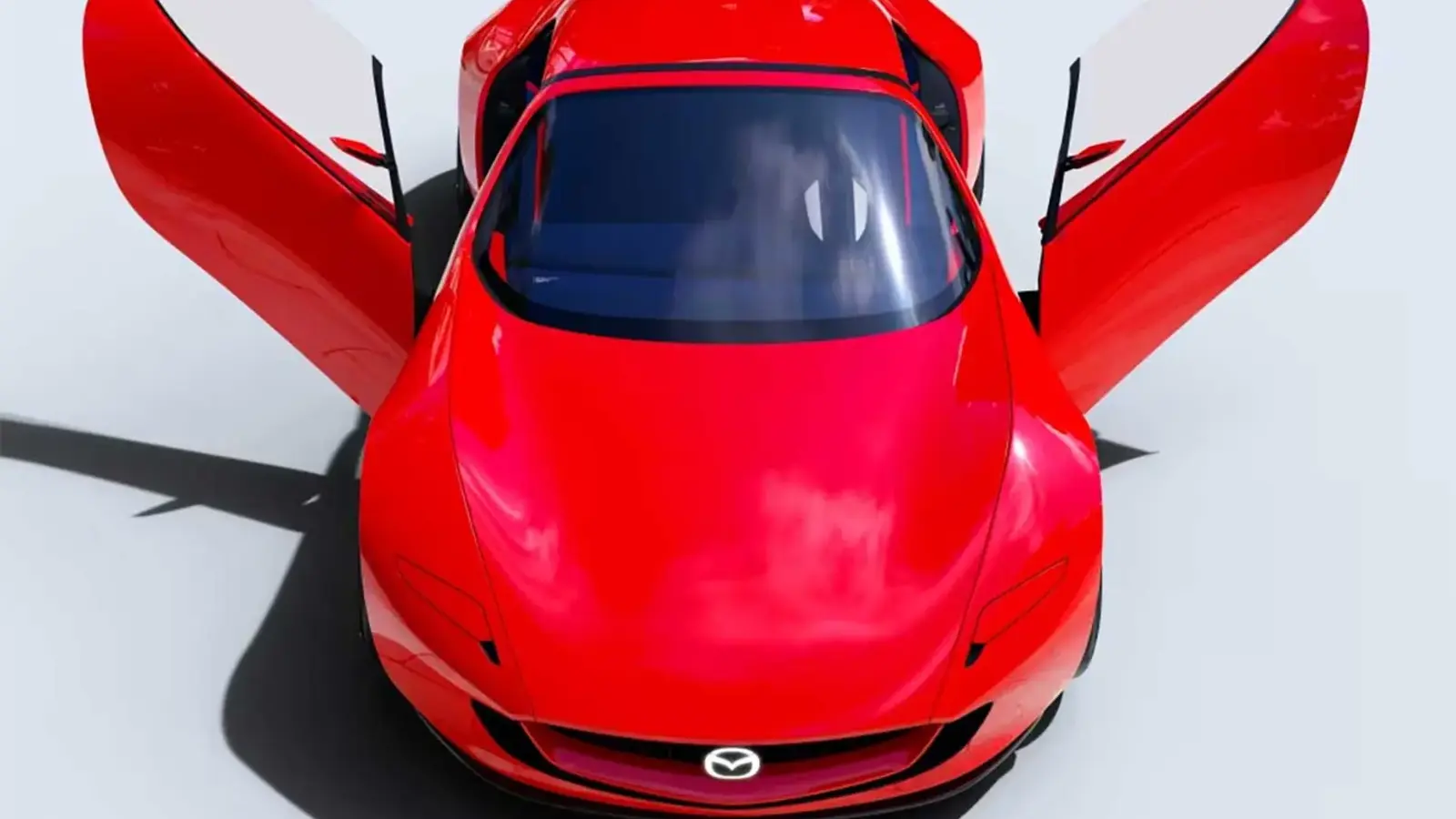
Close your eyes and picture a tiny roadster with its top down and a pair of butterfly doors opening like a stage curtain. Odd pairing? Yes. Exciting? Absolutely.
The patents that stirred the rumor mill
New patent filings from Mazda sketch a compact, front-engine, rear-wheel-drive convertible that borrows a theatrical touch — butterfly doors. The documents stop short of naming a model, but the drawings are detailed enough to spark immediate speculation: is this the spiritual successor to past Mazda sports icons, or something else entirely?
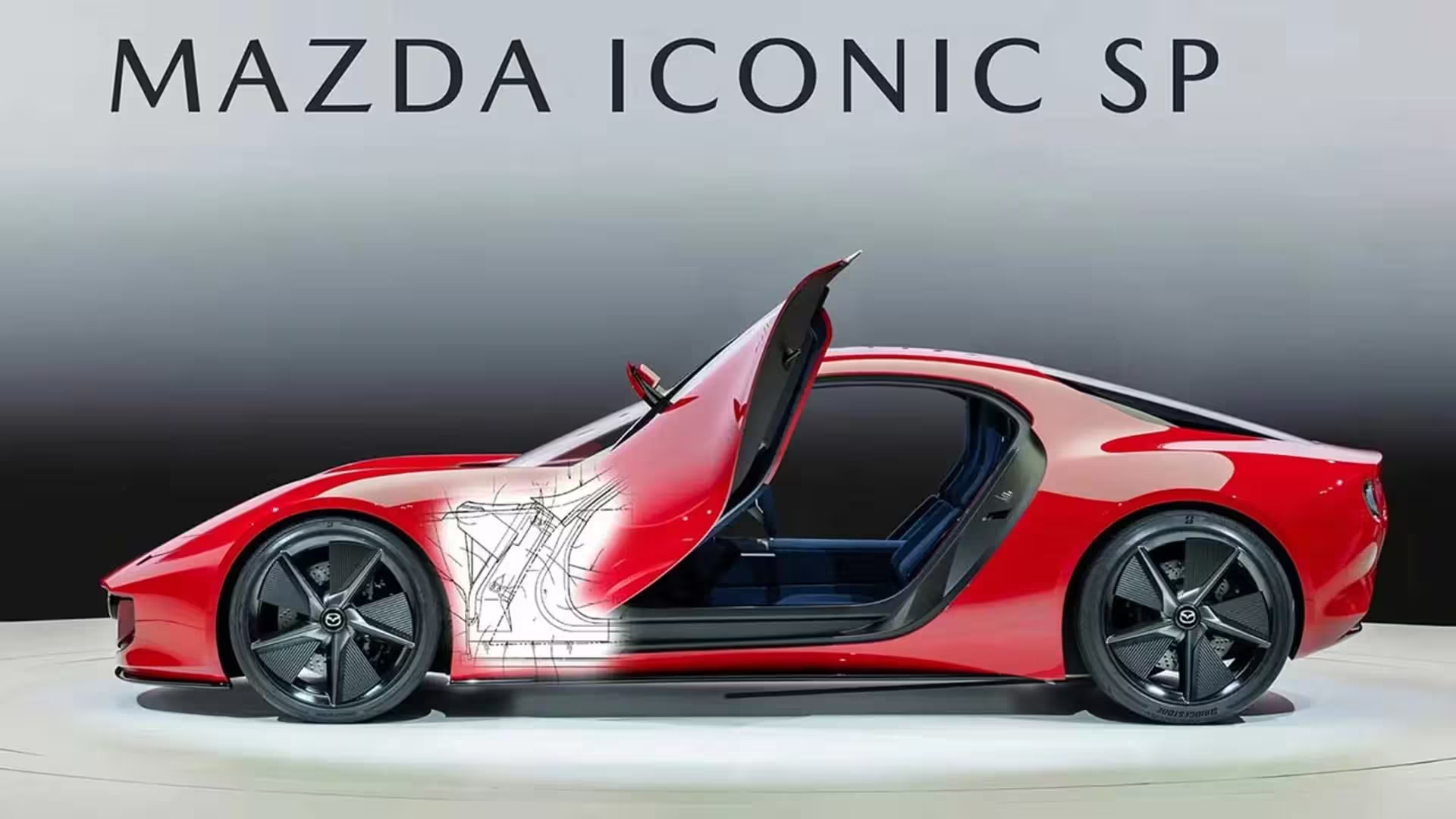
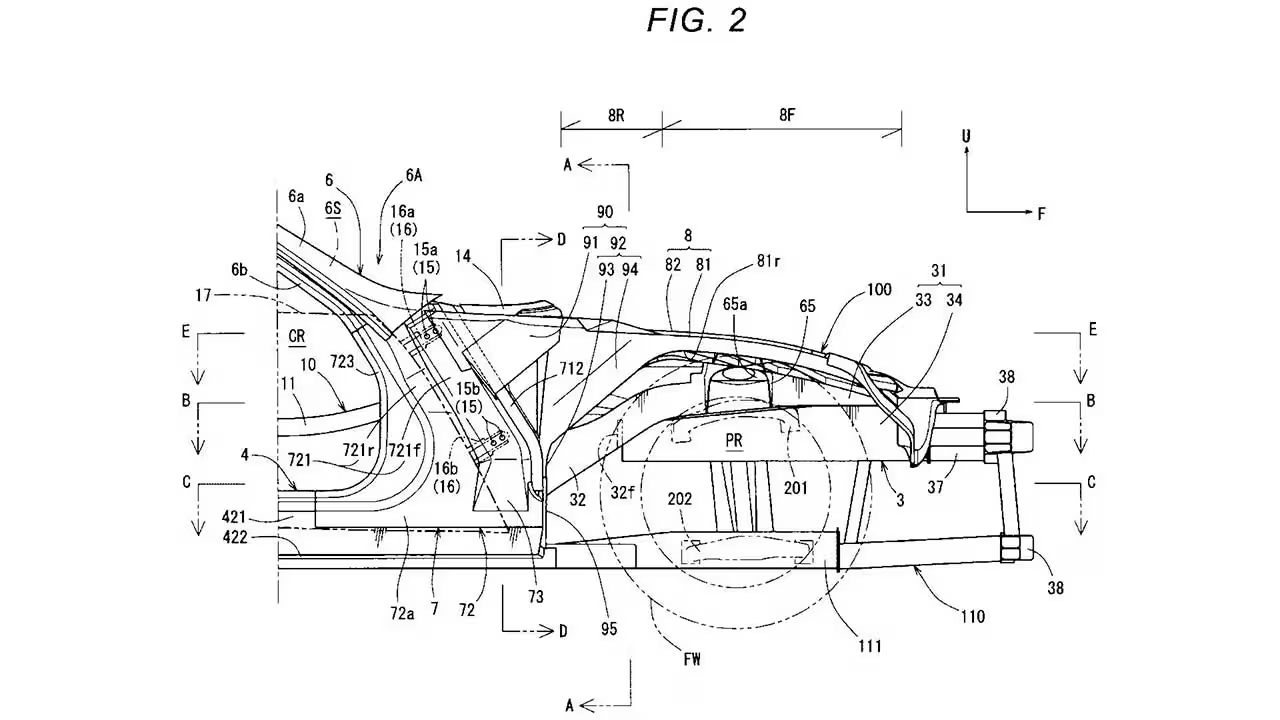
The drawings reveal a longitudinally mounted four-cylinder engine feeding a traditional transmission tunnel. Engineers also show how the door hinges might work on a soft-top car by reinforcing the A-pillars and routing suspension loads through braces that tie back into those stronger members. In plain terms, Mazda appears to have solved how to keep chassis stiffness high while giving the cabin a dramatic entry.
Mazda’s patents point to a four-cylinder, front-engine, rear-wheel-drive convertible with butterfly doors — not the rotary-powered machine some fans expected.
There’s more than showmanship in these pages. A separate patent focuses on crash-energy paths: how impact forces are steered through the firewall, the sills, and rear structure to better protect occupants. That level of structural thinking suggests a production-intent design, not just a styling exercise.

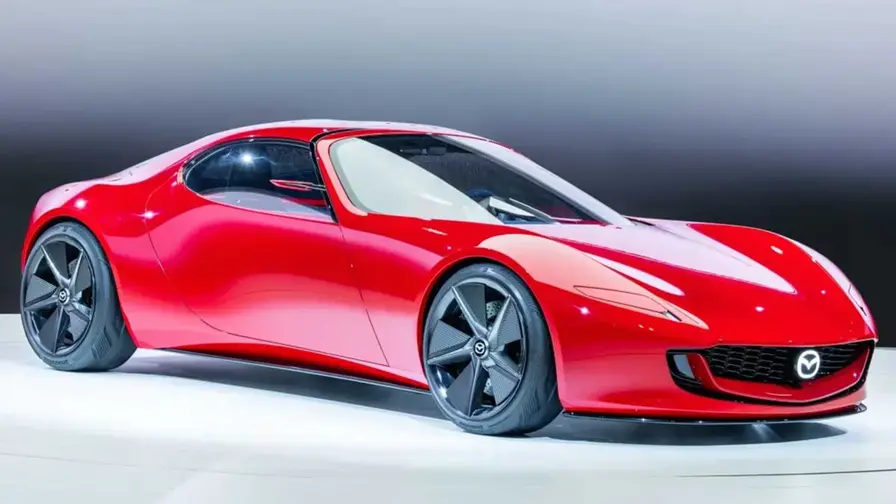
So where does this leave Mazda’s celebrated concepts and beloved small roadsters? The company has publicly said it plans a new-generation MX-5 that keeps the brand’s lightweight, driver-focused philosophy. And there’s the Iconic SP concept: a dramatic two-seat design originally shown with a rotary-style powertrain in a range-extending setup.
These patents create a tangle of possibilities. Will the next MX-5 undergo a radical makeover with complex butterfly doors? Unlikely — the MX-5’s DNA is simplicity and affordability. Could the Iconic SP land in showrooms wearing a four-cylinder inline engine instead of a Wankel? That seems more plausible, especially if Mazda is prioritizing cost and emissions realities over rotary romance.

There’s a third, quieter option: a shared, modular platform beneath more than one sports car. Build once, adapt twice. One chassis could host the humble MX-5, and a slightly more premium, visually daring sibling could get those butterfly doors and beefed-up structure. Economical. Credible. Smart.
Either way, the filings underline a commitment that matters: Mazda still wants to build cars for driving enthusiasts. The details — rotary or piston, flap or simple cut — are where the debate lives. Fans will argue. Engineers will iterate. And patent lines will keep us guessing until the first press photo breaks the silence.

“I cover automotive innovation, electric vehicles, and the future of mobility — where technology meets sustainability.”

Discussion
Leave a Comment
Comments
No comments yet. Be the first.