

Imagine one number, noted decades earlier in a medical file, becoming a reliable hint about someone’s brain decades later. New research suggests just that: the age when a woman experiences menopause may leave a measurable signature on brain structure and function long after reproductive years have ended.
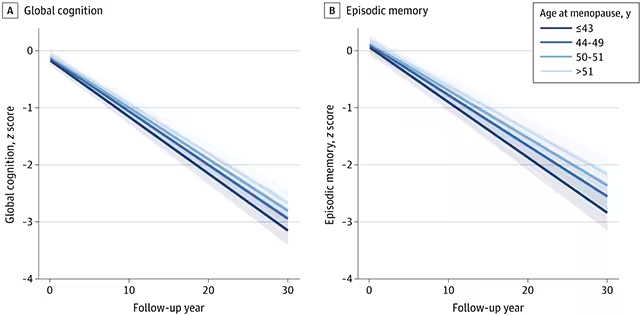
The study, published in JAMA Network Open, examined several brain markers and found consistent patterns linked to earlier menopause. That does not prove cause and effect. Early menopause could simply be a sign of faster biological aging that also affects the brain. Still, the convergence of multiple markers and prior work on estrogen and neurobiology strengthens the idea that the relationship deserves closer scrutiny.
A midlife signal in plain sight
Why does this matter? If age at menopause is tied to later brain changes, it could serve as a midlife-identifiable marker to help stratify dementia risk and guide early intervention. In practice, that means clinicians might use menopause timing as one piece of a larger risk profile alongside genetics, cardiovascular health, and lifestyle.
Estrogen is often discussed in this context because it influences brain circuits and blood flow. Some researchers argue that loss of estrogen around menopause could accelerate neurodegenerative processes for vulnerable individuals. Others counter that shared aging pathways drive both reproductive aging and brain decline. Both interpretations point to an opportunity: earlier detection and targeted prevention.
- Implication 1: Menopause timing could augment risk assessment tools for dementia.
- Implication 2: Understanding mechanisms may open preventive or therapeutic avenues related to hormone exposure and vascular health.
- Implication 3: More longitudinal studies are needed to untangle cause from correlation.
The authors write that their findings link menopause age to long-term structural and functional brain aging, positioning it as a potential midlife marker for risk stratification and early intervention. Translation into clinical practice will require replication, deeper mechanistic work, and careful consideration of hormone therapy risks and benefits.
For now, the takeaway is subtle and actionable: brain aging may begin earlier than we often assume, and reproductive history could provide valuable context when thinking about long-term cognitive health.

“My work centers on sustainability, energy, and environmental science — examining how innovation can lead to a greener future.”

Discussion
Leave a Comment
Comments
No comments yet. Be the first.