
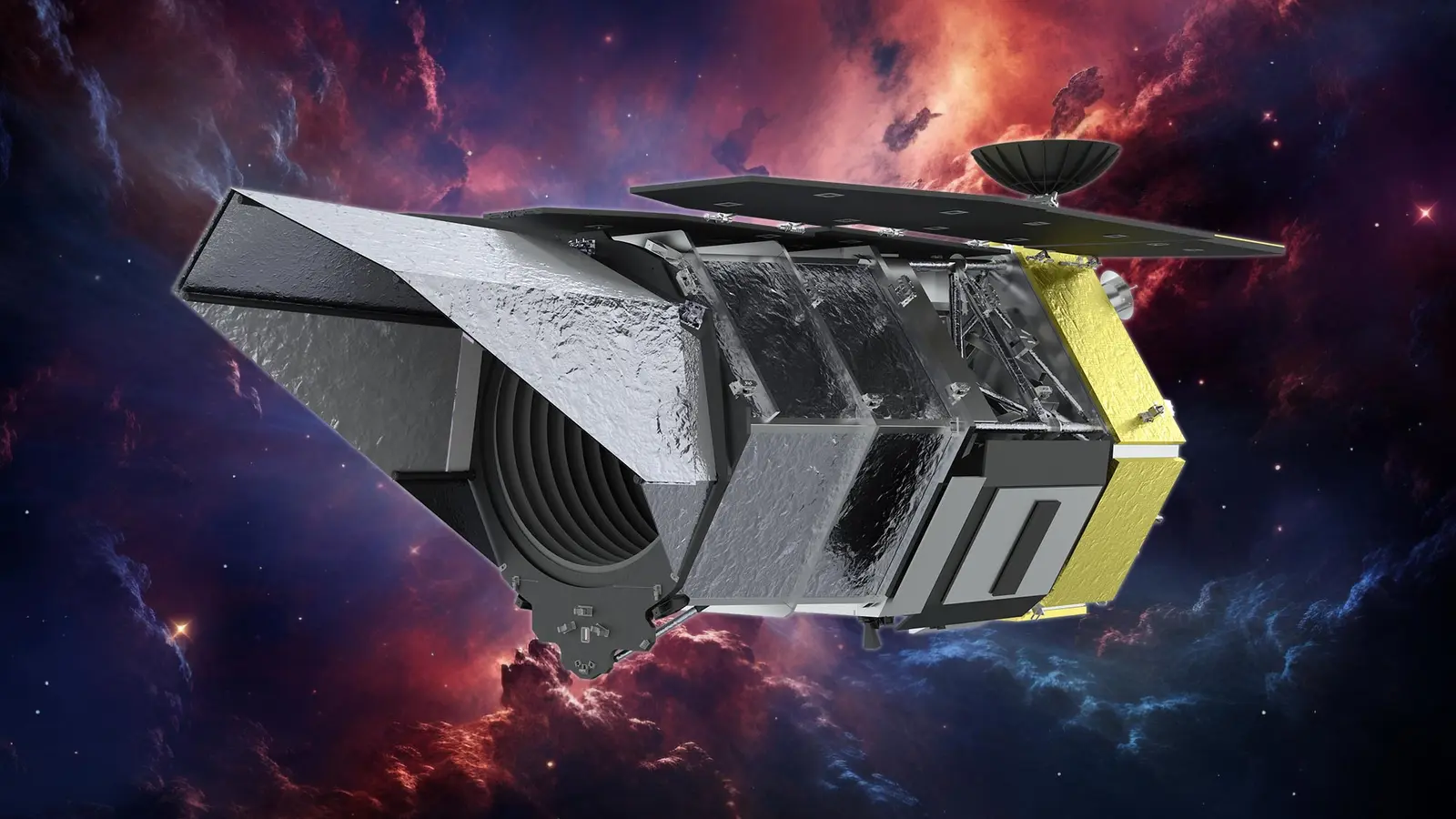
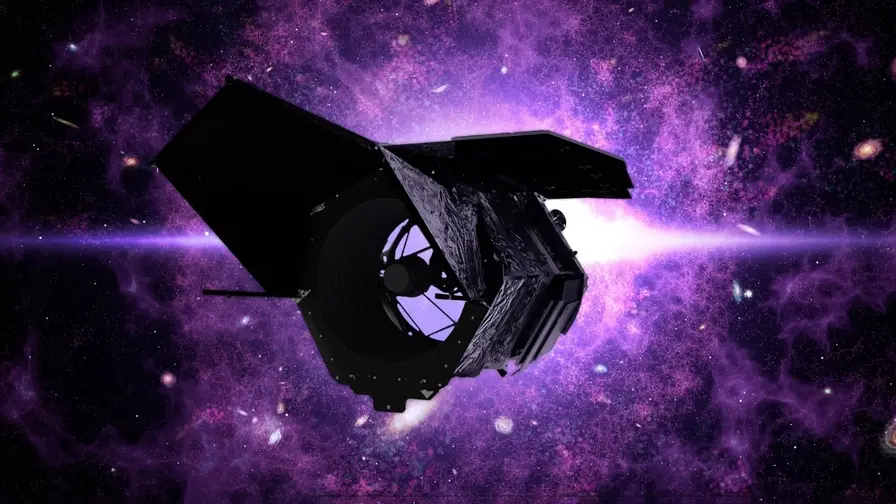
They turned a camera on a million miles from Earth and watched the first photons arrive. The Nancy Grace Roman Space Telescope has opened its wide-field eye, bringing a 300-megapixel infrared detector online and beginning a months-long ritual of checks, cooling and fine-tuning as it sails toward its observing post near the L2 point.
NASA calls the Wide Field Instrument, or WFI, a way to see vast swaths of sky with clarity that rivals Hubble. The idea is simple in phrase yet ambitious in practice: capture images that cover areas larger than the full moon while preserving the fine detail needed to study galaxies, dark energy and distant worlds. It is a tool built for scale.
NASA’s Nancy Grace Roman Space Telescope has successfully powered up its 300-megapixel Wide Field Instrument, a massive infrared camera built to scan huge areas of the sky while preserving Hubble-like detail.
First light in pieces: how Roman began to see
When engineers powered the WFI, they did not simply flip a switch and start science. There is a choreography to commissioning a telescope this capable. The detectors must be dried out and decontaminated. Temperatures must drop to cryogenic levels. Mechanical wheels that carry filters and prisms need to prove they move exactly as designed in microgravity. Each of those steps verifies a portion of the instrument and helps teams build a reliable baseline for future calibration.
On the morning of September 11, technicians turned off the instrument heater and allowed the detector assembly to cool from a launch-safe temperature near minus 85 degrees Fahrenheit, which is minus 65 Celsius, down toward operational temperatures. Over subsequent days the array dropped first to about minus 225 Fahrenheit, or minus 143 Celsius, and ultimately toward its final operating point near minus 300 Fahrenheit, or minus 183 Celsius.
This slow descent in temperature is deliberate. Cooling too fast risks stress to electronics and optics. Cooling too slow delays calibration. The Roman team followed a careful script, then activated all 18 infrared detectors when temperatures reached safe levels. Together the sensors provide a light-sensing surface comparable in area to a laptop screen, but built to collect light at infrared wavelengths that reveal galaxies, dust-obscured star formation and exoplanet signals.
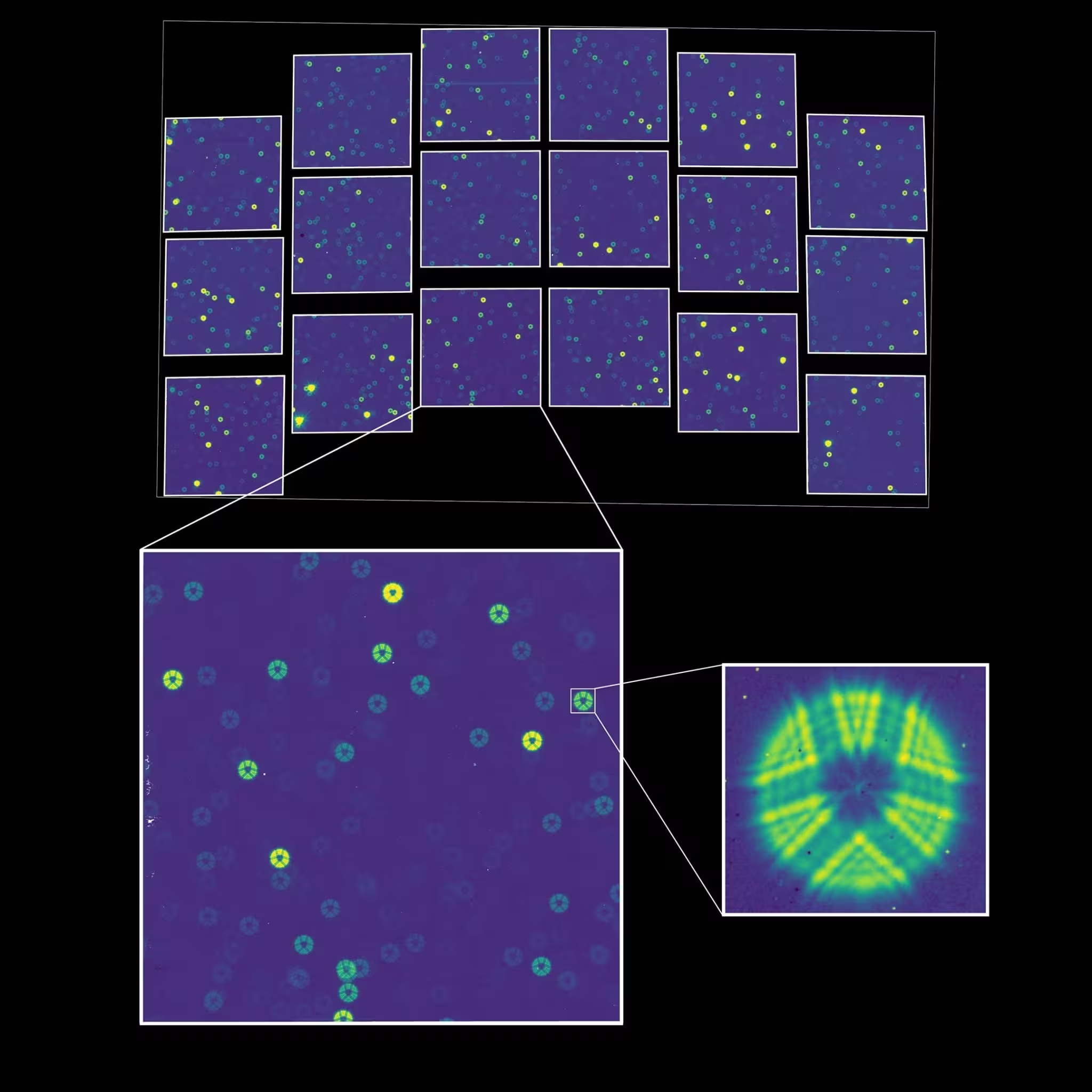
This test image captures the very first photons of starlight to reach the Wide Field Instrument on NASA’s Nancy Grace Roman Space Telescope. It was taken as an initial performance assessment with the detector array still stowed as it was for launch, far from best focus. Roman’s primary science instrument has opened its eyes to the universe for the first time, revealing a sea of out-of-focus stars, each spread out over many thousands of pixels. The image, which zooms into one detector and zooms again to a single star in the insets, offers a baseline the Roman team will work from to align the telescope’s optics and tune the focus. The team will soon activate the instrument’s fine-guidance system, which will mean Roman can lock onto targets. They’ll also focus the observatory, which will shrink each star’s light to appear as a crisp point, rather than the broad, donut-like features seen here (which appear as expected given the instrument’s present configuration). Roman’s science images, which NASA expects to release by early 2027, will be much sharper and reveal the cosmos in exquisite detail.
Filters, focus and the art of tuning a space camera
After powering the detectors, teams exercised the element wheel, a precision assembly that houses filters, prisms and other optical components. In one motion the wheel selects which colors and spectral slices reach the detectors. This test was the first time the mechanism operated free of gravity, and it performed within expectations. The instrument then moved on to its focusing mechanism. The goal: compress the donut-like light patterns seen in early test frames into pinpoint stars.
Why does focusing matter so much? Because Roman’s advantage is not only coverage but definition. A sharp point spread function translates into reliable measurements of galaxy shapes, star brightnesses and the tiny signals astronomers use to track dark matter and dark energy. Poorly focused images would blur that sensitivity and shorten the mission’s scientific reach.
With the element wheel and focus checks complete, engineers turned on the WFI calibration system and routed test data streams back to Earth. Those first frames are intentionally imperfect. Early images give teams a working map of how the optics sit after launch and what adjustments the alignment mechanisms must make. Over the coming months calibration will refine the telescope into its science-ready posture.
Coronagraph checks: preparing to glimpse alien worlds
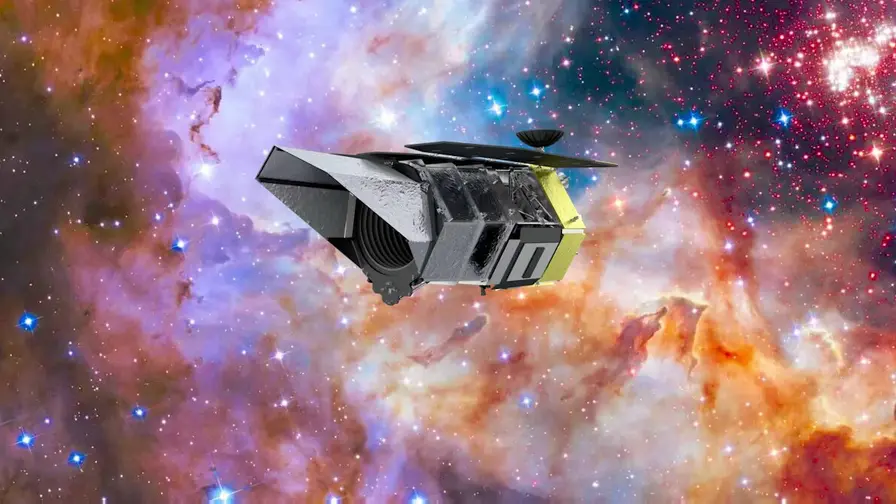
Roman also carried online a very different instrument, one built not for wide surveys but for hiding starlight. The Coronagraph Instrument is a technology demonstrator, designed to suppress a star’s glare so faint reflected light from orbiting planets can be seen. This is one of the most challenging problems in observational astronomy. Imagine trying to spot a firefly circling a searchlight from hundreds of kilometers away.
Engineers at the Coronagraph Commanding Center at Caltech/IPAC verified electronic, mechanical and thermal systems. They confirmed communications with software, cameras, masks and the deformable mirrors that will sculpt light to cancel diffraction. The team also warmed the coronagraph to its operational temperature of roughly 72 degrees Fahrenheit, or 22 Celsius, because much of the instrument is intended to function near room temperature. That helps maintain predictable material behavior in the actuator-driven mirrors.
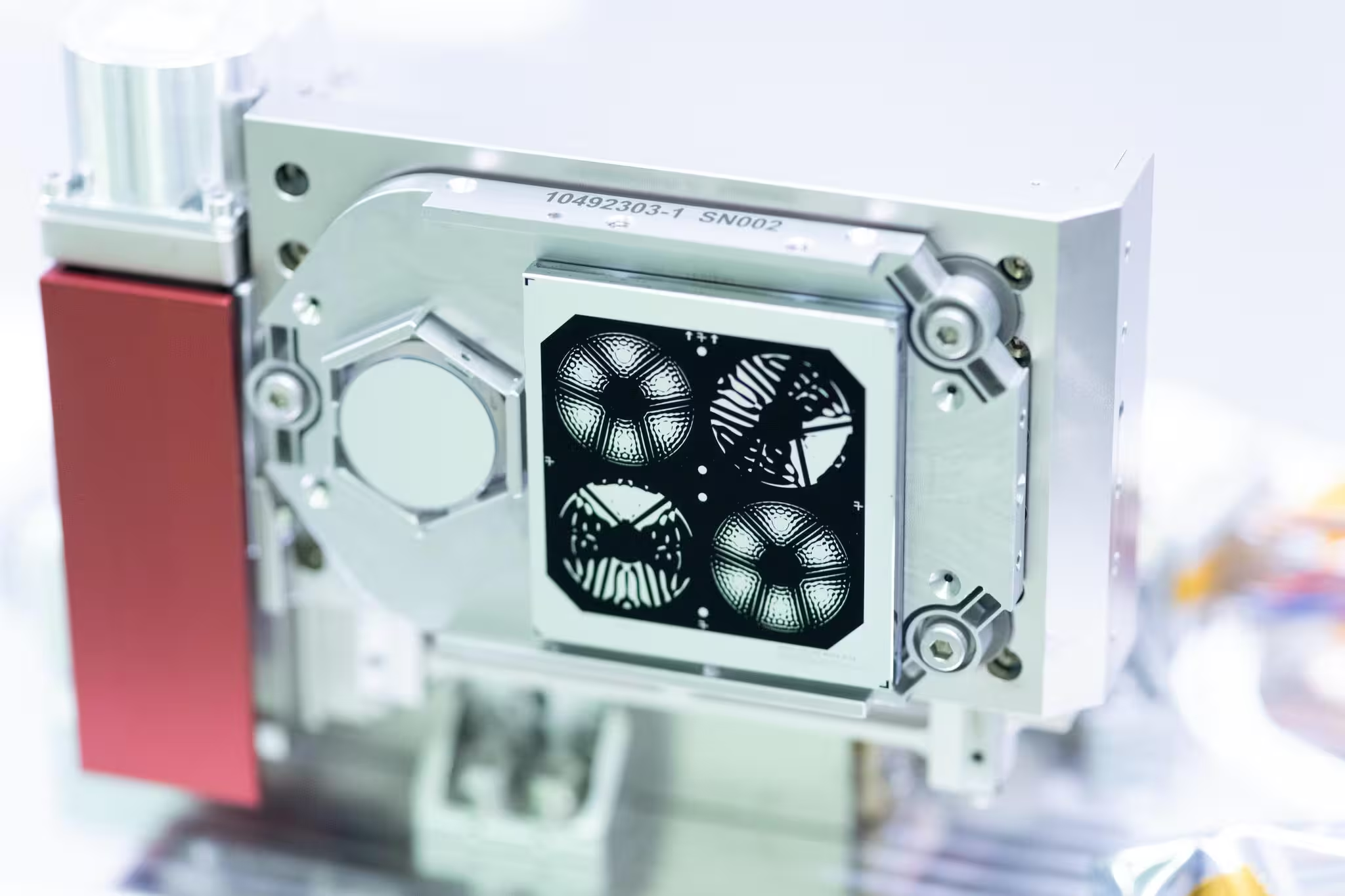
This image displays the “shaped pupil” masks, each about the size of a U.S. quarter, used in the Nancy Grace Roman Space Telescope’s Coronagraph Instrument. These precisely engineered components modify the diffraction pattern of starlight to block glare and reveal faint regions surrounding stars.
Unlike the WFI, which must operate at cryogenic temperatures, the coronagraph’s detectors will have their own commissioning plan. For the moment the coronagraph team is decontaminating the instrument by keeping detectors warm so water and trace chemicals will evaporate away. That process is expected to continue with intermittent calibration tasks for roughly 30 days.
Why Roman matters beyond a pretty picture
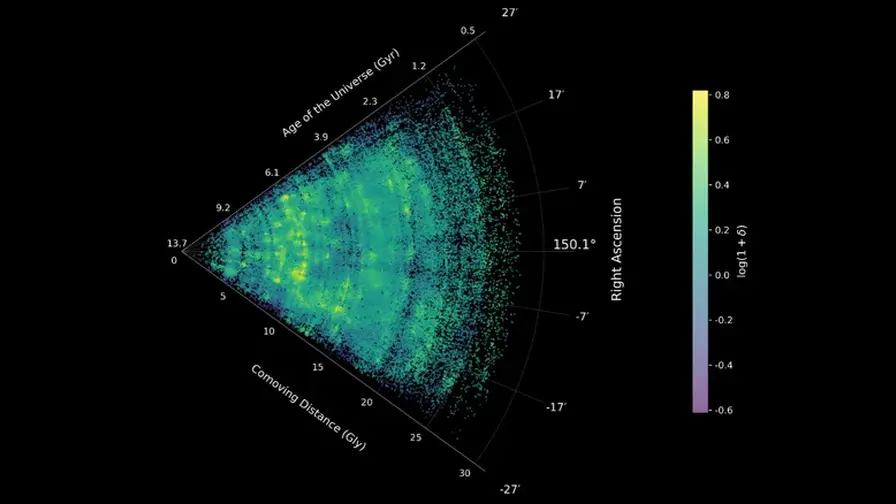
Roman is designed as a survey machine with precision. Its wide, deep mapping will let astronomers attack big questions: where does dark matter reside, what is the nature of dark energy that drives cosmic acceleration, and how common are planetary systems like our own? The telescope’s rich datasets will serve as a resource for thousands of scientists and enable follow-up studies with other observatories.
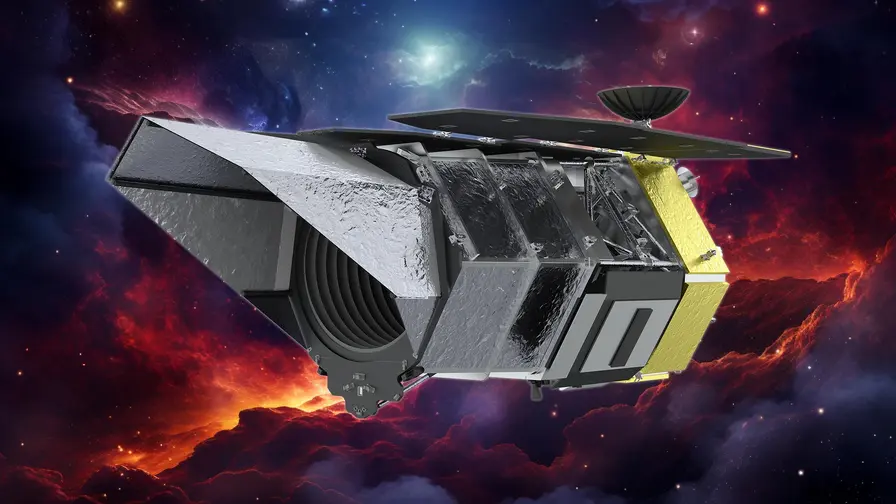
By combining Hubble-like resolution with a field of view hundreds of times larger, Roman will accelerate discoveries that previously took decades. Think of it as adding a panoramic camera to a toolkit that already had exquisite but narrow telephoto lenses. The result will be faster identification of targets for spectral study, better catalogs for gravitational lensing analysis, and more robust statistics on galaxy evolution and exoplanet demographics.
Expert Insight
"This is the point where months of simulator runs and hardware tests meet reality," said Josh Schlieder, the Wide Field Instrument scientist at NASA’s Goddard Space Flight Center. "After years of effort to build and test the instrument on the ground, we now have confirmation that it is operational in space. There is much to do, but we are on our way to groundbreaking science."
"The coronagraph commissioning is deliberately methodical," added Eric Cady, an optical engineer leading those efforts at NASA’s Jet Propulsion Laboratory. "We are decontaminating and validating mechanisms so when we begin starlight suppression tests the instrument will behave predictably. That patience pays dividends when you try to detect light a billion times fainter than its host star."
Looking ahead: what to expect and when
Roman will continue its commissioning as it travels to the Sun-Earth L2 gravitationally stable point, roughly one million miles from Earth. That journey gives the spacecraft a thermally stable environment and an unobstructed view of deep sky. Over the months ahead, teams will activate the instrument's fine-guidance sensors so Roman can lock on to targets with precise pointing. They will then complete optical alignments that shrink each star's image to a crisp point.
NASA currently expects to release Roman’s first science-quality images by early 2027. Those first public releases will mark the transition from engineering commissioning to regular science operations, after which survey programs will ramp up and the larger community will begin using Roman data for research across astrophysics.
Conclusion
Powering up a 300-megapixel camera in space is more than a technical milestone. It signals the start of a new era in wide-field infrared astronomy. Roman’s combination of breadth and detail will reshape how astronomers search for planets, map dark matter and probe the forces shaping the universe. The coming months will be about patience, precision and incremental gains. The payoff will be datasets that change the questions we can ask of the cosmos.

“The cosmos has always fascinated me. I write about space missions, astronomy, and the technologies pushing humanity beyond Earth.”

Discussion
Leave a Comment
Comments
No comments yet. Be the first.