

Two flagship chips. Qualcomm is quietly changing its playbook and the phone industry is about to feel the ripple.
Leaks now point to two distinct marketing names for the next flagship silicon: SM8950 likely appears as the Snapdragon 8 Elite Gen 6, while SM8975 may land as the Snapdragon 8 Elite Extreme Gen 6. Names are never the whole story, but they set expectations. One sounds like the standard all-rounder. The other demands top-tier performance and premium pricing. Which phone makers will pick which chip? That is the interesting part.
Two chips, two ambitions
Qualcomm itself confirmed a dual-flagship strategy for the year, but the exact branding remained secret until tipsters began dropping breadcrumbs. Earlier rumors had the high-end variant labeled Gen 6 Pro. Now the Extreme name is doing the rounds. Labels aside, both designs are expected to be built on TSMC's 2nm process, marking a clear step forward from the previous generation's 3nm die.
This will be Qualcomm's first flagship built on TSMC's 2nm node.
Smaller process geometry usually buys tighter power efficiency and higher transistor density. Expect better battery life for comparable workloads and higher sustained performance when phones are thermal-optimized. But real-world gains depend on how phone makers balance cooling, battery size, and performance curves.
On paper the vanilla 8 Elite Gen 6 appears to aim for a thoughtful balance. Rumors place its CPU layout at 2+3+3 Oryon cores with a shared 16MB L2 cache. The GPU listed is an Adreno 845, described as a six-slice design with 12MB of GMEM and an extra 6MB of system-level cache. Support for LPDDR5X memory and UFS 5.0 storage are expected, which should make storage and memory bandwidth feel snappy.
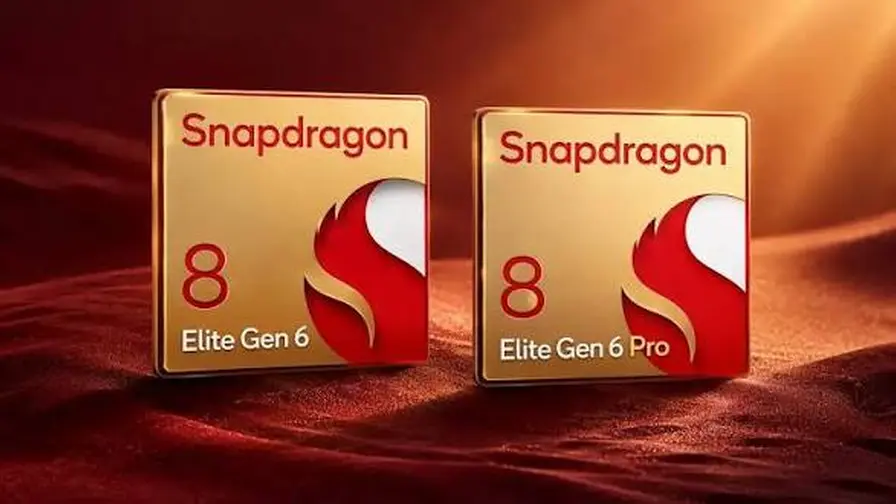
The larger brother, the Extreme variant, is pitched as the GPU-focused powerhouse. Leaks point to an Adreno 850 with 18MB of dedicated GMEM. If true, that represents roughly a 50 percent leap in bus width and memory dedicated to the GPU compared with Gen 5. Some reports even hint at LPDDR6 compatibility alongside LPDDR5X, and peak CPU clocks approaching 5GHz for a smartphone SoC, a frequency we've not commonly seen in mobile silicon.
Those details sketch a clearer commercial picture. Qualcomm giving phone makers two distinct silicon choices creates space for differentiation across price tiers. Want top-tier gaming and creative horsepower? Choose the Extreme. Want strong daily performance with better battery targets? The standard Elite may be the smarter fit.
We should treat these specs as leaks, not gospel. Mobile launches are full of last-minute changes. Clock speeds get adjusted. Cache sizes can be tuned. Still, the broad direction feels right: a mainstream flagship that emphasizes efficiency and balance, and a halo variant built to push GPU and peak-clock limits.
Qualcomm has moved up its flagship event this year. The Snapdragon Summit is scheduled for September 22 to 24 in Hawaii, and industry watchers expect the company to lift the curtain on both chips there. That timeline means more fragments of the story will surface in the weeks ahead as partners and insiders share further details on camera ISP tuning, modem capabilities, and thermal designs.
For phone buyers the real questions will be about real-world tradeoffs. How much battery life do you lose chasing extreme clocks? How much does a bigger GMEM pool improve sustained frame rates on demanding titles? Which brands will use the Extreme silicon as a showcase, and which will reserve it for boutique models with aggressive cooling?
Qualcomm's split-flagship move is a small strategic pivot with outsized consequences. Expect more nuance in device lineups this cycle, and a busy rumor mill until the Summit opens. By then we should get a full specification list and, crucially, the partner phones that will translate those chips into experiences people actually use.

“I cover emerging technologies, digital innovation, and the intersection of tech and everyday life. My goal is to make complex trends accessible and inspiring.”

Discussion
Leave a Comment
Comments
No comments yet. Be the first.