
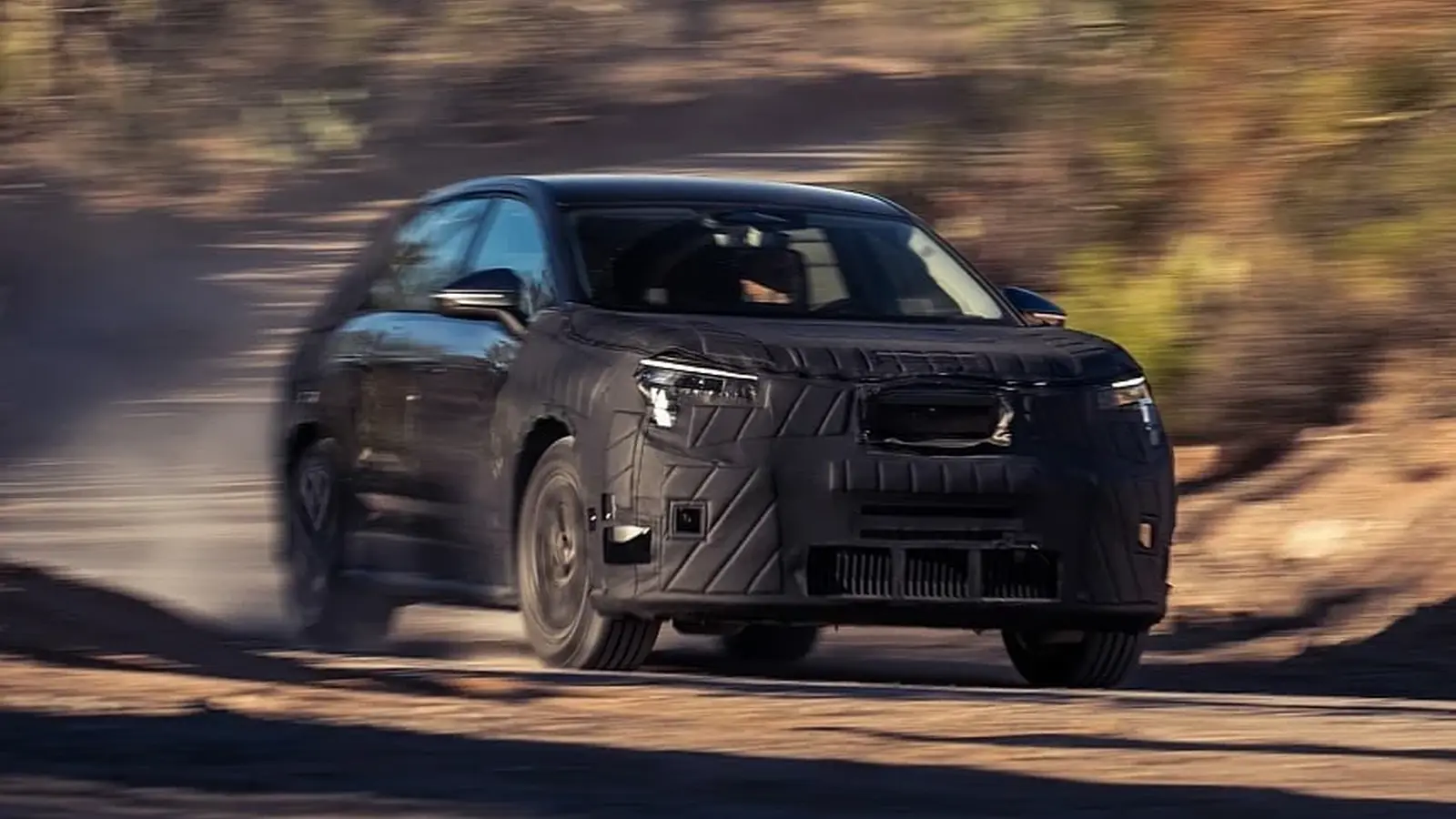
Skoda drove its new Peaq into the Arizona desert for one simple reason: to see what it would do when the heat got ruthless. That image — a Czech-designed flagship electric crossover being stress-tested under a merciless sun — tells you everything about how seriously the company has taken this project.
Think of Peaq as Skoda's quiet answer to the petrol-powered Kodiaq. It sits on the VW Group's MEB+ architecture, so beneath the skin you’ll recognize family ties with the Enyaq, Audi Q4 e-tron, VW ID models and other siblings. But Skoda says it tuned the Peaq to feel like its own car, with a slightly different character and packaging aimed at buyers who want a roomy, tech-forward EV rather than something overtly premium.

From Arctic chill to Arizona sun
Prototypes piled up more than 1.5 million kilometres during development. That’s almost a million miles. Tests covered extremes — icebound loops inside the Arctic Circle and long, punishing days in the desert. Yes, they shipped a prototype to North America purely to push the software, thermals and range in real-world heat. Don’t mistake the stunt for a sales hint: Skoda confirmed the Peaq won’t be offered in the US market.
The lineup at launch is straightforward: three powertrain choices and two battery sizes. The entry version uses a 63 kWh pack driving a rear motor that produces about 201 horsepower. Move up and you find a 91 kWh pack reserved for the two stronger versions labeled 90 and 90x. The single-motor 90 puts out roughly 282 horsepower. The 90x uses a dual-motor setup and cranks that to around 295 horsepower.
Acceleration numbers feel respectable for a family-oriented crossover. The top model will do 0 to 100 kph in 6.7 seconds. That’s a shade quicker than the mid-spec car and nearly two seconds faster than the base variant, which takes about 8.6 seconds.
Range is where Skoda is making a splash. The headline figure for the range-topping Peaq is over 600 kilometres on the WLTP cycle. The company suggests the mid-spec version will deliver similar autonomy, while the smallest battery should manage north of 460 kilometres. Those numbers put the Peaq squarely in the territory buyers expect from long-range mainstream EVs today.
Beyond batteries and drag times, Skoda has focused on practicality. Expect clever interior packaging, a roomy rear seat, and tech tailored to family use — the sort of pragmatic touches that have long defined the brand. Skoda is no stranger to sharing hardware with siblings in the Volkswagen Group, but the Peaq aims to translate that shared underpinnings into something distinctly Skoda: sensible, spacious and value-rich.

Official eyes will be on Monnetier-Mornex, France on June 23, 2026, when Skoda unveils the Peaq to the public at 18:25 CET. That’s when we’ll see the production look, final specifications and pricing for markets where it will actually be sold.
So what matters most? The Peaq feels like a pragmatic flagship — a car that showcases Skoda’s EV capability without abandoning the down-to-earth temperament customers expect. It won’t be the flashiest vehicle on the stand, but it may be one of the most useful.
Will that be enough to turn heads in Europe and other markets where it’s available? Time will tell. For now, the Peaq is a reminder that the EV race is as much about measured engineering as it is about bold headlines.

“I cover automotive innovation, electric vehicles, and the future of mobility — where technology meets sustainability.”

Discussion
Leave a Comment
Comments (2)
nice numbers but feels like a rebadged VW with Skoda trim. Practical yeah, but where's the wow? Packaging might win tho, still kinda skeptical.
Wow, desert testing feels dramatic but smart. If that 600 km WLTP holds in real life, Skoda nailed it. But will software be clean? hmm