
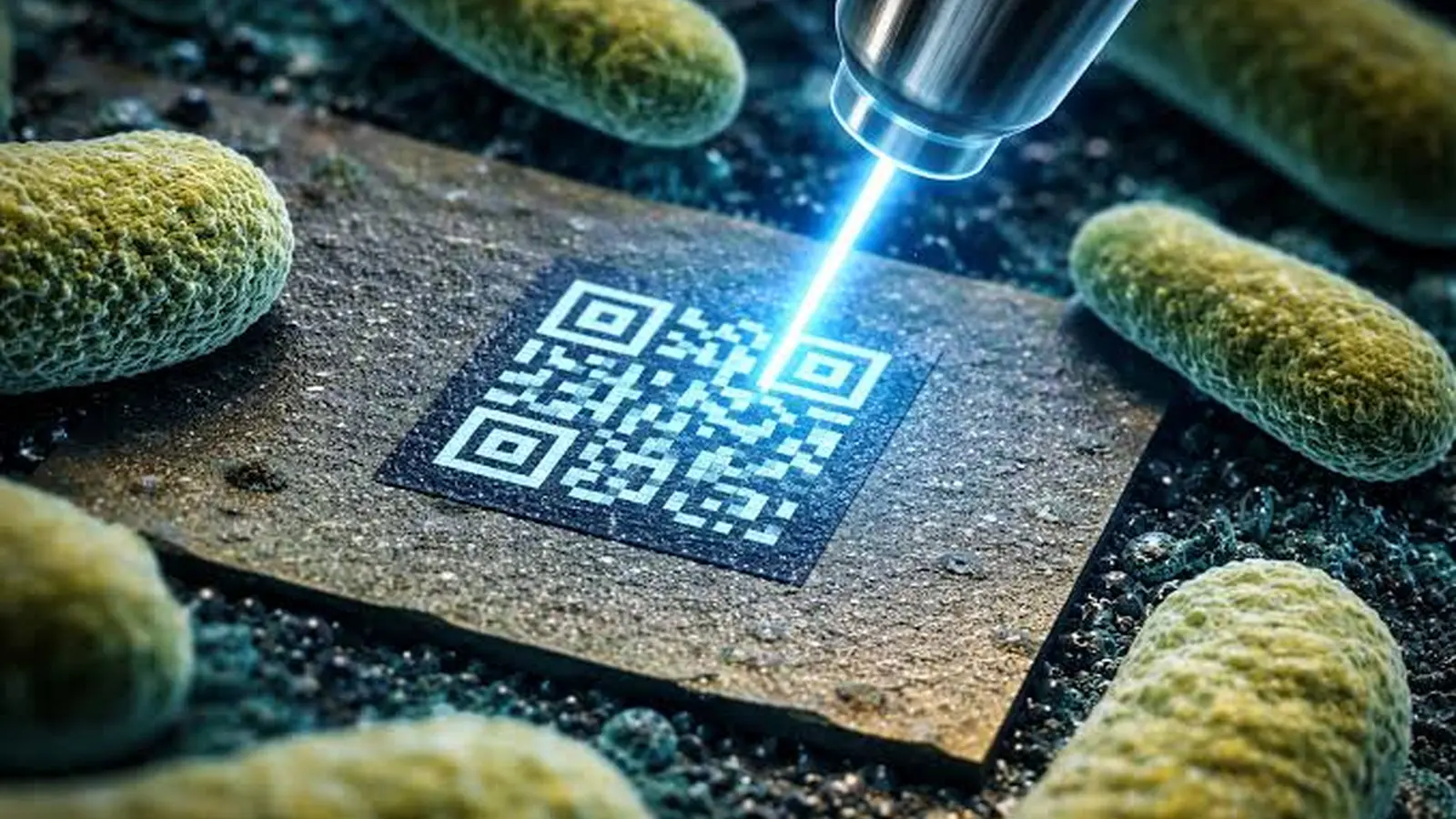
Imagine a barcode so small you need an electron microscope to read it. That is no metaphor—researchers from Monash University and the Czech Academy of Sciences have etched a functioning QR code just 50 nanometres across. Tiny doesn't begin to describe it.
At 50 by 50 nm the pattern is roughly the size of a coronavirus particle and about 800 times smaller than the previous record-holder. To put that in human terms: the entire QR code is nearly a thousand times smaller in width than the diameter of a single human hair.
From single silver atoms to readable data
Each pixel of the code is made from individual silver atoms. The team used a scanning tunnelling microscope to pick up and place atoms with astonishing precision. High vacuum. Extremely low temperatures. A robotic system laid down most of the pattern, and then researchers nudged specific atoms by hand until the code scanned correctly.
The final image, once magnified and decoded, directs users to the SPM Pro Tips website—a resource designed to showcase scanning probe microscopy and nanoscale research techniques. That practical result underlines the point: this was not a mere stunt. It was a proof of control at the atomic level.
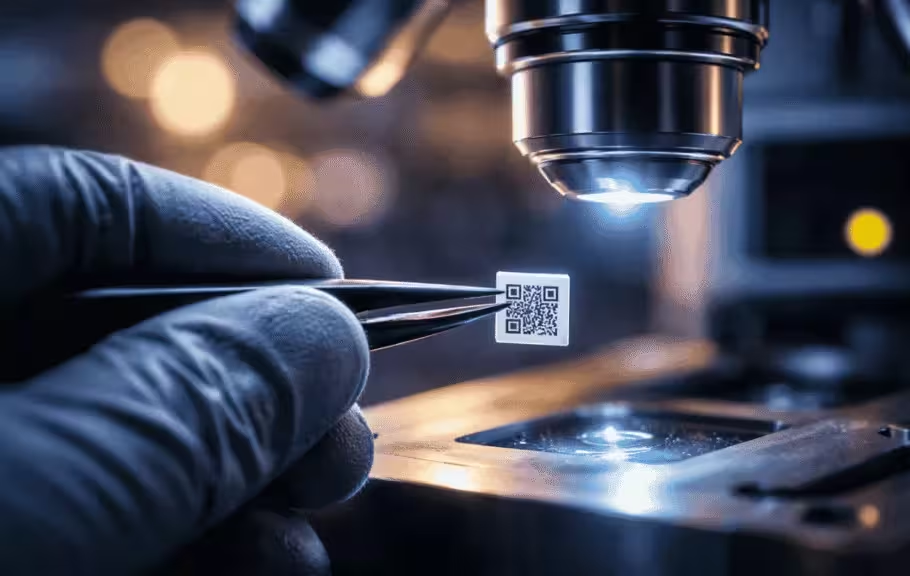
The record still awaits final confirmation by Guinness World Records, but the team has submitted an application. If approved, this device will replace the earlier record set earlier this year and mark a milestone in atom-by-atom fabrication.
Why should anyone care? Because the technique is not just about tiny art. It demonstrates a level of manipulation over single atoms that could enable ultra-dense data storage, bespoke nanostructures, and components for next-generation quantum devices. Small steps in the lab can lead to giant leaps in capability.
There is a theatrical side to this work. Yes, it makes a headline. But the experiment also functions as a clear technical report card: scientists now routinely position atoms to create readable, functional patterns. That degree of control changes design conversations across materials science and quantum engineering.
This nano-scale QR code is a concrete sign that atomic precision is moving from demonstration to potential application in memory, nanofabrication, and quantum technologies.
Expect more experiments like this—both for show and for substance. The tools are getting faster, the automation smarter, and the manual tweaks ever more refined. In years to come, the question won't be whether we can place atoms; it will be what we decide to build with them.

“I love exploring gadgets, apps, and trends that redefine how we connect, work, and play in a digital world.”

Discussion
Leave a Comment
Comments
No comments yet. Be the first.