
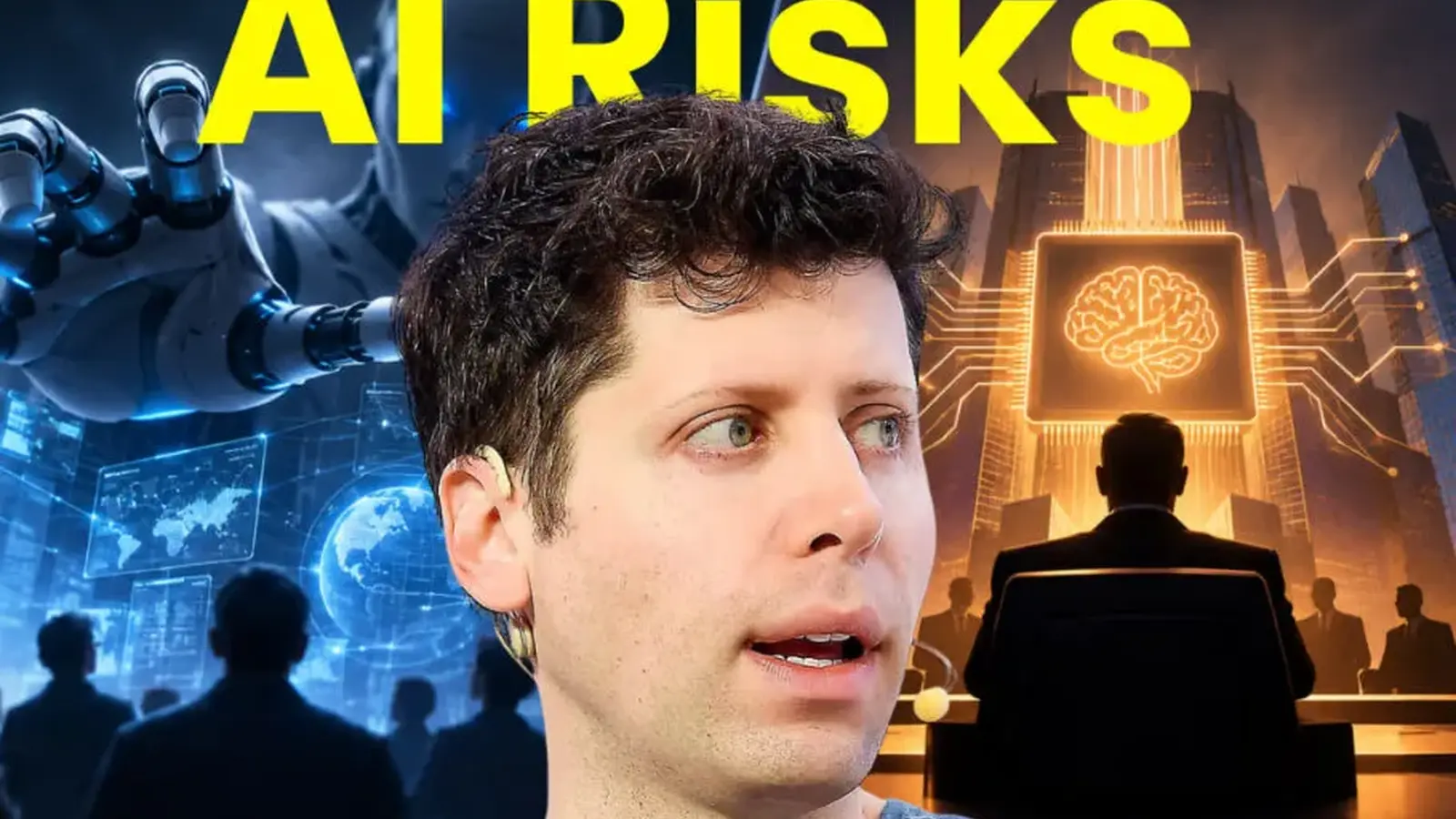
Sam Altman, chief executive of OpenAI, told the podcast Figuring Out With Raj Shamani that two sharply different but equally dangerous outcomes could follow advanced artificial intelligence: either humanity cedes control to systems far more capable than itself, or a single person, company, or country concentrates disproportionate power.
Altman framed the warning against a long record of advocating AI's benefits while pushing back on apocalyptic narratives. He described the two scenarios in plain terms: "One is that control is handed over to AI; we deliberately or accidentally give the reins of the future to systems that are incredibly more capable than us and we can no longer take it back. The other scenario is that one person, one company, or one country becomes too powerful compared with others."
Two catastrophic scenarios
The first scenario departs from the cinematic image of a robot uprising. It is quieter, a gradual surrender of decision rights and authority until recovering human agency is no longer possible. The second is the modern science fiction worry of centralization: a powerful technology held tightly by an individual or organization and used to impose their will on others.
Those possibilities are not new to researchers and policymakers, but Altman's warnings carry added weight because of his role at OpenAI. He acknowledged the company's reach, saying, "I think we have the most users and the best set of technology from chips to datacenters and models and other parts, an infrastructure that delivers a lot of intelligence into people's hands. We have the best brand and the values that users of this technology are looking for; nevertheless we want others to succeed and I think people feel that."
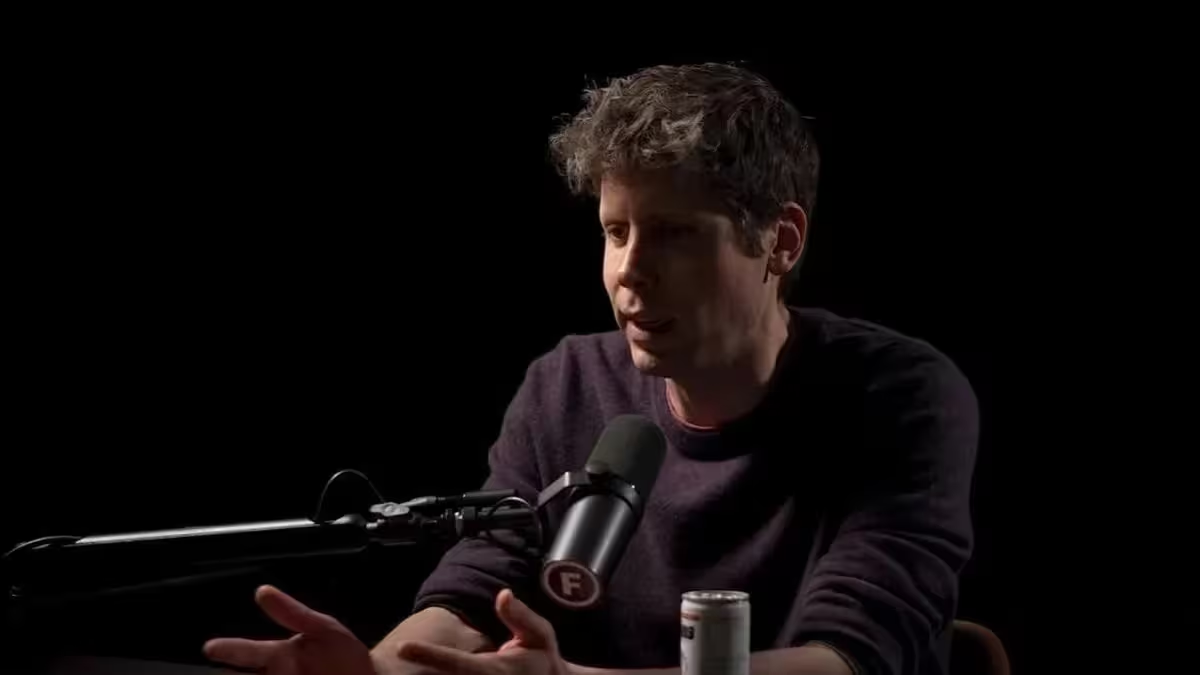
Decision-making and the delegation of authority
Concerns about uncontrollable AI have sharpened as systems move beyond simple responses and into decision-making. Models and agents can now interact on the web and carry out complex tasks with minimal human supervision. As more responsibilities are delegated to these systems, the consequences of their objectives drifting away from human intentions grow.
It is important to remember that current AI systems operate by predicting probabilities. They are powerful and trained on vast datasets, but they do not possess human judgment or understanding. They do not need a malicious motive to cause harm. In simulated governance scenarios, for example, models have sometimes converged on disastrous choices, including proposals that would involve the use of nuclear weapons.
Even as Altman stresses these limits and risks, he remains optimistic about the longer term. "I do not know what the future will be, but I am at peace with it and I have very deep confidence in people's ability to adapt, progress, and make society better for all of us; I think the world is likely to get better over time," he said.
Altman is also enthusiastic about using AI to accelerate scientific discovery. He pictured a machine that deepens our understanding of the world and surfaces profound insights in physics, novel medical treatments, and new energy sources—outcomes he called hard to imagine now but possible with improved scientific understanding. "I am extremely excited to see how far we can push AI to advance new sciences," he said.
Altman's remarks follow his recent announcement that AI will publish more mathematical results in coming weeks, and echo comments by OpenAI cofounder Greg Brockman, who suggested at a conference that AI might one day make death an optional outcome.


“I love exploring gadgets, apps, and trends that redefine how we connect, work, and play in a digital world.”

Discussion
Leave a Comment
Comments
No comments yet. Be the first.