
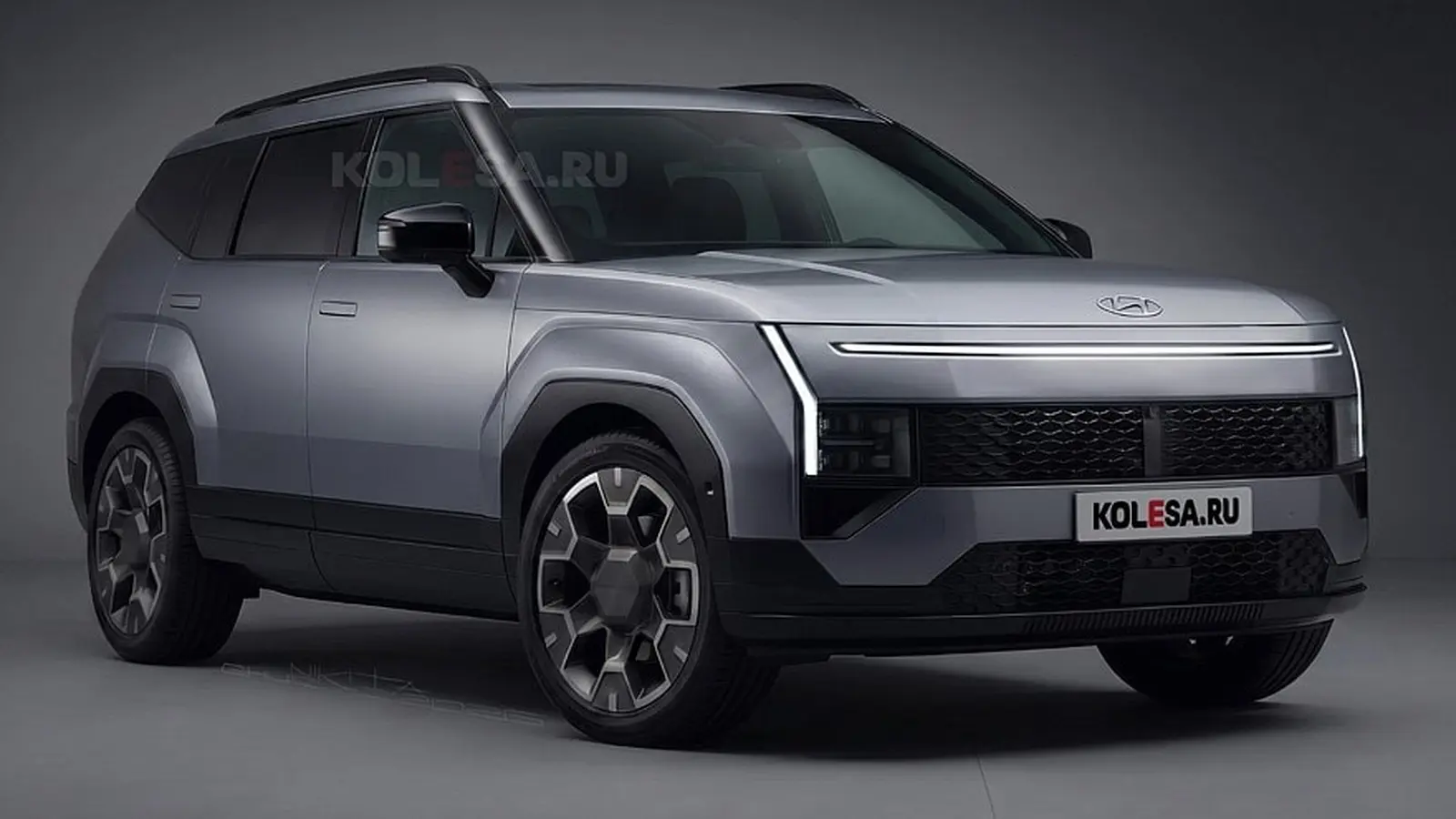
Forget the gentle curves that defined the current Tucson. The next one arrives with edges and intent, a silhouette that borrows the upright temperament of Hyundai’s larger SUVs and refuses to hide its ambition.
What the latest renderings actually show
After months of spy photos and brief glimpses, a detailed set of digital illustrations from Kolesa, crafted by Nikita Chuyko, stitches those teasers into a convincing whole. The result is unmistakable: a flatter, more assertive front end and a boxier overall posture that make the 2027 Tucson look like it grew taller and more purposeful overnight.
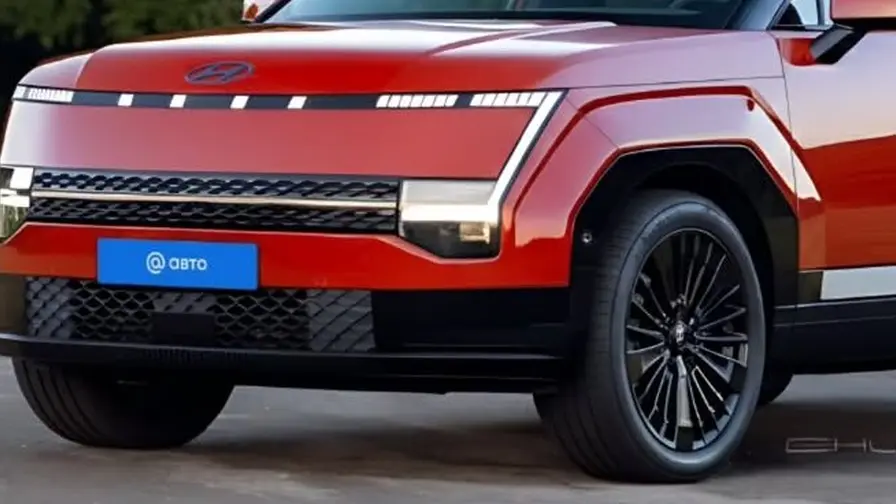
The face has been rethought. A broad horizontal light bar sits just under the hood, flanked by slim vertical daytime running lights, while the primary headlamp clusters move to the outer edges of the grille. The grille itself breaks from the current Tucson’s personality entirely. Lower down, the air intake’s footprint nods to the outgoing model, but the hood adopts a clamshell motif and the joints where pillars meet roofline gain sharper geometry.

Small details shift the whole character: new, cleaner door lines, flush handles, revised mirrors and a set of freshly designed wheels. From the side, the profile reads simpler and more composed than before, a deliberate move toward visual clarity rather than sculpted ornamentation.
At the rear, the roof slopes less aggressively and the pillars aren’t as steep, which should translate into a roomier cargo area. Taillights are slim and vertical; a light bar across the tailgate is interrupted by a trim piece, giving the back end a modern, layered look. Renderings tend toward a grey finish with contrasting black trim and lower-body cladding, reinforcing a rugged-but-urban vibe.
Inside, Hyundai appears to be pushing modernity forward as well. Expect the Pleos infotainment suite, a narrow digital instrument cluster and an overhaul of nearly every surface. Observers hope this generation also brings improved materials and assembly quality, something Hyundai has been steadily addressing across the lineup.

Timing-wise, the new Tucson is widely forecast to debut as a 2027 model in the United States. Whether buyers will embrace the tougher, boxier direction remains an open question, but the intent is clear: Hyundai wants the Tucson to stand apart, both visually and functionally.
So, looking at these realistic renderings, do you prefer this sharper direction or are you a fan of the outgoing generation’s softer lines?

“I cover automotive innovation, electric vehicles, and the future of mobility — where technology meets sustainability.”

Discussion
Leave a Comment
Comments
No comments yet. Be the first.