
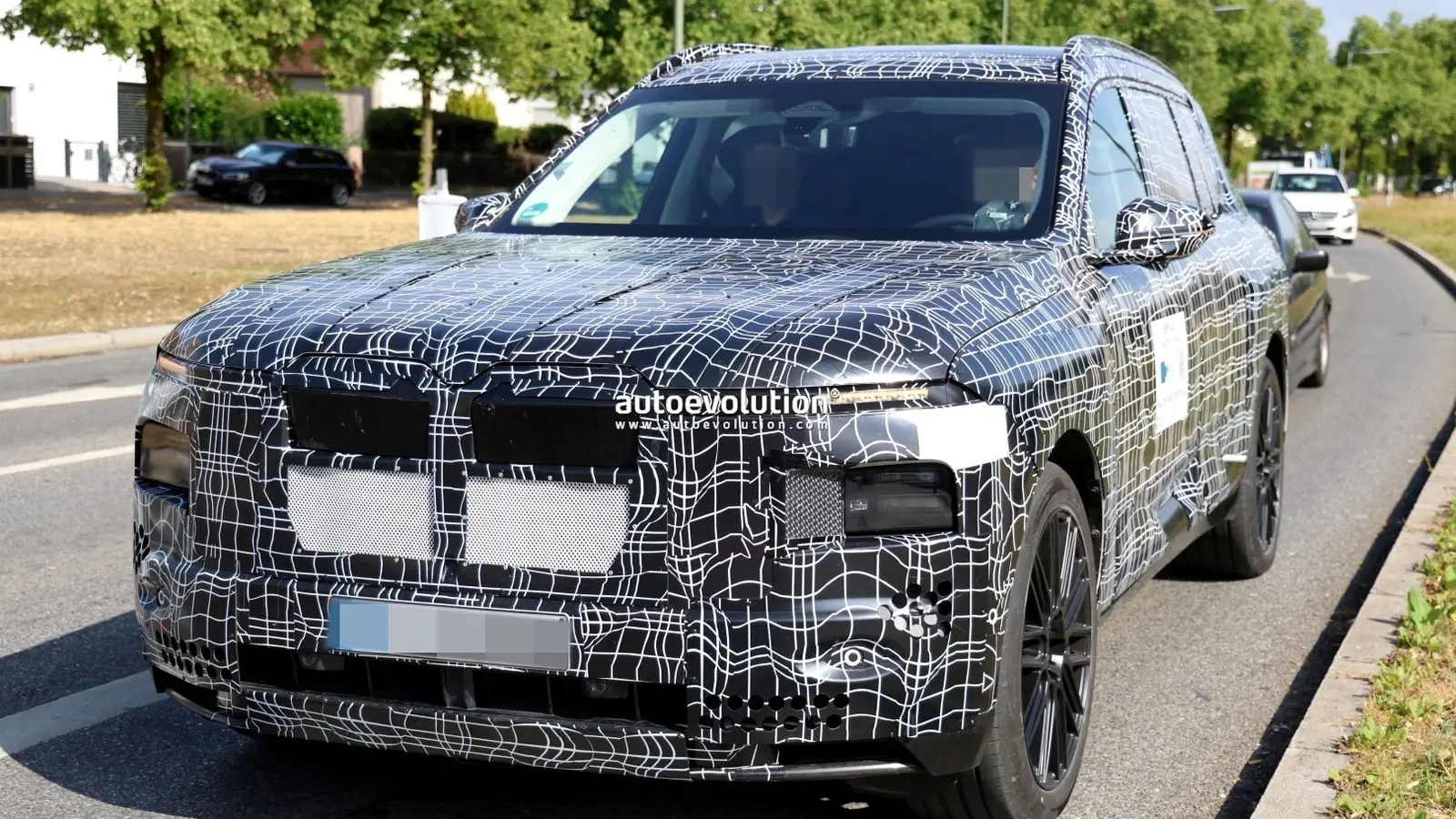
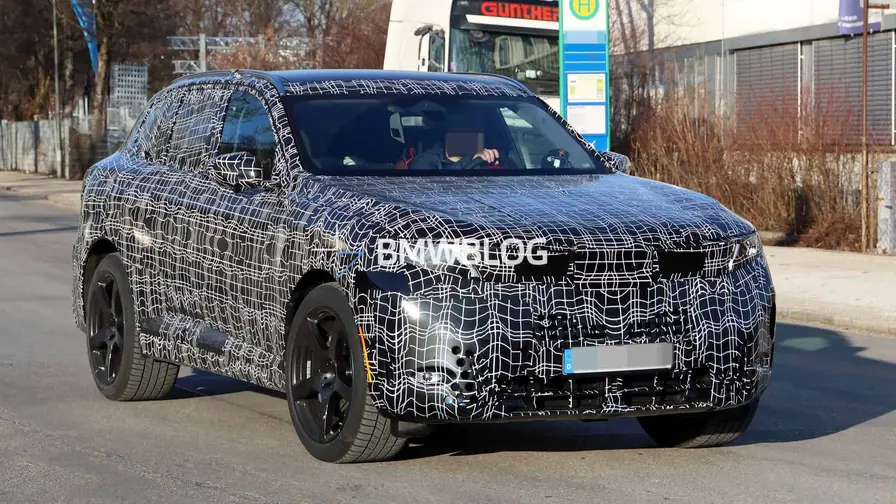
A camouflaged giant eased through traffic outside Munich, its classic BMW profile intact but with a few modern secrets hiding behind fabric and tape. No tailpipes. Sealed kidney grilles. Flat belly panels. If you blinked you might miss the most important detail: this is the X7 that wants to be electric.
Electric intent, familiar stance
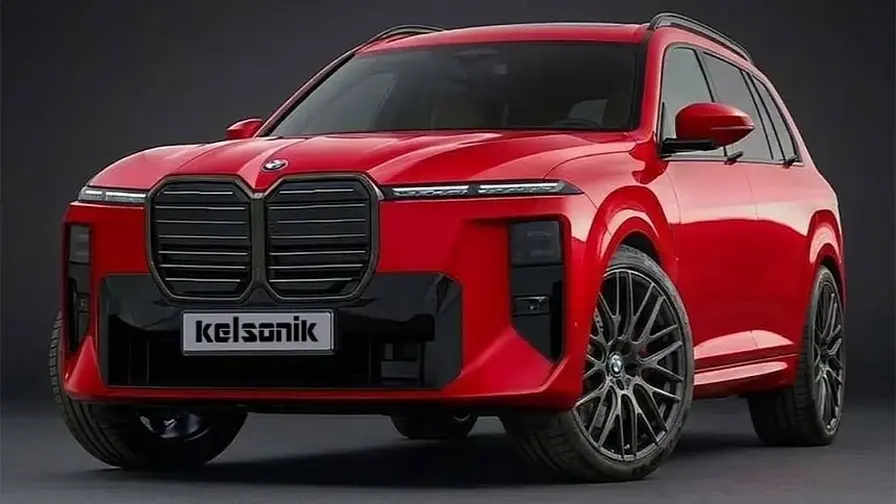
The next-generation X7 arrives as a careful evolution rather than a stylistic revolution. Think of it as refinement, not reinvention. The boxy silhouette and upright face that buyers of full-size Bavarian SUVs favor remain. Yet peek closer and you’ll spot cues borrowed from BMW’s latest EVs: closed-off grilles, split headlight graphics updated with production-ready lighting, and streamlined handles that tuck flush into the doors.
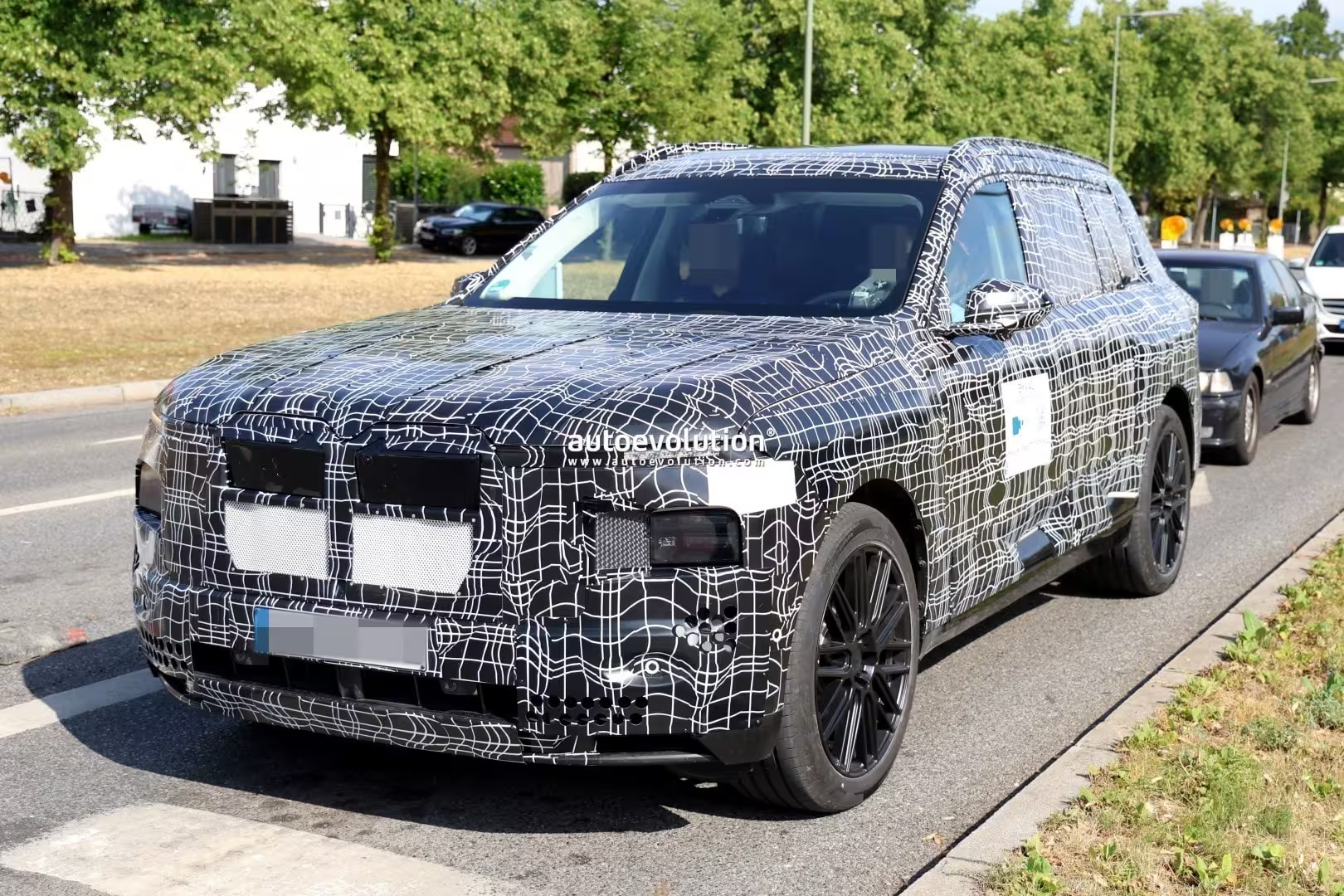
These spy shots show prototypes moving on public roads near Munich, and the absence of exhaust outlets makes the point obvious. BMW will offer conventional petrol and diesel options alongside a fully electric iX7 that appears to share much of its mechanical philosophy with the recently revealed iX5.
Production is slated for Spartanburg, South Carolina, where BMW builds its largest SUVs. The plant—home to roughly 11,000 workers—turns out around 1,500 vehicles daily, and it will add the new X7 and its electric sibling to that mix. Expect Alpina variants too, reportedly under the internal G69 codename.

Inside, BMW’s Neue Klasse influence is unmistakable. The instrument binnacle gives way to Panoramic Vision, a sweeping display architecture that further distances the cabin from the physical iDrive controller many drivers have used for years. Shorter sentences. Big change.
Door operation gets futuristic as well. Conventional pull handles make way for small winglet-style actuators with a mechanical fallback. But remember China—the long-wheelbase iX3 there reverted to traditional handles to meet local approval. BMW may take a similarly cautious path if regulations or customer preferences demand it.
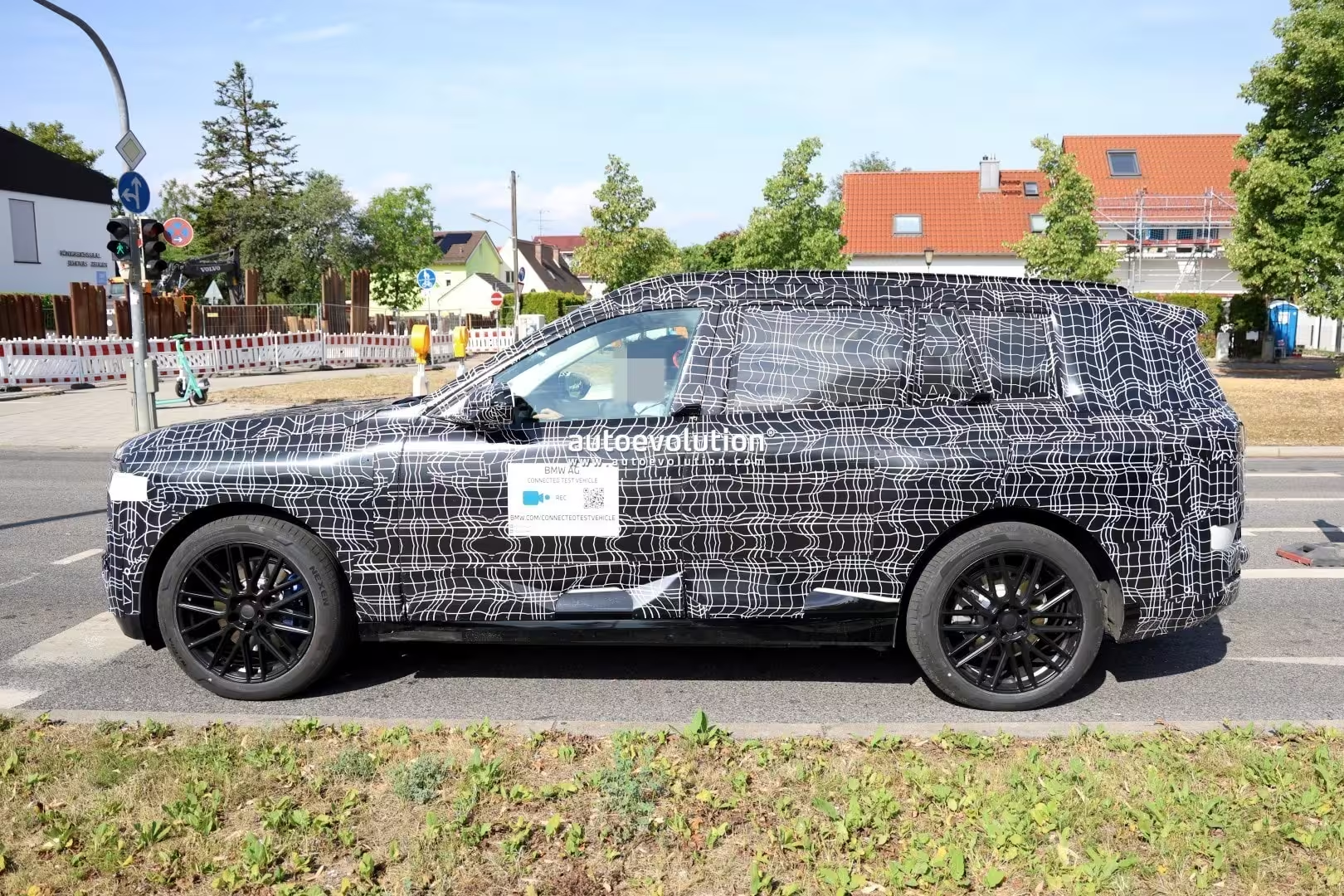
Tailgate design is evolving too. BMW has largely abandoned the two-piece tailgate used on some prior models, replacing it with a wider single-piece unit. That said, the X7 could still be offered with a split tailgate to give it a different character from the X5 and X6.
Expect an iX7 that stretches EV range and charging into full-size SUV territory.
So what does 'electric X7' actually mean on paper? The ICE-powered X7 will continue to offer six- and eight-cylinder choices, plus a turbo diesel for Europe. The iX7, on the other hand, will lean on modern cell chemistry and robust battery packs.
BMW’s targets are ambitious. Base internal-combustion six-cylinder units should start at around 300 horsepower. The electric iX7 aims for battery capacities north of 140 kWh, with an advertised real-world range that should comfortably exceed 400 miles on a full charge when equipped with the largest pack. That jump in range rides on next-generation cells that add roughly 20 percent more energy density compared with prior chemistry.
Charging speeds are being dialed up too. On compatible DC fast chargers the iX7 is expected to support peak rates near 460 kW, which translates to much quicker top-ups during long journeys. Power output at the high end could also be staggering—BMW’s engineers are said to be targeting versions that produce up to 800 horsepower from dual-motor layouts. But with curb weights inching into the multi-ton regime, torque and thermal management matter as much as headline figures. For context, the iX5 60 xDrive tips the scales at about 2,825 kilograms (6,228 pounds).

What this all adds up to is a BMW that wants to hold onto the X7’s stately road presence while stepping decisively into electrification. The exterior will feel familiar to traditional customers. The underpinnings, the charging architecture and the cabin experience will make clear this is a vehicle born in the EV era.
BMW plans to launch the redesigned X7 in summer 2027 for the 2028 model year. Between conservative styling choices and substantial technical upgrades, the new X7 could be the model that brings full-size luxury EV capability to buyers who prefer their SUVs imposing and composed rather than flashy.

“I cover automotive innovation, electric vehicles, and the future of mobility — where technology meets sustainability.”

Discussion
Leave a Comment
Comments (2)
Looks like BMW plays it safe - same old X7 vibe but with big batteries. Feels a bit meh, range targets impressive, if they’re real
No tailpipes, 800hp EV and 400+ miles? Sounds cool but is that real world or lab numbers? weight and thermal mgmt will be the real headache, curious tho