
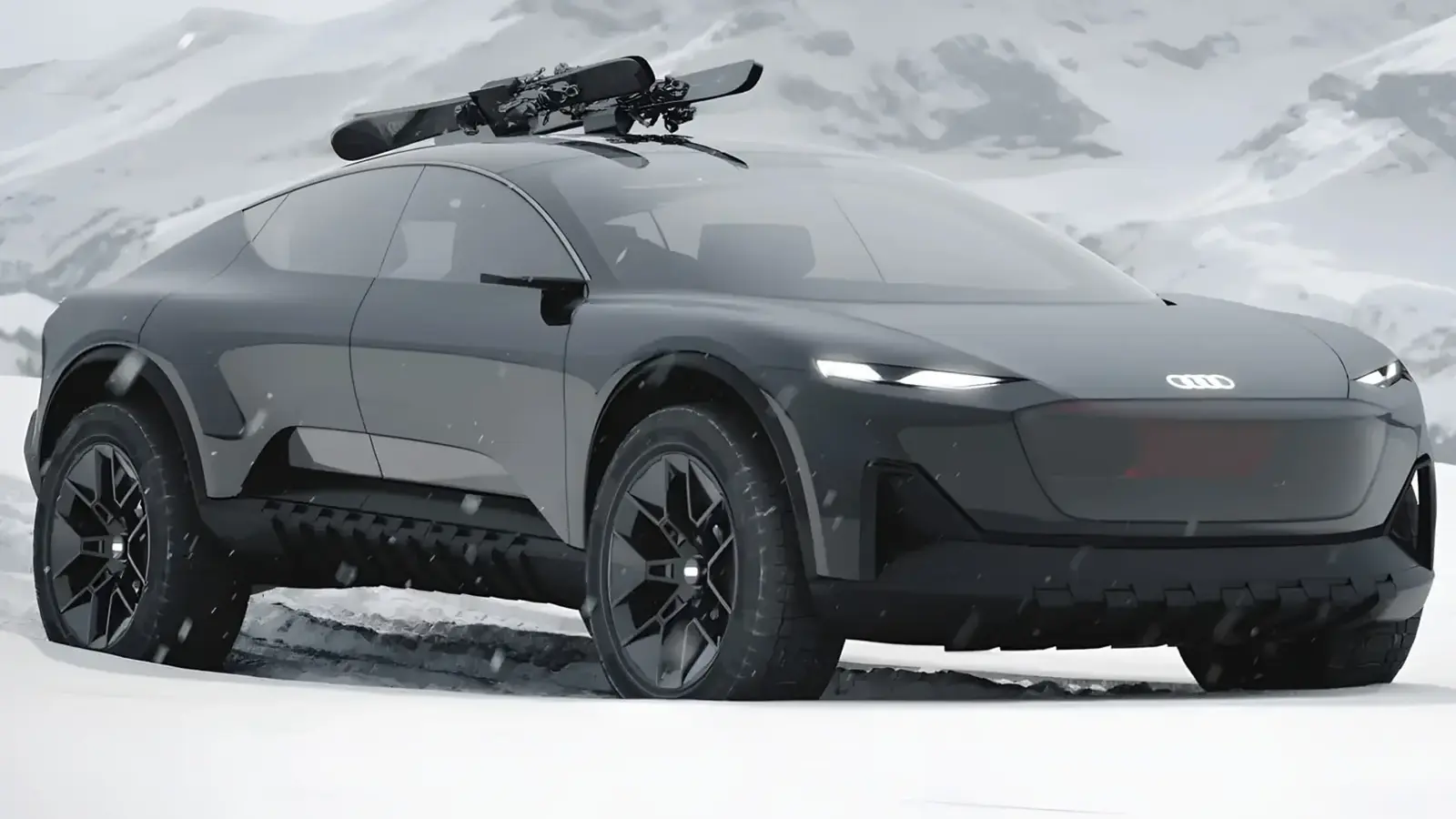
Imagine a drivetrain that changes character mid-drive. One moment it behaves like a pure electric car, the next it wakes a gasoline engine that can either recharge the battery or push the wheels directly. That is the picture drawn by a recent Audi patent filed with the United States Patent and Trademark Office.
At its core, the design is an extended range electric vehicle, but not the simple kind you might expect. Audi’s proposal pairs a primary electric motor with a second motor on a different axle, and then links a small combustion engine into that web through a series of mechanical couplings and electronic controls. The result is a system that can switch roles: drive the front wheels, the rear, both, or use the engine purely as a generator.

Where complexity knocks on cost
That toggle is the clever part. With a full battery both electric motors can propel the car and recover energy under braking. When charge runs low the gasoline engine can spin up, attach to the second motor and top the battery back up. In extreme scenarios the engine might even send torque to the wheels through the same pathway. It is an elegant workaround to extend range without making the combustion unit the dominant propulsor.

But clever can be costly in other ways. Audi argues fewer high-voltage components are needed, especially the reduction of an expensive electric motor and its associated electronics. Fewer expensive parts at production time might lower sticker prices or margin pressure. On the flip side you add bespoke couplings, clutches and extra moving parts. More mechanical complexity tends to mean more maintenance headaches down the road.

There is also a brand question. Quattro all-wheel-drive is an Audi signature. If the second motor is sometimes diverted to charging duty rather than delivering torque, the system might fall short of delivering genuine, seamless all-wheel traction in every condition. That compromise could be a hard sell for purists who expect instant, predictable quattro performance.

This patent is a wager on cheaper components at the price of greater drivetrain complexity.
History shows similar experiments. Other manufacturers have let combustion engines assist or directly drive wheels at highway speeds, or used compact generators to sustain electric range. Audi’s twist is routing the engine through the same electric machinery that normally drives the car, controlled by software and highlighted by purpose-built couplings. It is a dense mechanical choreography, one that depends on precise hardware and smart control logic.
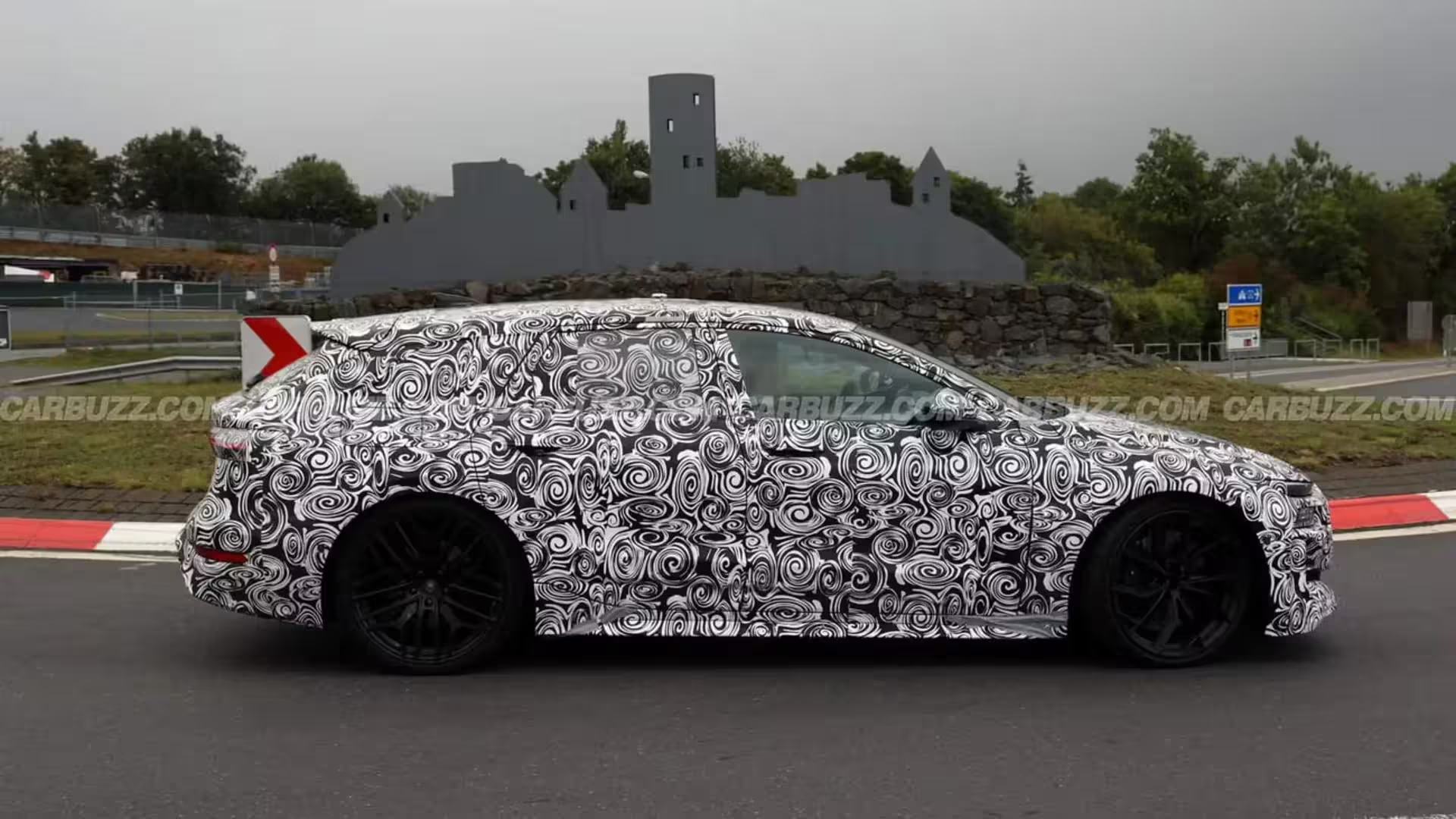
Filing a patent is not the same as committing to production. Automakers often protect ideas that never leave the drawing board. Still, this filing reveals a specific ambition: extend EV range while rethinking where cost and complexity should sit in the drivetrain. Whether this approach becomes a practical advantage, or an engineering curiosity best admired on paper, will come down to trade-offs drivers feel in the garage and on the road.
In short, Audi’s proposal sits on a thin ridge between ingenuity and overreach. It could give buyers a cheaper way into extended-range EVs, or it could introduce new failure points and dilute a hallmark trait of the brand. Either way, it is a reminder that pushing automotive boundaries often looks messy before it looks brilliant.

“I cover automotive innovation, electric vehicles, and the future of mobility — where technology meets sustainability.”

Discussion
Leave a Comment
Comments (2)
Woah clever idea, feels fiddly tho. If the software's flawless it could sing, but I keep seeing repair bills. Curious and a bit hyped.
If Audi actually ships this, service shops will hate it. Cool idea but lots of extra clutches, weird failure modes... is it even worth the tradeoff?