
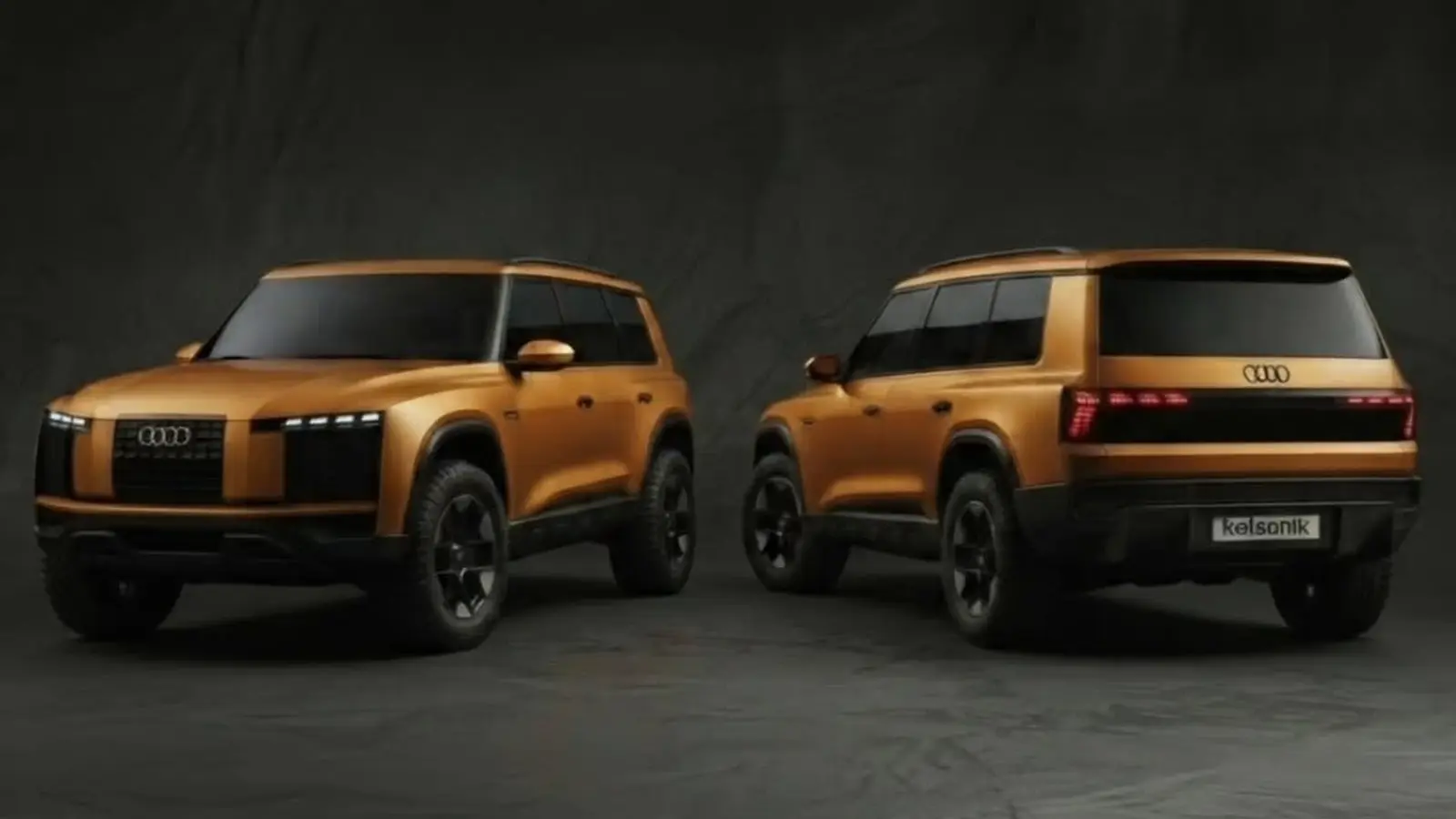
Imagine an Audi pulling up to a remote trailhead with inches of ground clearance, chunky tires, and a silhouette that reads equal parts utility and attitude. People would look twice. That image is what Audi seems to be sketching in its head: a full-size rough-and-ready SUV aimed squarely at the Mercedes G-Class and the Land Rover Defender.
Built from Scout bones? The rumor trail
Under the Volkswagen Group umbrella, Audi has options. One of the more intriguing whispers points to Scout, the Charlotte-based startup with a body-on-frame approach. Scout’s Terra pickup and Traveler SUV are electric vehicles with range extenders and ladder-frame architecture designed for proper off-road use. If Audi taps that package, the result would be an Audi that actually wants to get dirty, not just look rugged in an airport valet lane.

That speaks to capability as much as cachet. A ladder-frame layout favors long-travel suspension, durability, and easier modifications for serious overlanding. It also opens the door to multiple powertrain choices: pure BEV, BEV with range extender, or even hybrid variants for buyers who want flexibility without sacrificing go-anywhere competence.
Renderings from designer Kelsonik have already fueled the debate. They imagine a boxy, muscular Audi with slim LED signature lights, a restrained grille, plastic cladding, and a tall stance. The front visage borrows cues from Audi’s Nuvolari concept—an unexpected reference that mixes sportscar DNA with off-road pragmatism. The result looks modern and purposeful, though that modernity will divide buyers who idolize the G-Class’s classic lines.
Design versus desirability
Style matters as much as capability in this segment. The G-Class is half SUV, half fashion statement. A buyer choosing a G-Wagen is buying a cultural icon as much as steel and suspension. Audi’s challenge is twofold: craft a visual identity that feels premium and unmistakably Audi, and ensure the hardware backs up the image when the pavement ends.


The renders tilt toward a contemporary aesthetic: compact grille, V-shaped taillights, pronounced fenders, and a utilitarian lower body. There are discreet roof rails and a rear door setup that hints at G-Class practicality. In this imagined form, the Audi would look cleaner, more modern. Whether that equates to greater desirability is subjective. For some, modern equals progress. For others, heritage trumps novelty.
And then there is BMW, which is also rumored to be preparing its own contender. Early signs suggest BMW might stick with the CLAR platform rather than a ladder frame, which implies a different approach to off-road capability—one that favors on-road dynamics and luxury over brute-force durability. That contrast could shape buyer choices just as much as badges or styling.
So where does Audi stand in the lineup? The Q9 positions Audi in the full-size luxury SUV field alongside BMW X7 and Mercedes GLS. A rugged high-rider built on Scout architecture would broaden Audi’s portfolio into territory it has largely avoided: a serious, ladder-frame off-roader with genuine overland ambitions. That could attract buyers who want Audi badge cachet without sacrificing real-world capability.
Will it matter to sales? Potentially. There are fewer true off-roaders in the high-end market than people imagine. Many G-Class and Defender owners never leave paved roads. Yet the credibility that comes with a vehicle that can handle mud, water crossings, and steep approaches is potent. It validates marketing claims and gives the brand a story worth telling.

There’s also the question of powertrains. Scout’s BEV architecture with a range extender makes sense for long-distance adventures where charging infrastructure is scarce. Audi could offer multiple configurations to satisfy a wide audience—urban buyers who want the look and tech, and expedition-focused owners who demand durability and range.
At the end of the day, this is still speculation and rendering-based vision. Audi has the industrial siblings and technical building blocks to make a believable entry into this niche. Whether it will be a styling win or a technical one depends on choices yet to be made: platform fidelity, powertrain diversity, and how much classic off-road DNA Audi chooses to keep.

My take? If Audi leans into Scout’s ladder-frame strengths and resists the temptation to soften the package for showroom appeal, it could become a meaningful alternative to the G-Class and Defender. If instead it prioritizes polish over presence, it will be another handsome high-rider that looks tough but behaves politely on dirt.

“Cars are evolving faster than ever. I cover electric vehicles, smart mobility, and the future of transportation worldwide.”

Discussion
Leave a Comment
Comments (2)
Is this even true? Audi leaning on Scout sounds smart, but will they neuter it for city buyers or keep the ladder frame soul, tho...
If Audi uses Scout's ladder frame, hell yeah. An Audi that actually gets dirty? sign me up. Just dont soften it for showrooms, pls