
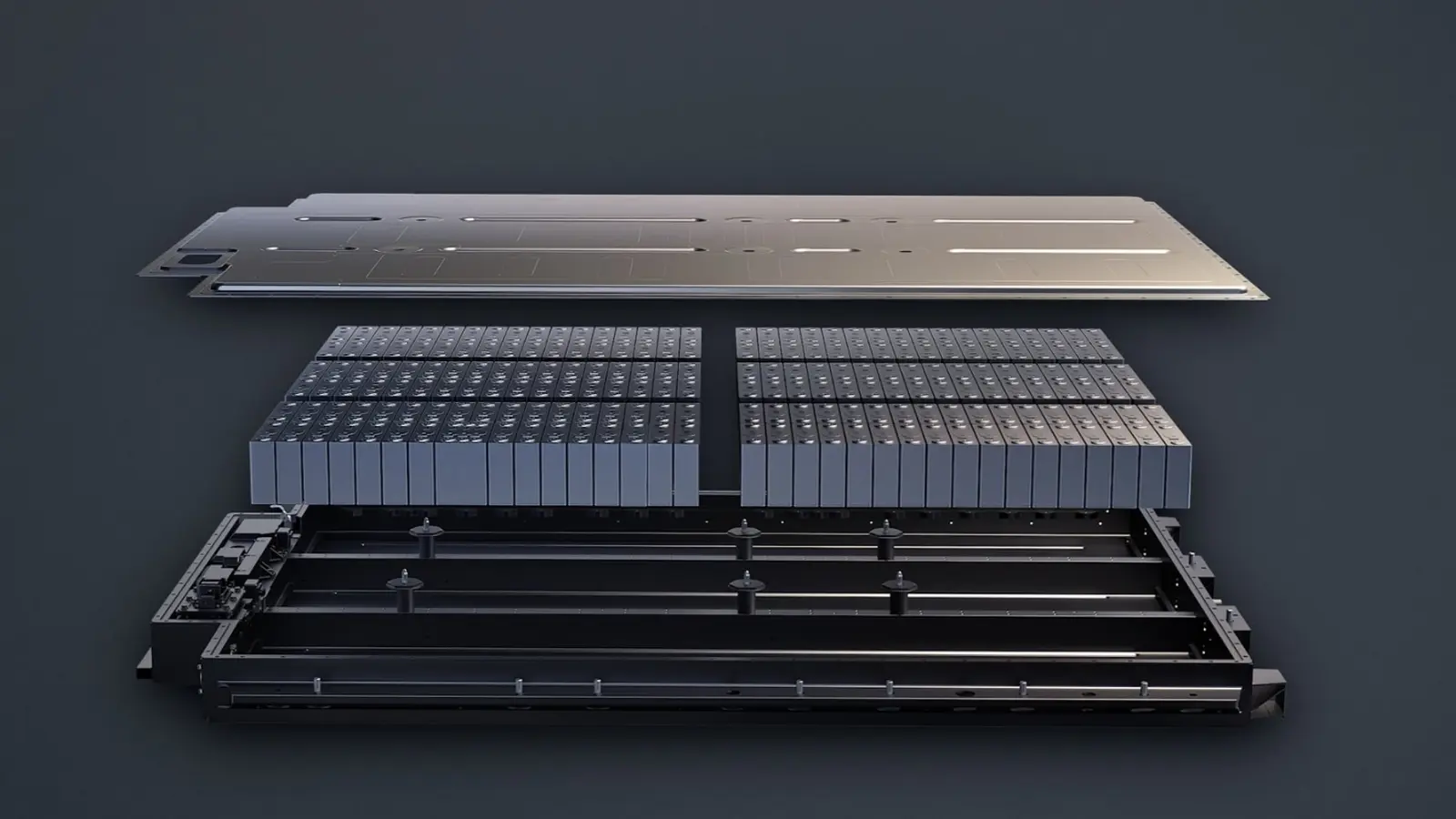
Picture a mechanic in a dimly lit R&D bay, squinting at a tiny ceramic wafer and smiling like he just found a cheat code. That is the mood you get from BYD's latest patent filings. Not a fairy-tale promise this time, but a step-by-step map of chemistry and manufacturing tricks designed to make solid-state batteries real inside everyday electric cars.
Solid-state has been the automotive equivalent of a mirage for years: alluring, occasionally photographed, rarely touched. BYD is not trying to conjure a single miracle compound. Instead, the company is orchestrating a chemistry duet. On one side are halide electrolytes, prized for stability. On the other are sulfide electrolytes, known for lightning-fast ion movement. Together, they could combine the best of both worlds. The challenge? These two chemistries normally hate each other. Left unchecked, they form resistive interfaces and degrade quickly.
Small layers, big effects
The solution is surgical. Patent CN122494747A describes an ultra-thin, ion-conducting buffer layer placed between the halide and sulfide regions. Think of it as diplomatic staff mediating a tense summit so that lithium ions can pass without drama. That buffer reduces interface resistance and keeps the materials from chemically sabotaging each other.
Then there is the physical stress problem. Batteries swell and crack during repeated charging. BYD’s CN122494567A outlines a dual-layer cathode architecture that tackles mechanical fatigue head-on. A tough monocrystal inner core resists fracture. A porous polycrystalline outer shell supplies the surface area needed for high-power bursts when you demand acceleration. Both layers play complementary roles: durability inside, performance at the edge.

BYD has also addressed contact failure, the old nemesis of solid-state packs where solid particles lose intimate contact. Patent CN122494552A inserts ionic liquid wetting agents at electrode interfaces to improve contact and ion flow. It is a bit like adding just enough oil between gears so they stop grinding but keep moving efficiently.

Scaling lab chemistry into millions of cells is a different sport. That is where CN122494553A comes in. BYD defines a quality metric called Re, insisting that at least 60 percent of a cathode particle’s perimeter maintain direct contact with neighboring electrolyte particles. It sounds clinical, but it is a manufacturing anchor: a measurable target to prevent capacity collapse as production ramps up.
Why go to such lengths? Because the company understands the consequence. Most modern BYD models use Blade LFP cells. Those are safe and structurally excellent, but heavy. If solid-state packs can deliver higher energy at lower mass, you change the vehicle equation. Lighter cars. More usable range without gargantuan batteries. Different packaging and handling. Different economics.
The timeline is pragmatic. BYD is not promising showroom-ready cars next month. The firm expects small-scale trial production in 2027 and plans to run initial batteries in a low-volume fleet for real-world evaluation. That pace feels believable. Many rivals talk about the dream while pointing to assembly headaches. BYD is publishing its playbook.
There are still risks. Solid-state cell manufacturing demands new equipment, tighter tolerances, and long-term validation under harsh conditions. Even with smart material pairings and buffer layers, real-world aging, thermal behavior, and repairability remain open questions. But the patents read like a systems-level approach rather than a wishful materials paper.
Watching this unfold teaches two things. First, incrementalism counts. Breaking a huge problem into chemical, mechanical, and manufacturing subproblems increases the odds of a working solution. Second, scale is the ultimate test. Lab success is one thing. Making millions of consistent cells is another. BYD appears to be building both the chemistry and the quality control rules to bridge that gap.
If BYD succeeds, heavy battery packs could become a relic and the shape of future EVs could change dramatically.
It will not be a single breakthrough night. Expect a sequence of small victories: better interfaces, tougher cathodes, cleaner manufacturing ratios, and then slowly broader deployment. But for a company that already dominates EV volume, a methodical, patent-backed push into dual-electrolyte solid-state cells is one of the more credible attempts to end the era of weight-for-range compromises.

“Cars are evolving faster than ever. I cover electric vehicles, smart mobility, and the future of transportation worldwide.”

Discussion
Leave a Comment
Comments (2)
Sounds smart on paper but is 60% Re really scalable? New equipment, tight tolerences = big $$ and delays. Anyone got real test dates?
Wow BYD actually mapping out the messy bits, not just hype. If dual electrolytes work cars could get way lighter, tho...