
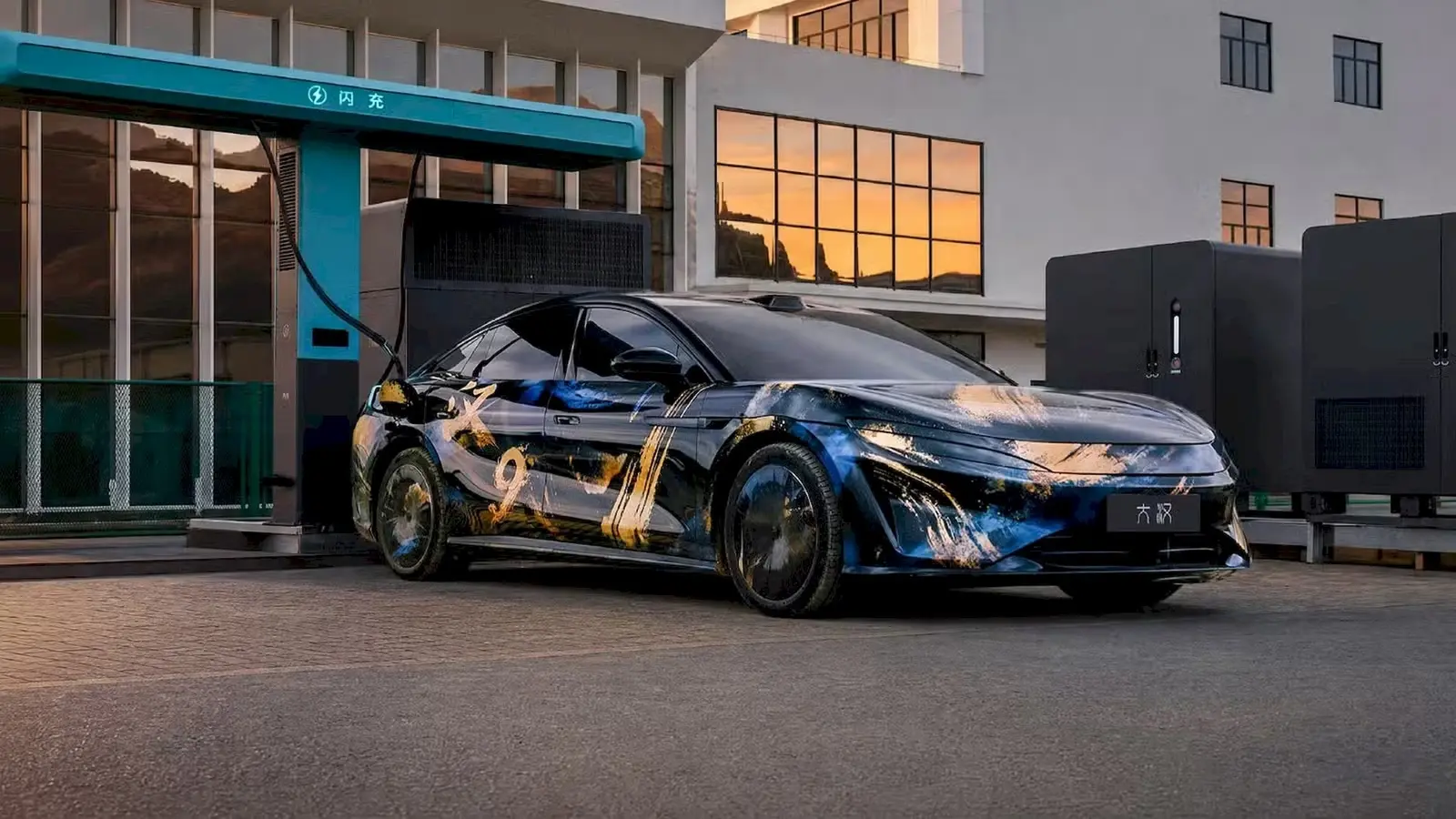
Picture a luxury sedan that quietly rewrites the rules of range and performance while you were busy watching German badges duke it out. That car is the BYD Great Han, and it refuses to be modest.
Big numbers, sharper teeth
BYD has just lifted the curtain on its new flagship, a full-size sedan built around second-generation Blade LFP cells and capable of megawatt-class flash charging. The headline stats are hard to ignore: the top all-wheel-drive version delivers 764 horsepower (775 PS) and sprints from 0 to 60 mph in about 3.0 seconds, topping out at 168 mph (270 kph). The rear-wheel-drive model is no slouch either, with 496 horsepower (503 PS), a 0 to 60 time of 5.2 seconds and a 149 mph (240 kph) limit.

Range is where BYD aims to shock. Using China’s CLTC cycle, the rear-wheel-drive LiDAR Exclusive Edition is rated at up to 626 miles (1,008 km) on a single charge, while the AWD LiDAR Flagship manages up to 547 miles (880 km). BYD hasn’t published battery capacity figures, but promises the next-gen Blade chemistry paired with megawatt fast charging will change how drivers think about long trips.
Beyond the numbers: design and intent
Look at the Great Han and you’ll see the family resemblance to the Han line: a slim horizontal LED blade across the front, a fastback profile that drops into a muscular rear, and proportions that read more European grand tourer than bargain executive. BYD is building credibility, not gimmicks. This is a car meant to sit in the D-segment and take on the Porsche Taycan, Mercedes-Benz EQE, and BMW i5 head-on, not from the cheap seats.

Performance claims put the Great Han slightly above the Taycan Turbo S on paper when it comes to peak horsepower, and its straight-line pace backs that up. But BYD’s real leverage is the claimed long-distance ability: if those CLTC numbers translate well to real-world conditions, long-haul driving in an EV just got significantly less stressful.
There’s also tech under the skin worth noting: dual-motor configurations for the flagship, single-motor rear-drive choices for efficiency, and integrated LiDAR options on the more expensive trims, a hint at advanced driver assistance ambitions.
What this means for the market
BYD is no longer a regional success story. It has become the world’s largest EV maker by volume, selling roughly 4.6 million new energy vehicles last year across battery-electric, hybrid, and plug-in models. For now, BYD’s presence in the U.S. is limited to buses, but the Great Han reads like a probe toward premium markets, a product signal before any formal North American push.

Could it unsettle the established European players? Possibly. The combination of long claimed range, competitive performance, and rapid charging makes the Great Han a serious proposition for buyers who want both distance and dynamism without the German price tag reflex.
Expect the Great Han to land in showrooms in the third quarter of 2026. Until independent tests verify BYD’s range and charging claims, skepticism is healthy. Still, this is a milestone: an automaker that once focused on cost and volume is now aiming squarely at prestige and performance, and it’s doing so with figures that demand attention.

“I cover automotive innovation, electric vehicles, and the future of mobility — where technology meets sustainability.”

Discussion
Leave a Comment
Comments (2)
Nice numbers, but feels overhyped. BYD's leveling up fast, still wanna see independent tests and pricing. If true, Porsche gotta sweat a bit
Wait 626 miles on CLTC? sounds wild, but real world will tell. 3s 0-60 and megawatt charging tho… curious how battery life holds up, temp issues?