

Imagine a vaccine that does not chase the next dominant strain but anticipates it. Researchers at the University of Cambridge have used artificial intelligence to design a candidate vaccine that aims to protect against a wide spectrum of avian influenza viruses — including lineages that have caused human infections and variants not yet seen in people.
How the AI-designed vaccine works
The team assembled genetic surveillance data from around the globe: virus sequences sampled from wild birds, farmed animals and people. Then they ran computational and evolutionary algorithms to synthesize five artificial antigens that together represent the broad genetic diversity of bird flu viruses. These are not copies of a single circulating strain; they are optimized constructs meant to guide the immune system toward protective responses that are hard for the virus to evade.
An antigen is the active ingredient in many vaccines. It teaches the immune system to recognize a specific molecular pattern so that, when the real pathogen appears, antibodies and immune cells can respond rapidly. By encoding multiple, divergent antigens, the Cambridge design tries to train immunity across a wider landscape of viral variation.
In preclinical tests the vaccine protected both mice and ferrets when challenged with several genetically distinct avian influenza strains. All strains used in those challenges have previously infected humans and are considered plausible pandemic threats. For comparison, animals immunized with the World Health Organization standard vaccine survived only about half the time under the same test conditions.
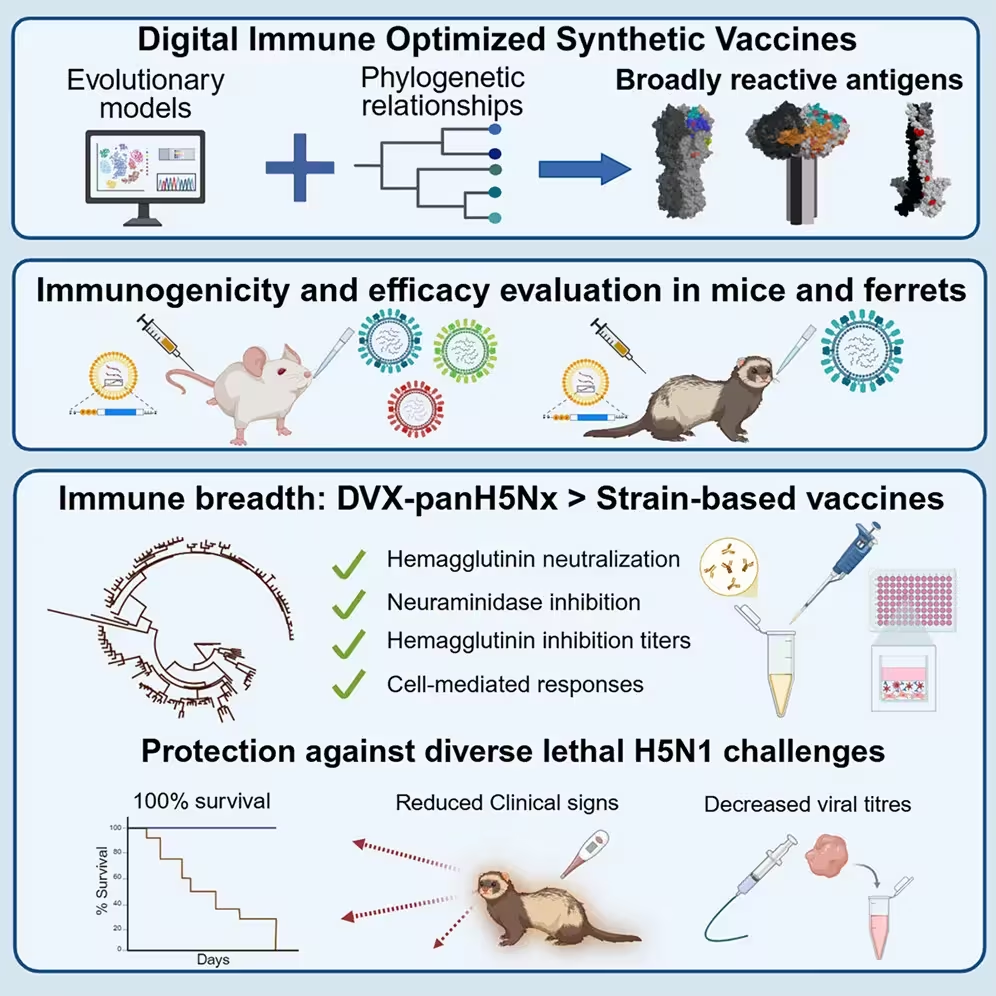
The results were published in Cell Reports Medicine and covered by international outlets. A University of Cambridge spokesperson described the work as a step toward vaccines that improve readiness for emerging viral threats. "We wanted to move away from a single-strain mindset," the team said. "By using an algorithmic view of viral evolution, we can build antigens that capture diversity and reduce the chance of immune escape."
The approach addresses a core problem with RNA viruses like avian influenza. These viruses mutate rapidly and can swap genes, producing new variants that sometimes jump from animals to humans. Traditional preparedness plans rely on stockpiling vaccines that match known strains. That strategy can fail if a novel or divergent variant emerges.
Translating promise into public-health tools will require further work. The researchers plan human clinical trials to assess safety and immune coverage. Manufacturing at scale, regulatory review and real-world efficacy against circulating and newly emergent strains will be crucial milestones. The team also intends to adapt the same design framework for seasonal influenza and other fast-evolving RNA viruses.
The potential advantages are clear. A broadly protective vaccine could reduce the time lost to chasing individual strains during an outbreak. It could also simplify stockpiling logistics and buy critical weeks or months while virus-specific vaccines are developed or updated. Yet hurdles remain: immune responses in small animals do not always mirror those in humans, and antigen selection must balance breadth with the strength of protective immunity.
This research sits at the intersection of bioinformatics, immunology and public-health strategy. If clinical trials confirm the preclinical findings, the AI-guided antigen design could become a tool in pandemic preparedness toolkits. For now, the work demonstrates a promising route: use data-driven algorithms to design vaccines that expect the unexpected.


“The cosmos has always fascinated me. I write about space missions, astronomy, and the technologies pushing humanity beyond Earth.”

Discussion
Leave a Comment
Comments
No comments yet. Be the first.