
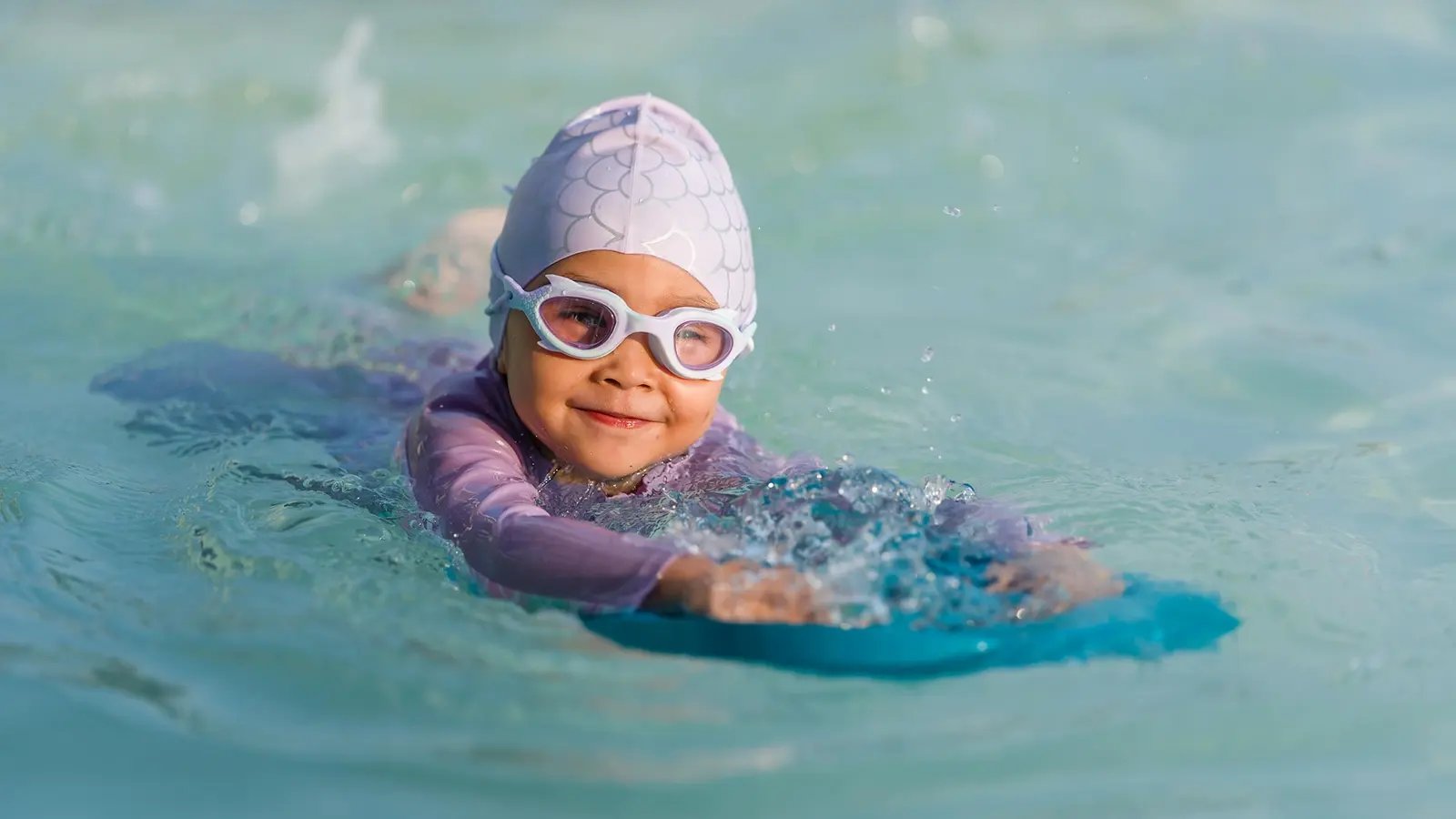
Picture a kindergarten class where one child calmly follows a three-step instruction, counts out loud without skipping a beat, and pairs numbers to objects with ease. It feels ordinary, almost inevitable. But new research suggests that for many children, that calm competence may begin in the shallow end.
When the pool becomes a classroom
A four-year study examined nearly 7,000 survey responses and included individual testing of 177 children. The headline finding was striking: children who began structured swim lessons before age five scored ahead of their peers on measures of literacy, numeracy, and the ability to follow instructions. On average, those children appeared to be between five and eighteen months ahead of typical developmental milestones for their age group, even after researchers adjusted for socioeconomic background.
The team used respected assessment tools, including the Peabody Developmental Motor Scales and the Woodcock-Johnson III battery, which are normed against national census data. Those instruments allowed the researchers to compare participating children with broader population expectations rather than with a small local sample. The result was not a hint but a measurable pattern: early participation in quality swimming lessons correlated with gains across cognitive and social domains.
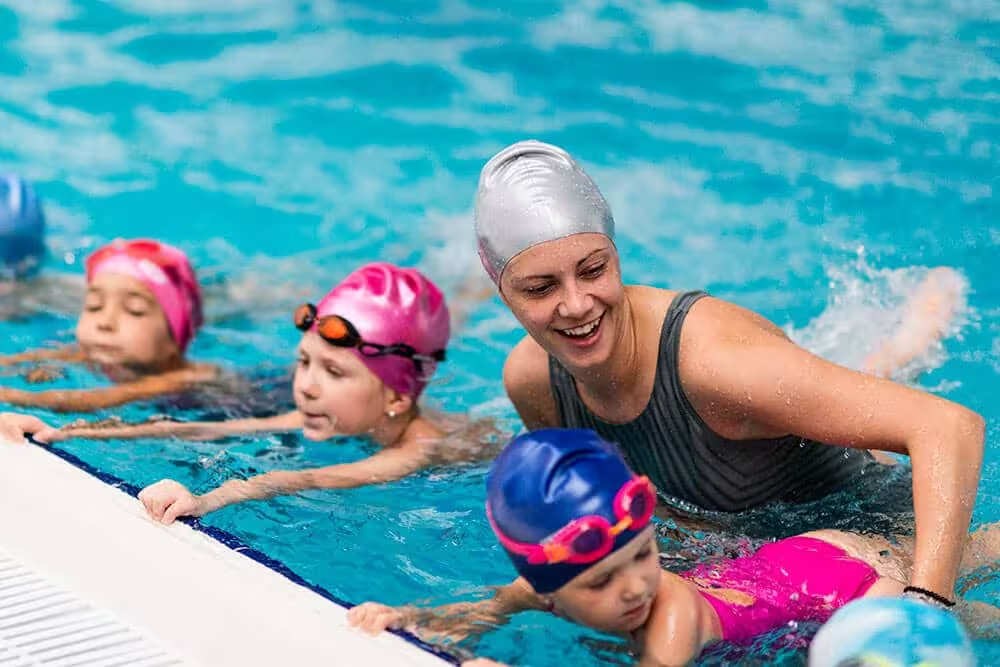
Why would practice in a pool ripple into the classroom? The explanation is pragmatic. Instructors teach sequencing, turn-taking, and counting with concrete actions. A child who counts kicks from one to ten while imitating a teacher is rehearsing one-to-one correspondence, a foundational numeracy skill. Repeating routines — lining up, waiting turns, responding to a signal — reinforces attention and self-regulation. It is training for the kinds of executive function children need when a teacher asks the class to settle, listen, and complete a task.
Skills beyond the splash
Those practical lessons carry cognitive benefits too. Language flourishes when instructors use short, clear directives and label actions: kick, float, breathe. Social skills develop as children share space and follow communal rules. Emotional regulation is rehearsed every time a child manages fear at the pool edge or waits patiently for help. In short, swimming lessons layer physical practice with routines that support school readiness.
Robyn Jorgensen, Emeritus Professor at the University of Canberra, who expanded on the project in her recent book, frames the findings conservatively. She does not claim swim lessons make children smarter by nature. Instead, she argues that the structure and activities in quality lessons cultivate habits and capacities that transfer directly to early classroom demands. Laurie Lawrence, an Olympic coach whose industry intuition helped spark the research, had observed the pattern informally. The study turned that industry hunch into documented evidence.
Those results may surprise educators and parents. They also shift how we think about early childhood interventions. Swim lessons are commonly framed first as safety training or as a recreational pastime. This research suggests another role: a preparatory environment for learning, especially during the critical early years when attention, language, and basic numeracy skills form quickly.

Access, inequality, and the risk of falling behind
There is a harsh flip side. The benefits documented by the study are not equally available. Cost is the most obvious barrier. Most swim schools operate as private enterprises and fees can be prohibitive for many families. The research highlights stark geographic and economic gaps: the United States and China show some of the greatest inequities, where regular lessons are affordable largely for affluent households. Singapore, Australia, Brazil, and South Africa also face substantial barriers tied to distance, pool availability, or price.
For some families, the choice is agonizingly clear. A respondent from Zimbabwe described lessons as a luxury when basic needs like food take priority. In parts of rural Australia, families on farming properties may drive hundreds of kilometers to reach a pool. That distance compounds the problem: children who live far from facilities are both less likely to attend lessons and more vulnerable to drowning, creating what the researchers called a double burden.
That pattern raises policy questions. Should public resources support early swim instruction in the same way governments subsidize early childhood education? Jorgensen argues yes. She points to the long-term costs governments already shoulder to close achievement gaps. If a relatively modest investment in organized early-years swimming can produce measurable gains in school readiness, the return could be both moral and fiscal — safer children who arrive at school better prepared to learn.
Expert Insight
"The pool is an environment of structured challenge," says Dr. Elena Martínez, a developmental neuroscientist at the University of Barcelona. "Children practice sequences, manage emotion, and repeatedly engage working memory. These are all neural pathways that support classroom learning. You are not teaching arithmetic in the water. Instead, you are training the cognitive tools that make arithmetic and reading possible."
Dr. Martínez adds a practical note: "Quality matters. Casual splashing does not produce the same benefits as lessons that combine clear instruction, repetition, and social routines. If policymakers want outcomes, they should fund accredited programs tied to developmental goals."
Conclusion
Swimming lessons, when delivered with structure and skilled instruction, appear to do more than teach breath control and stroke mechanics. They offer a setting where young children rehearse counting, sequencing, attention, and social rules — skills that show up later as advantages in school. The effect is not destiny, and lessons are not a silver bullet. But as this research suggests, there is a practical, scalable connection between early aquatic instruction and the competencies that matter in the classroom.

Policymakers, educators, and parents should weigh two realities: the potential cognitive and social benefits of structured early swimming, and the current inequities that limit access. If the goal is broadly shared school readiness, subsidizing or expanding community swim programs is an idea worth testing. The shallow end, it turns out, might be deeper than we assumed.

“My work centers on sustainability, energy, and environmental science — examining how innovation can lead to a greener future.”

Discussion
Leave a Comment
Comments
No comments yet. Be the first.