
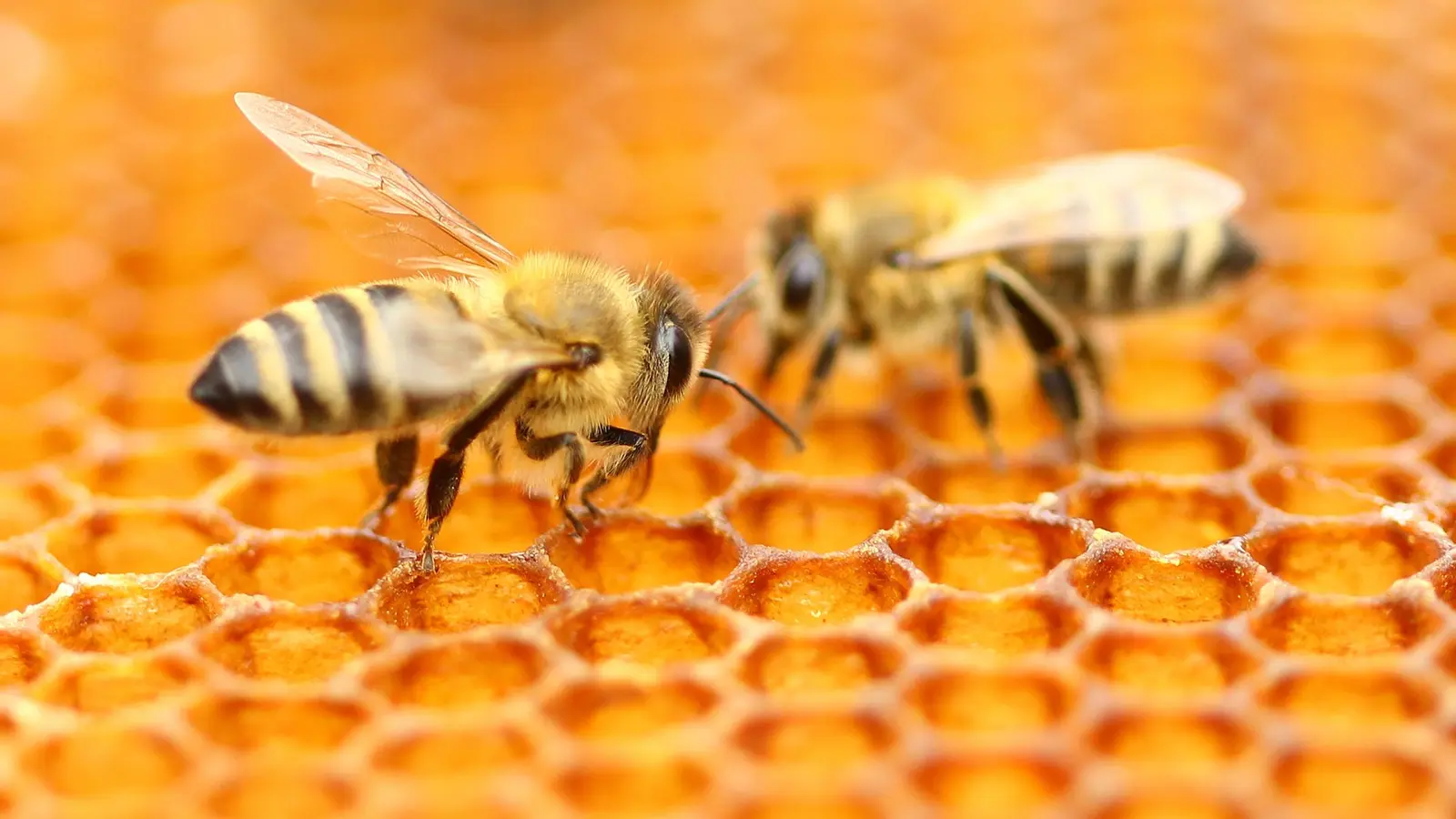
A beekeeper lifts a frame and sunlight catches a sheen of honey. Sticky, sweet, and familiar. What is less visible is how those same materials form a defensive web that shields an entire colony from infection.
Honey bees are social insects that live in highly organized colonies consisting of a queen, workers, and drones. Best known for producing honey and beeswax, they also play an important role in pollinating flowering plants and agricultural crops.
How hive materials arrange themselves into defence
Researchers have mapped the hive like a layered fortress. At the outer edges, where the structure meets the landscape, honey and propolis act as broad-spectrum sentinels. Honey, rich in hydrogen peroxide and other reactive compounds, delivers strong antimicrobial activity. Propolis, the sticky resinous substance bees collect from plants to seal gaps, contributes plant-derived flavonoids and other chemicals that suppress microbial growth.
Deeper toward the brood chambers, the chemistry changes tone. Beeswax combs, stored pollen — often fermented into beebread — and secretions from the bees create a more selective environment. Instead of trying to sterilize everything, these inner layers suppress pathogens while supporting beneficial microbes that help larvae develop. The arrangement is not random. Where materials sit and how they are combined matter for the colony’s resilience.
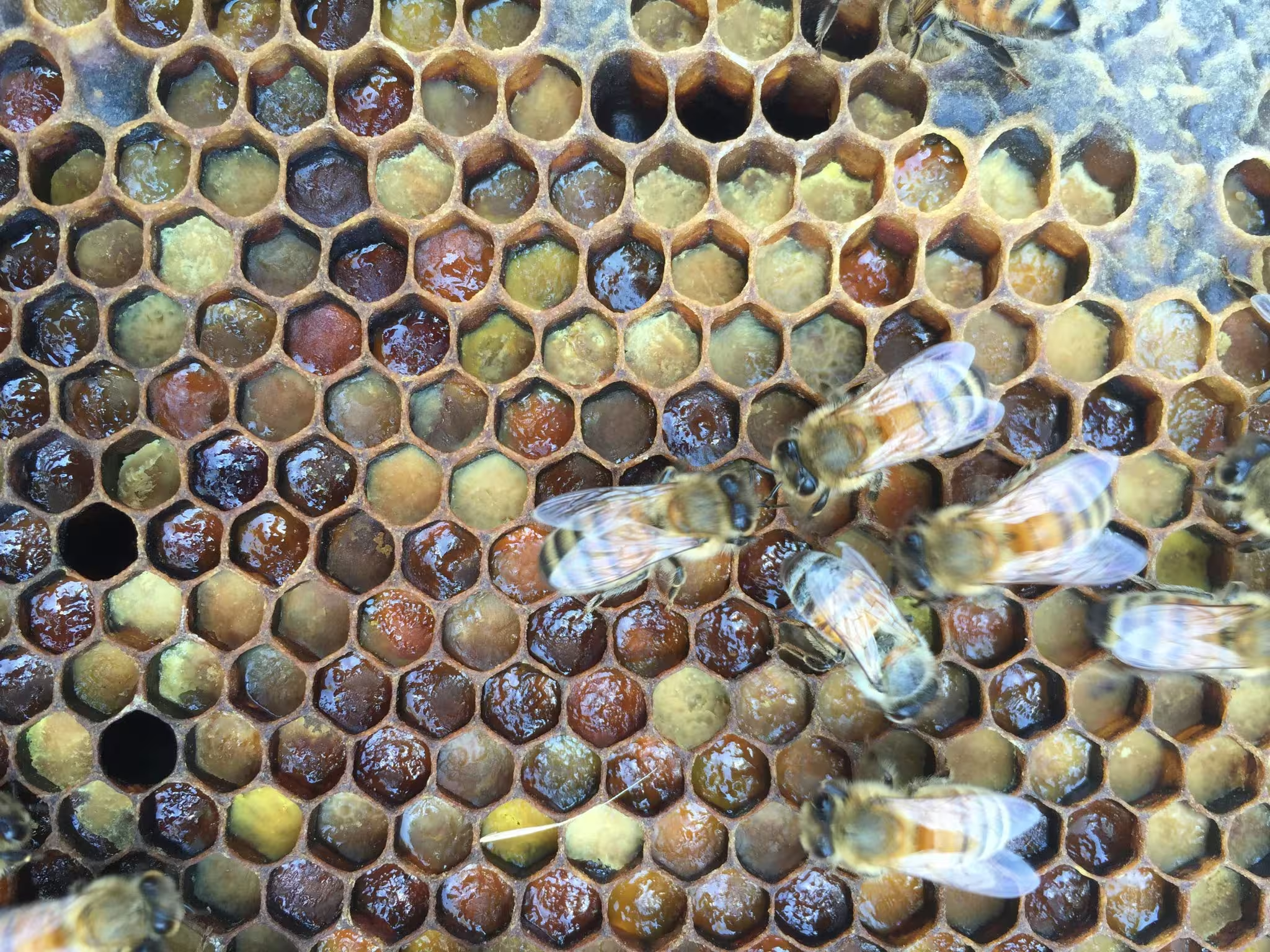
Close-up of bees extracting pollen.
Study design and what the scientists measured
The field work took place at research apiaries in New South Wales. Scientists sampled 24 colonies across five sites, measuring chemical profiles and testing antimicrobial activity in honey, propolis, wax, and stored pollen. They also sampled the bees themselves to study gut microbes and examined secretions and tissues for antimicrobial properties.
What emerged was a clear signal that many microorganisms and chemical signatures in hive materials trace back to floral nectar. Colonies foraging near native bushland tended to bring home different chemical mixes than those amid agricultural fields. Those differences correlated with measurable changes in antimicrobial potency and the composition of beneficial versus harmful microbes inside the hive.
Why landscape diversity matters for bee health
When flowers are varied, bees collect a wider palette of resins and nectars. That variety appears to enrich the defensive chemistry of propolis and honey. In contrast, simplified landscapes created by intensive farming may limit the plants available to foragers and, over time, erode the hive’s natural defenses. The implication is straightforward: protecting habitat diversity supports healthier colonies.
The protective system within hives also shows a bias. The materials and secretions were generally more effective against bacteria than fungi. This pattern likely reflects the evolutionary pressure exerted by bacterial threats, such as American foulbrood, a devastating infection of larvae. Other stressors, like the varroa mite, remain serious problems, but this research highlights how nutrition, environment, and nest architecture interact to shape disease resistance.
Broader implications and new questions
These findings shift how we think about colony health. The hive itself functions as an organized, living buffer that combines physical structure with biochemistry and microbiology to protect developing bees and stored food. For beekeepers, conservationists, and land managers, the study provides a practical argument for conserving native flora and creating forage corridors rather than treating disease as an isolated problem.
There are also comparative questions. Many social insects build complex nests. Do Australian native stingless bees, ants, or termites use similar spatial and chemical strategies to manage microbes? Early indications from this work suggest the answer could be yes, opening new lines of inquiry across ecology and microbiome science.
Expert Insight
'This study reframes the hive as an active participant in colony immunity, not just a passive container,' says Dr. Mira Patel, an entomologist who studies insect microbiomes. 'It highlights how behavior, landscape, and chemistry intertwine. For conservation, that means planting for microbial diversity, not only floral abundance.' Her observation points toward practical restoration strategies that could bolster resistance to both familiar and emerging threats.
Translating these insights into on-the-ground practice will require collaboration among researchers, apiarists, and land managers. Monitoring how different floral assemblages alter propolis composition or the hive microbiome could lead to targeted planting schemes that enhance colony resilience.
In short, hives behave like distributed immune systems: materials, microbes, and bee behaviour combine to protect the most vulnerable members of the colony. Preserving diverse habitats may therefore be as important as any veterinary intervention in keeping bees healthy and productive.


“My work centers on sustainability, energy, and environmental science — examining how innovation can lead to a greener future.”

Discussion
Leave a Comment
Comments
No comments yet. Be the first.