
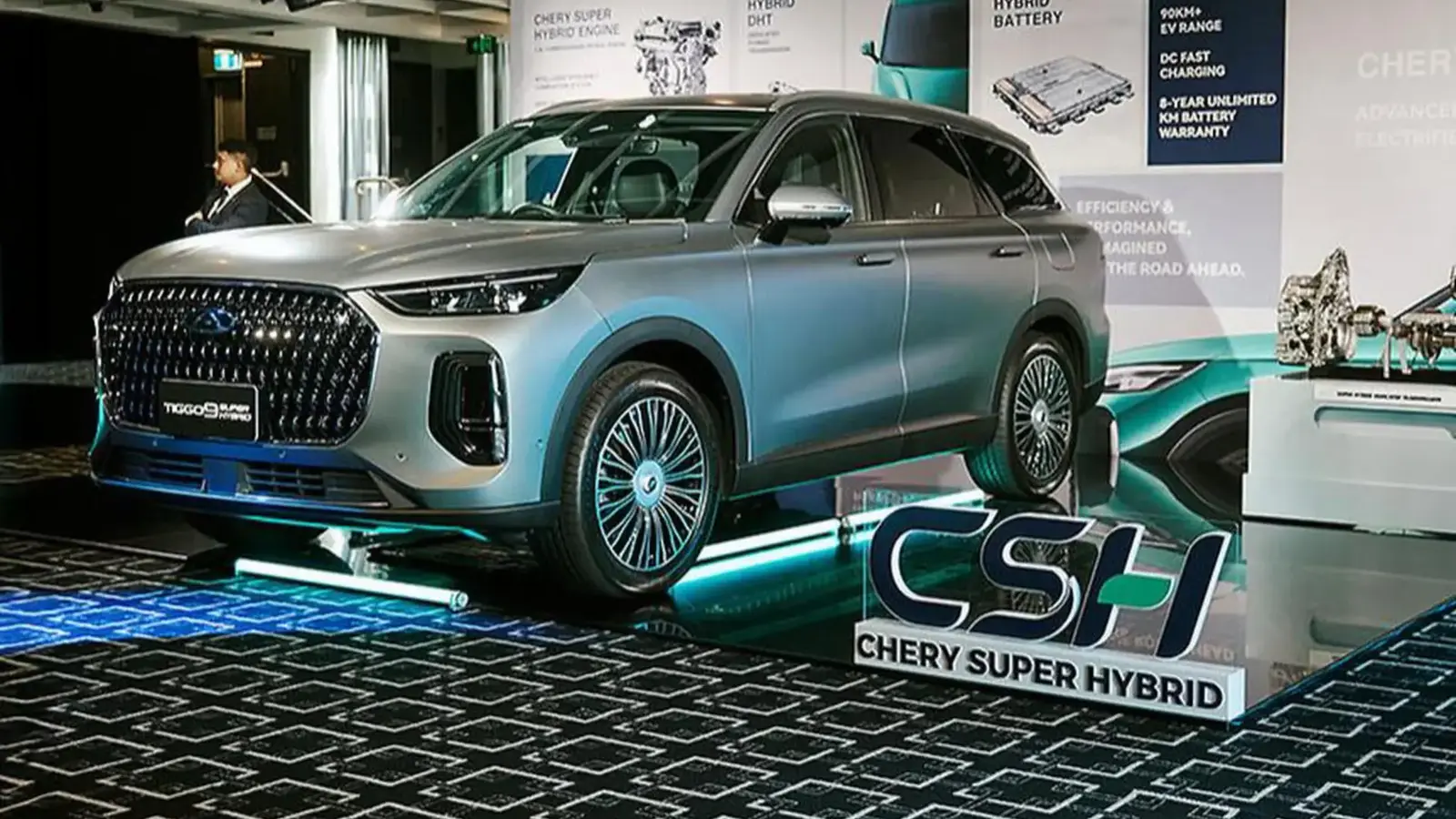
Imagine cruising through a dense summer heatwave in a Chinese city and thinking, what if the battery goes wrong? Chery just answered that question in the boldest way yet: a lifetime battery warranty for the first owner, limited to non-commercial use, on every new energy vehicle fitted with Rino battery packs.
The move is not marketing theater. It’s a direct response to China’s newly enforced GB 38031-2025 safety standard, which took effect on 1 July 2026. That regulation has raised the bar sharply on what manufacturers must prove about battery safety. Chery chose to lean in.
Why the warranty matters now
The new standard reads like a gauntlet. Batteries must resist a fire or explosion for two hours after a thermal runaway event. Cabin smoke must be held at bay for at least five minutes after a warning sounds. Cells must survive three impacts from a 30 mm steel ball at 150 joules without igniting. And a pack should not catch fire or explode even after 300 fast-charge cycles. These are not small asks.

Chery’s lifetime promise covers batteries, electric motors and control units. If a sold—or even still-on-sale—model suffers damage caused by thermal runaway originating in the battery, and human error isn’t to blame, Chery says it will replace the car in China with a new vehicle of the same model. That’s a striking level of accountability.
Four Chery sub-brands already use Rino battery packs: Chery itself, Oxid, Jetour and iCar, which is also marketed as iCover. By tying the warranty to Rino-equipped models, Chery signals confidence not only in its vehicles but in the chemistry and engineering behind those cells.
There’s history here. Chery rolled out a broader lifetime warranty across its lineup in 2023, but this latest step deepens that guarantee specifically around battery safety. It’s a clear message to buyers: tougher rules are coming, and Chery intends to meet them head-on rather than step back.
What’s next for the technology? Chery is already investing. The company aims to make solid-state batteries widely available in 2027 and continues development across other chemistries. Partners named include CATL and Gotion, two big players in China’s battery ecosystem.
On the sales front, the little QQ3 EV—set to be sold globally as the Chery Q—was Chery’s best-selling model in China for May 2026, moving 8,523 units, according to China EV DataTracker. Pairing volume models like that with a lifetime battery warranty is a strategic bet: build trust and lock in more buyers in a market where safety standards are tightening fast.

There’s also a psychological angle. Consumers care about range, price and charging. They care about safety even more, but it’s harder to quantify. A warranty that promises a replacement car in specific battery-failure scenarios turns safety assurances into something tangible—and emotionally persuasive.
Chery’s gamble is simple: reassure buyers, protect the brand, and accelerate adoption. If the warranty and the hardware hold up, rivals will have to respond. If not, Chery risks a costly promise. Either way, the new standard and Chery’s reaction mark a clear inflection point for EV safety expectations in China and beyond.

“I cover automotive innovation, electric vehicles, and the future of mobility — where technology meets sustainability.”

Discussion
Leave a Comment
Comments (2)
Wow, Chery actually putting money where mouth is... lifetime battery warranty on everyday models? Bold move, hope it holds up, else expensive lesson
Lifetime replacement for thermal runaway? Big promise. But how will disputes about human error be judged, and who's footing the bill if it's murky...?