
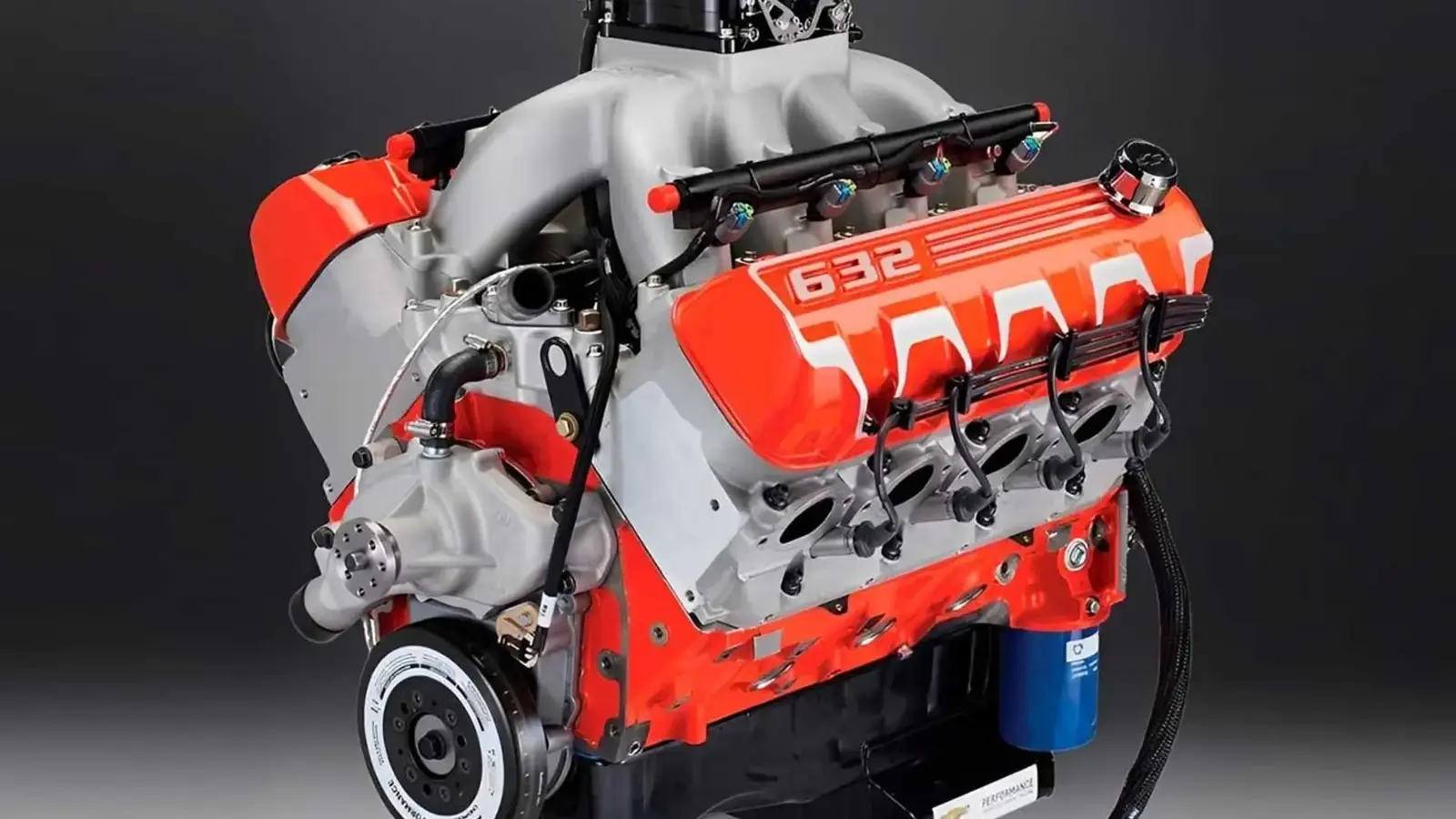
Picture a hulking V8 that refuses to bow to turbo trends and hybrid bandwagons. It breathes freely. It roars at 7,000 rpm. And it makes more than 1,000 horsepower without a turbocharger or supercharger in sight.
Chevrolet’s ZZ632/1000 crate engine is an audacious piece of engineering that reads like a manifesto for old-school displacement. While many manufacturers shrink engines and bolt on forced induction to meet emissions rules and efficiency targets, GM built a 10.4-liter naturally aspirated V8 that deliberately goes the opposite direction. The result is raw, unapologetic power delivered with an almost surgical level of refinement.

A Detroit love letter to displacement
The ZZ632/1000 traces its DNA to Chevrolet’s big-block lineage that began in 1958. But this isn’t nostalgia dressed up as novelty. It uses a cast-iron block for strength under sustained, brutal loads, and CNC-machined cylinder heads with RS-X symmetrical ports to keep airflow and temperature consistent across all eight cylinders. That attention to detail reduces hot spots and parts stress—exactly what you need when you’re asking mechanical components to live at the ragged edge.

Compression sits at 12.0:1. The rev ceiling is 7,000 rpm. Peak power is an eye-widening 1,004 horsepower at 6,600 rpm, while torque peaks at 1,188 newton-meters at 5,600 rpm. Those figures are not marketing hyperbole. They come from careful design: massively sized intake and exhaust valves, 450 cc intake runners compared with roughly 200 cc on an LS1, and high-flow 900 cc/min fuel injectors to keep the combustion chamber fed.
How do you validate reliability for a one-thousand-horsepower naturally aspirated engine? You put it through simulated torture. Chevrolet ran the ZZ632/1000 through more than 200 drag-race equivalents on a dynamometer, and it emerged without failure. That test pedigree is the selling point more than a sticker price could ever be.

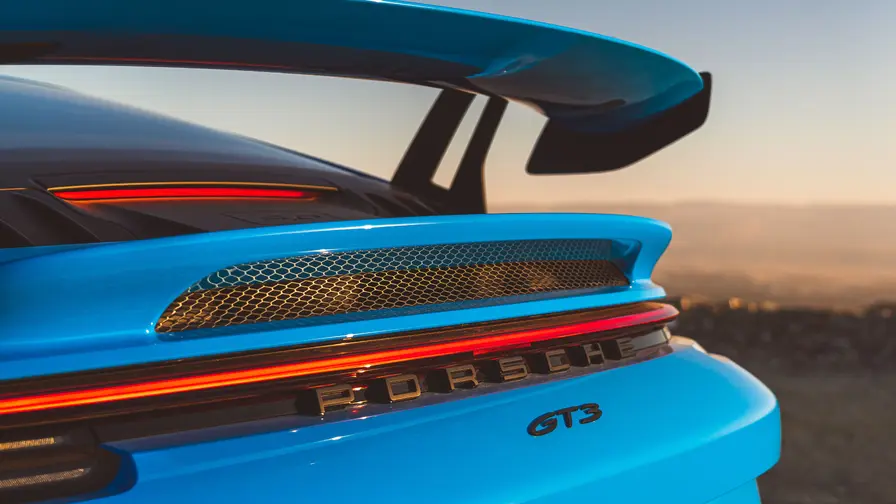
This crate engine produces 1,004 hp without forced induction.
Is it street legal? Not in most places. Is it a magnet for drag racers, hot-rodders, and anyone who treats horsepower as a craft? Absolutely. The factory list price is around €40,000, which may seem steep until you factor in the cost and time saved compared with building a comparable engine from scratch—or buying and fitting a supercharger system that demands reinforcement elsewhere in the car.
Buyers should remember that the engine is only part of the equation. Chassis strengthening, a beefy transmission, driveline upgrades, and cooling improvements are necessary investments if you intend to harness that power safely. In other words: the ZZ632/1000 is a turnkey powerhouse, not a complete turnkey car.

There’s also an interesting rivalry angle here. The naturally aspirated ZZ632/1000 delivers slightly more peak power than some supercharged rivals, including a certain 7.0-liter V8 that relied on a three-liter supercharger to hit similar numbers. That comparison underlines the point: forced induction is a route, not the only one.
Beyond raw figures, the engine represents an identity. Chevrolet has shown it can engineer small turbocharged four-cylinders, hybrid systems, and full-electric drivetrains. Yet this big V8 reads as a creative statement—part engineering exercise, part nostalgia, and wholly modern in execution. It runs on common 93-octane gasoline and proves that traditional pushrod architecture, when executed precisely, can still outmuscle and outshine some contemporary solutions.

Will the ZZ632/1000 trigger a sea change in how manufacturers think about displacement? Probably not at scale. Regulations and market demand favor efficiency and electrification. But for builders, racers, and enthusiasts who want a pure, install-ready, naturally aspirated thousand-horsepower heart for a drag car or showpiece, this engine is both practical and poetic.
It’s Detroit engineering wearing a vintage soul. Loud? Yes. Practical? Only to those who measure practicality in throttle response and decibel levels. And that might be exactly the point.

“I cover automotive innovation, electric vehicles, and the future of mobility — where technology meets sustainability.”

Discussion
Leave a Comment
Comments
No comments yet. Be the first.