

Monterey was loud this year, but the Czinger 21C Spyder managed to steal the moment. Sun, sea breeze, and a V8 that sings to 11,000 rpm — with the roof gone, everything feels sharper, closer, rawer.
Design as a manifesto
The Spyder isn’t a mere convertible version shoehorned out of necessity. It’s Czinger doubling down on a design philosophy they call BioLogic Engineering. Think of it as an attitude more than a buzzword: human creativity liberated from old constraints and amplified by 3D metal printing. The cockpit gets additively manufactured touchpoints and rethought ergonomics under the name NeuralNode, while BrakeNode fuses caliper, upright and hydraulic channels into one piece to cut unsprung mass and simplify parts. The claim? Up to 15 percent shorter stopping distances.

Names aside, what matters to drivers is how it feels and behaves. With the roof removed, aerodynamics were reengineered rather than compromised. At 241 km/h the Spyder produces roughly 1,482 kg of downforce; fit the removable carbon fiber top and that rises to about 1,500 kg, matching the hardcore 21C HDF. That’s extraordinary territory for an open-top car.
Numbers that will make enthusiasts sit up
- Powertrain: 2.88-litre twin-turbo V8 plus electric motors, total 1,250 hp (about 932 kW)
- Torque: 691 lb-ft (approximately 938 Nm)
- Redline: 11,000 rpm
- Downforce: ~1,482 kg at 241 km/h; ~1,500 kg with roof fitted
- Performance: 0-97 km/h in 1.9 seconds; quarter-mile in 8.7 seconds

Raw figures, yes. But the way they integrate hardware and fabrication is what separates Czinger from the pack. The Spyder’s body and structural elements benefit from additive manufacturing in ways that standard assembly lines simply cannot replicate. That translates into bespoke geometry, fewer fasteners, and components tailored to precise performance goals.

Only 30 cars will leave Area 21, Czinger’s Los Angeles workshop, each hand-assembled and road-legal across the United States. That tiny run guarantees exclusivity, but it also shows the firm’s belief in marrying cutting-edge manufacturing with old-school craftsmanship.
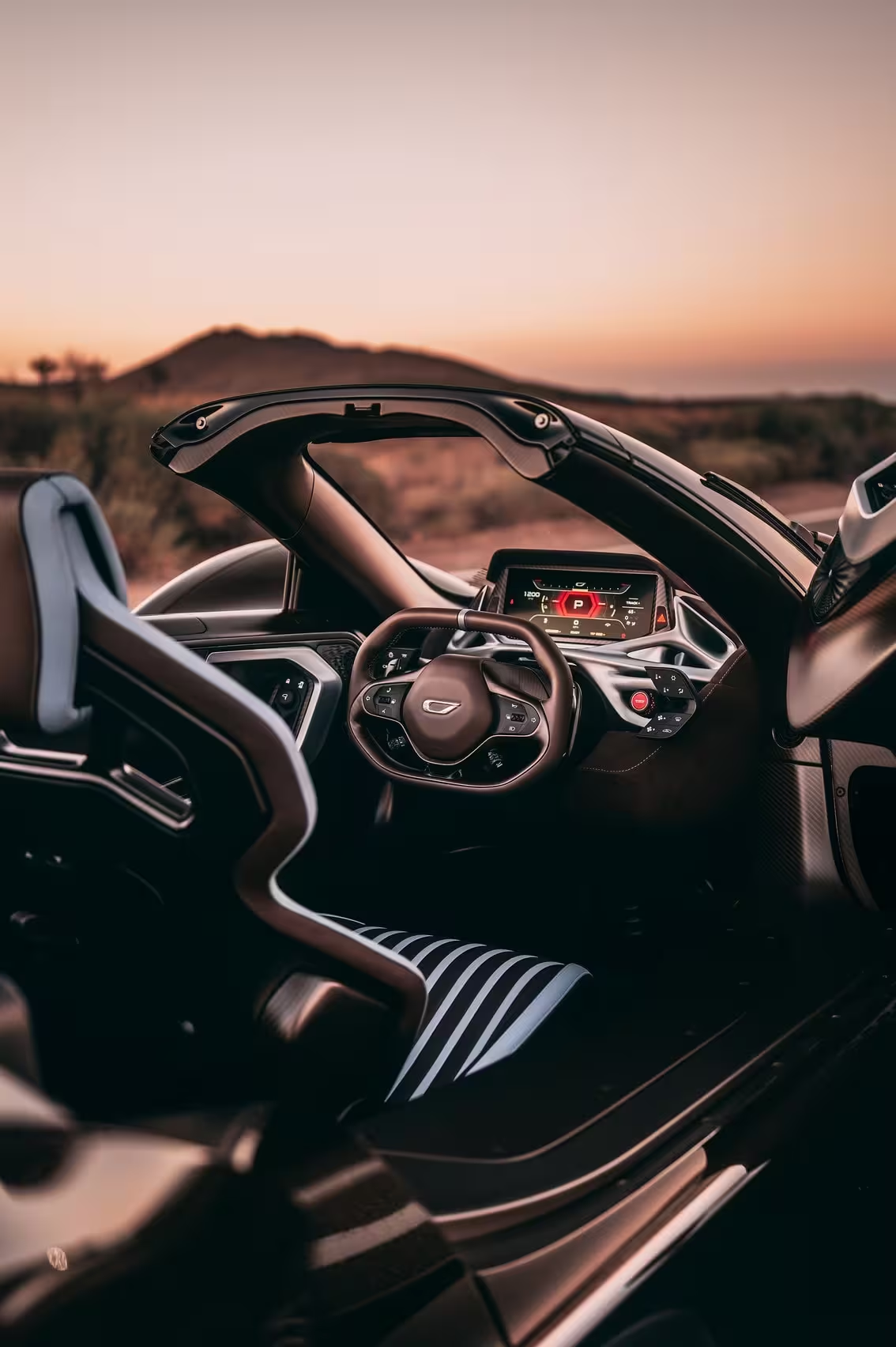
Production is limited to 30 hand-built cars, each starting at around €2.56 million.
Does the Spyder change the rules? Not single-handedly. But it does push an important conversation forward: how far can we take hybrid hypercars when every component is reconsidered from the ground up? Monterey got a glimpse of the answer — loud, fast, and open to the sky.

“I cover automotive innovation, electric vehicles, and the future of mobility — where technology meets sustainability.”

Discussion
Leave a Comment
Comments
No comments yet. Be the first.