

Picture a beefy, boxy SUV with unapologetic land-rover vibes, but bigger, louder and electrified. That’s the first impression the Galaxy Cruiser 700 makes. It’s not subtle. It wants attention.
Geely, calling it the Galaxy Cruiser 700 and known in China as the Zhanjian 700 or Battleship 700, teased the concept at Auto Shanghai 2025. The production model is due late 2026, with right-hand-drive versions destined for the UK, South Africa and Australia slated for production in late 2028 or early 2029.
Power theatre and heavy realism
Under the squared-off hood sits a 2.0-liter turbocharged four-cylinder linked to three electric motors, one up front and two at the rear. The combined output? A staggering 1,113 horsepower. That figure reads like hyperbole until you remember the Cruiser has to haul nearly 2,880 kilograms. Heavy, yes. Dramatic, absolutely. The battery is a 70 kWh Golden Short Blade pack, and Geely claims about 350 kilometers of electric-only range. That’s roughly 217 miles on a full charge.
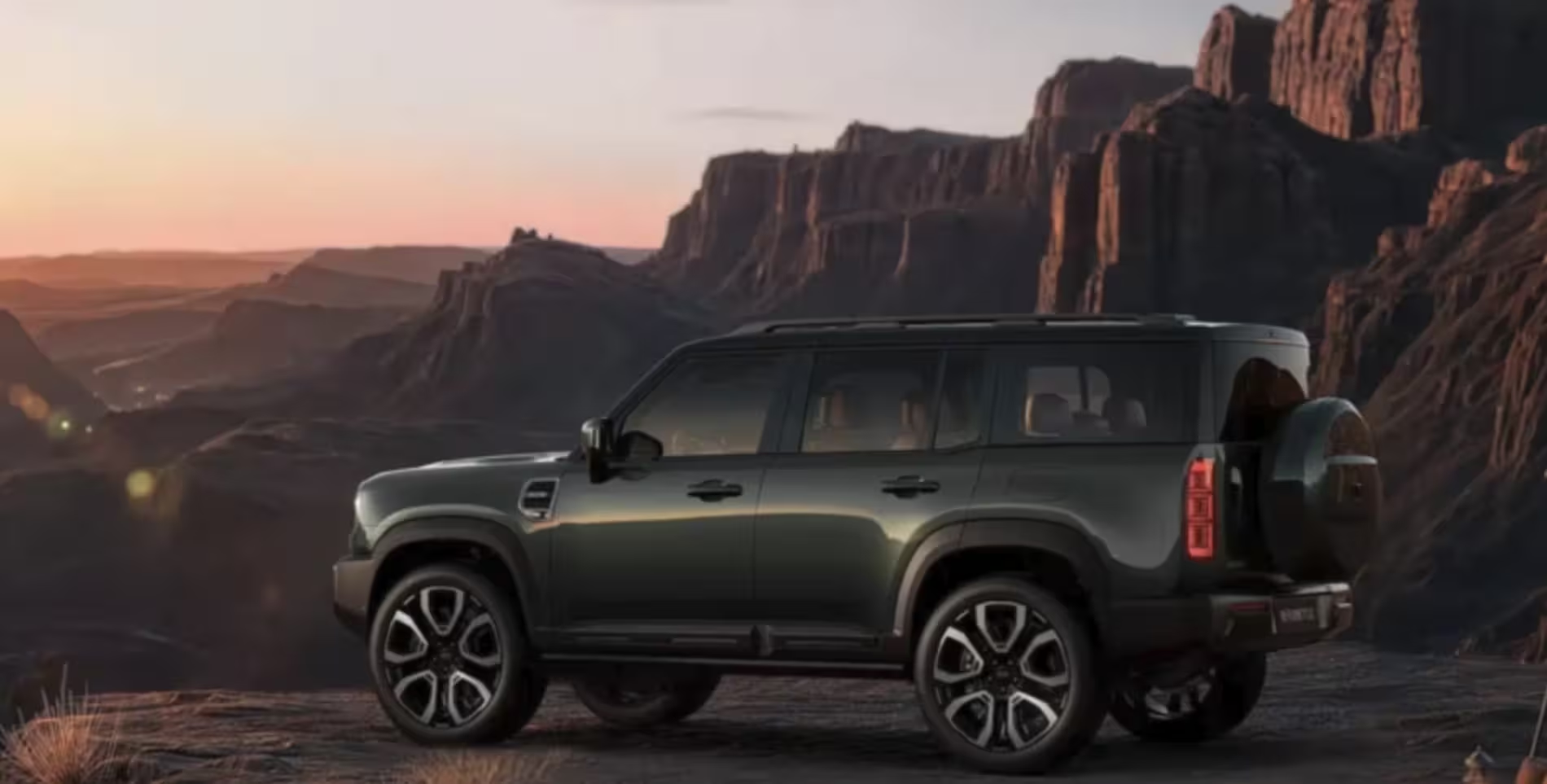
Performance numbers tell a mixed story. The Cruiser sprints to 60 miles per hour in about 3.1 seconds. Impressive on paper. But the top speed is limited to 180 km/h, or 112 mph, which nudges the car toward torque-rich shove rather than outright velocity.
Why the mismatch? Think of it as muscle for the urban canyon and off-road climbs rather than a track-day star. The Cruiser trades peak speed for colossal thrust and presence.
How it stacks up against the Defender
Now, the hard comparison. Land Rover’s most extreme Defender, the OCTA, runs a 4.4-liter twin-turbo V8 inside a mild-hybrid setup, producing around 626 horsepower and 750 Newton meters of torque. It hits 0 to 60 in 3.8 seconds and tops out at 250 km/h, or 155 mph. The Geely doubles the headline horsepower but carries far more mass, so its real-world character differs. Faster off the line. Slower at the top. Two different philosophies, both loud.
The Cruiser also finds cousins in China’s luxury PHEV arena. BYD’s Yangwang U8, for instance, pairs a 2.0-liter turbo with four wheel-mounted motors and claims about 1,180 horsepower. The arms race is underway, and horsepower headlines are the currency.

With an expected starting price of about €61,500, the Galaxy Cruiser 700 will undercut the Defender OCTA significantly.
To put those numbers in perspective: Land Rover’s OCTA starts at roughly €146,600. The arithmetic is hard to ignore. Two Geely Cruisers would still cost less than one OCTA, at least on paper.
That price gap explains the strategy. Geely can package dramatic design, immense combined power and a plug-in hybrid drivetrain and still position the Cruiser as a luxury-value alternative. Buyers who want presence, tech and headline figures without the British badge will see the appeal.

But questions remain. How will real-world efficiency look once the battery depletes? How will chassis tuning handle nearly three tonnes? What about resale and service networks in export markets? Early specs answer some curiosities but not the ones that matter most once the keys change hands.
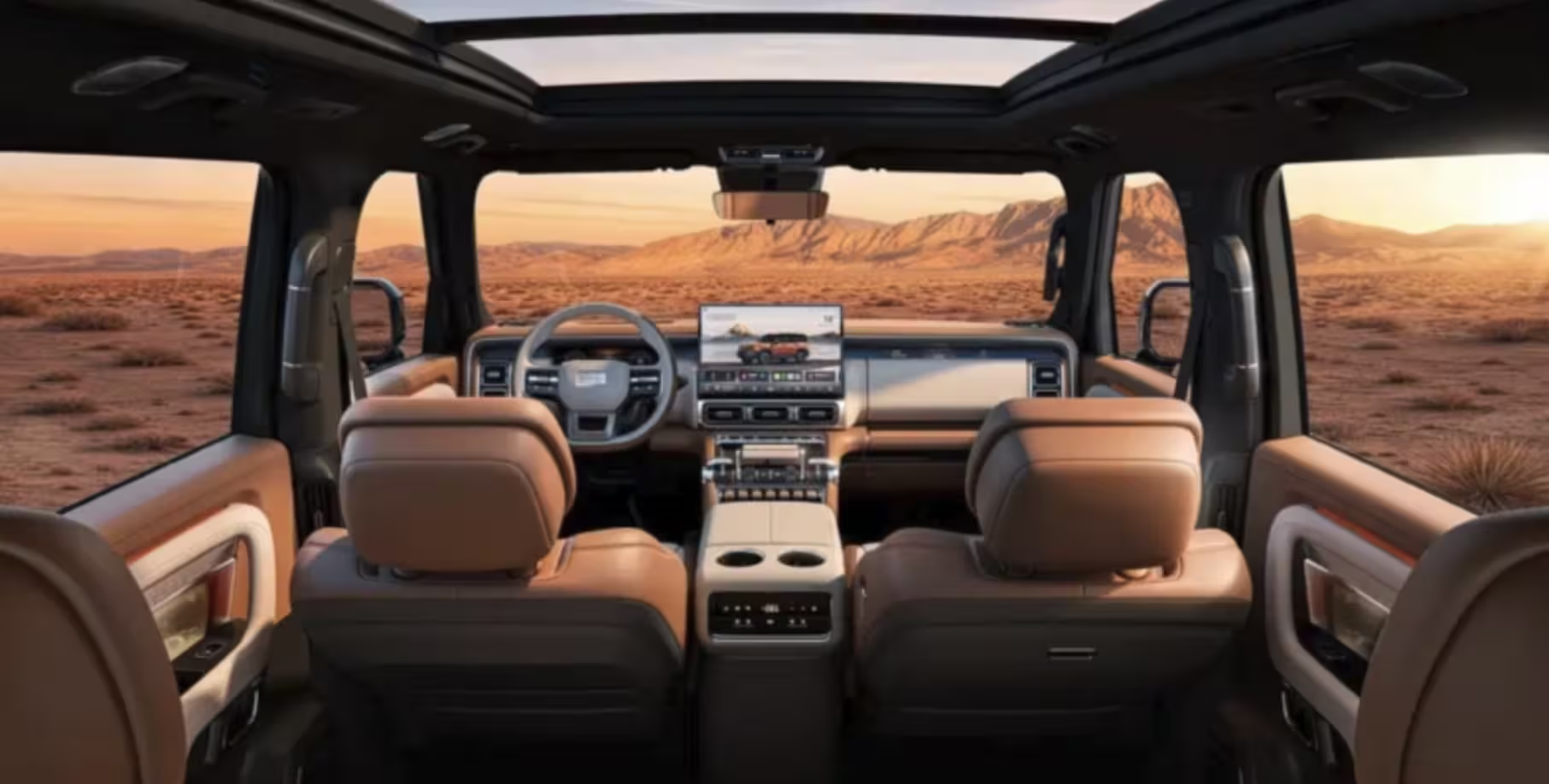
For now, the Galaxy Cruiser 700 is a bold statement from Geely. It borrows the Defender silhouette, then flips the script with electrified muscle and accessible pricing. Expect the usual debate: imitation or inspiration, bargain or bargain-basement. Either way, the upcoming battle for high-end, electrified off-road style just got louder.

“I cover automotive innovation, electric vehicles, and the future of mobility — where technology meets sustainability.”

Discussion
Leave a Comment
Comments (2)
Is this real or just flex marketing? 217 miles on a 70kWh pack sounds optimistic once you factor in weight, towing, AC etc. Service in Oz/SA tho?
Holy crap that power figure is wild! 1,113 hp but nearly 3 tonnes? Feels like theatre, not clever engineering. Still, wanna see it IRL