
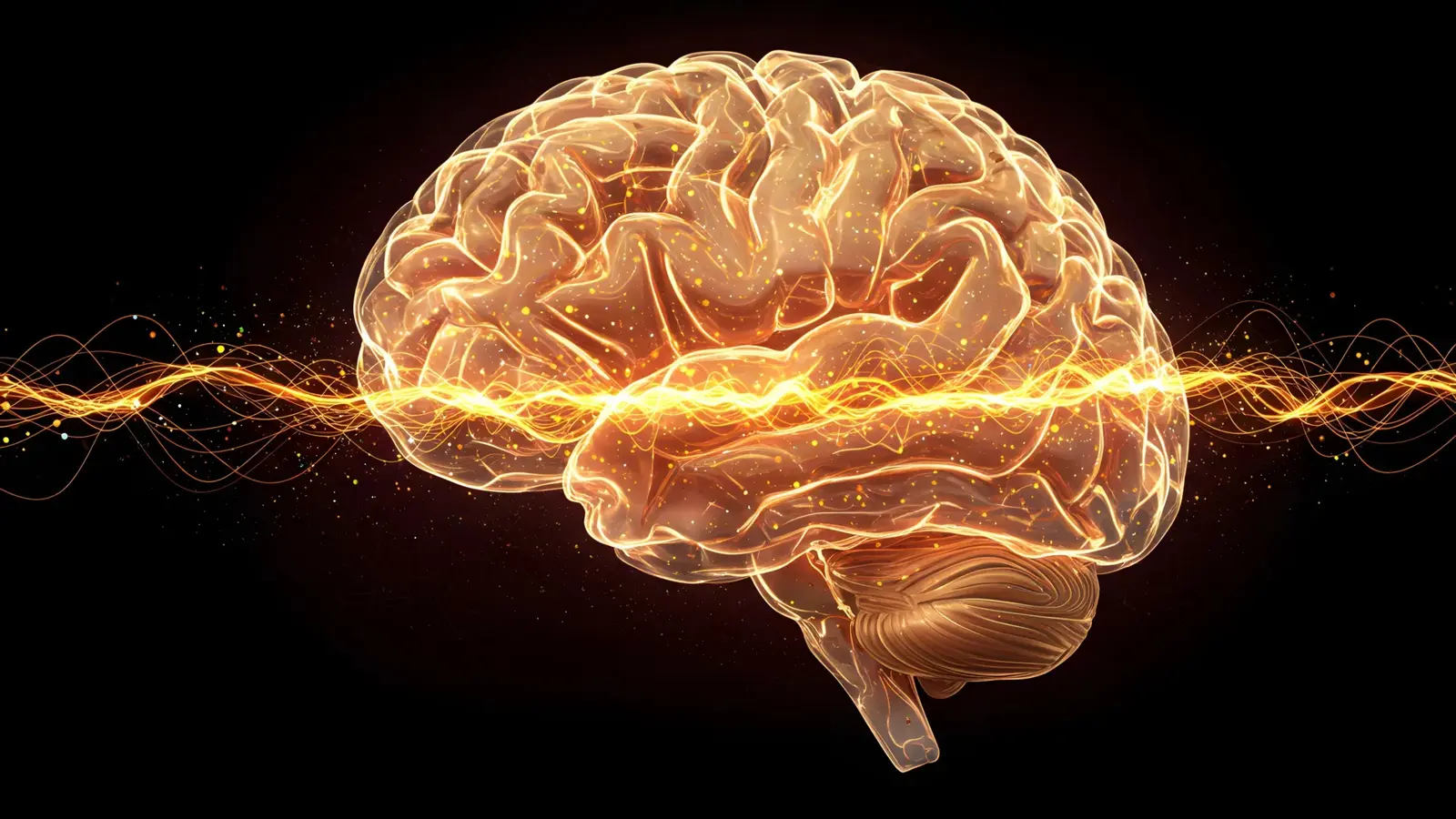
You cannot hear it, but your brain hums with patterns that tell a story about aging and memory. Listen closely and those rhythms may reveal who will struggle with dementia and who will keep a sharp mind into their eighties and beyond.
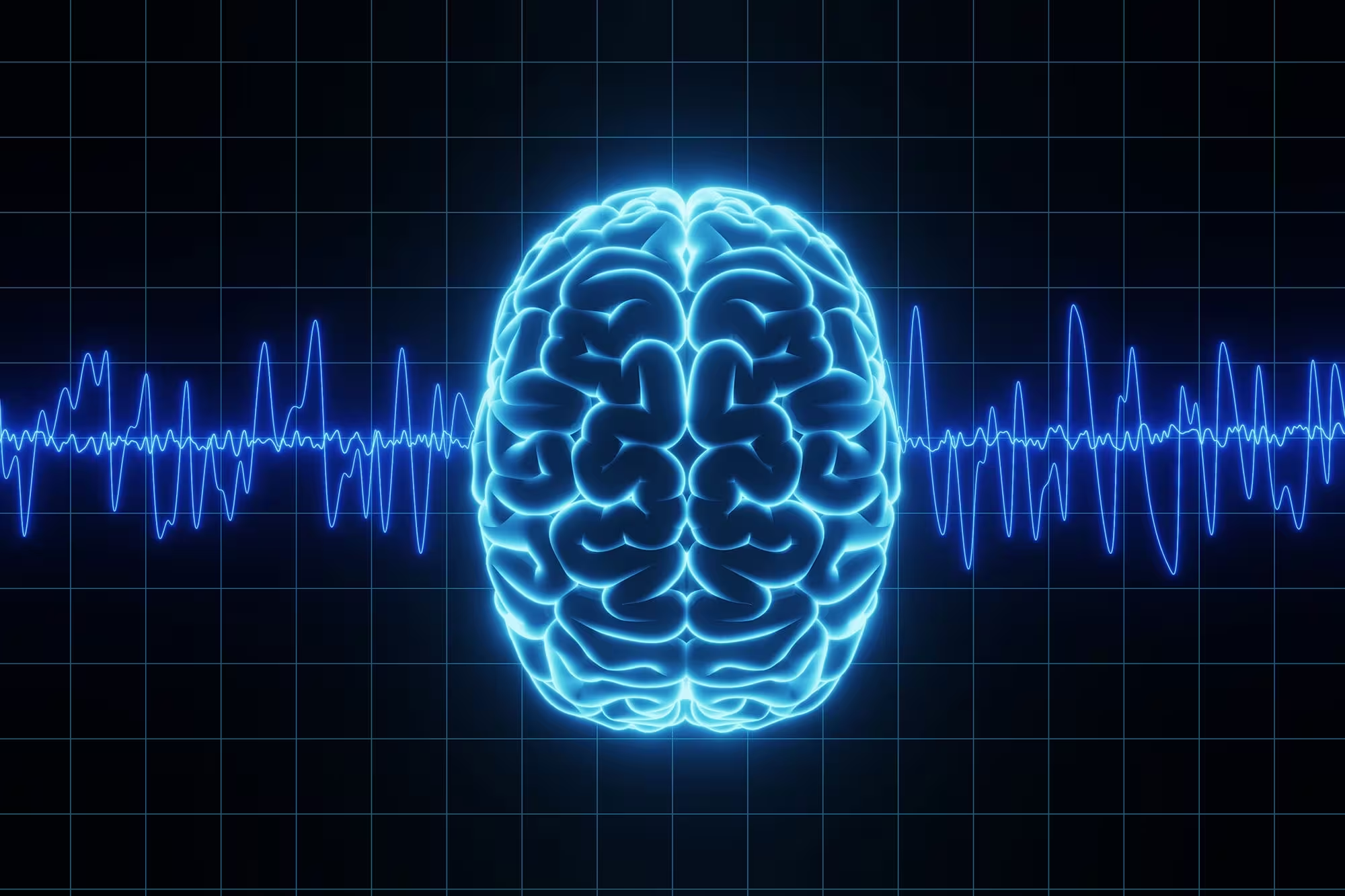
Brain waves are rhythmic patterns of electrical activity produced by the coordinated firing of neurons. These patterns change with sleep, attention, memory, and other mental processes, offering scientists valuable clues about how the brain functions.
A resilience versus vulnerability fingerprint
A team at Stanford Medicine has turned those subtle rhythms into a single, testable signature. Using resting state functional MRI scans, researchers compared two extremes: 180 so-called super agers, people aged 75 and older whose memory performance matches that of typical 45-year-olds, and 110 older adults diagnosed with Alzheimer’s disease. The goal was simple and ambitious. Find the patterns that separate brains that resist decline from those that move toward dementia.
They distilled complex connectivity patterns into a score the team calls the Alzheimer’s resilience-vulnerability connectome, or ARC score. In the study, the ARC score separated super agers from people with Alzheimer’s with roughly 85 percent accuracy. That is not perfection, but it is a clear signal rising from noisy biological data.
Why does this matter? Because traditional biomarkers like amyloid-beta and tau become detectable relatively late in the disease course. The ARC score captures network-level dynamics, the way brain regions talk to each other when someone is at rest. Those dynamics shift long before memory slips are obvious on a clinic test.
Predicting decline in people who feel fine
Next, the researchers tested the ARC score in a large group of more than 1,300 cognitively healthy adults aged 55 to 70. At baseline, these participants performed normally on cognitive tests. Yet their brain connectivity patterns diverged. Over follow-ups lasting up to 12 years, people with activity patterns resembling the Alzheimer’s profile declined faster, and they were more likely to develop amyloid plaques or to be diagnosed with mild cognitive impairment or Alzheimer’s disease.
Those with super-ager-like connectivity tended to maintain cognitive ability. The signal held up even when compared against established risk markers such as genetics and conventional biomarkers. Combining the ARC score with traditional measures sharpened prediction further. In the words of lead author Kanhao Alex Zhao, PhD, the team used the ARC score to estimate 'how likely a patient is to convert to mild cognitive impairment or Alzheimer’s disease'.

The practical implication is compelling. If a noninvasive scan can identify someone on a trajectory toward decline years before symptoms, clinicians and researchers gain a window for early intervention. That is exactly what the Stanford team emphasizes: detection earlier, when treatments or lifestyle changes might have greater impact.
Mechanisms, limits, and intervention prospects
Important caveats remain. The ARC score is not a diagnostic test. Brain connectivity changes with age, injury, stress, and psychiatric conditions. One person scoring in a vulnerable range is not condemned to develop dementia. Scores can change, and that plasticity is where hope lies.
What could shift a vulnerable pattern toward resilience? The researchers point to two broad strategies. First, targeted cognitive training that strengthens specific networks. Second, neuromodulation techniques such as transcranial magnetic stimulation that use magnetic fields to nudge activity in targeted regions. Both approaches are under active investigation, but neither has yet been proven to prevent Alzheimer’s by altering ARC-like patterns.
The team plans intervention trials. As Yu Zhang, PhD, an investigator on the project, explains, identifying the super-ager pattern gives researchers a model of what a 'healthy' network looks like. We need both pieces: know where to target and how to change it.
Another intriguing link is between ARC scores and brain age, a metric derived from imaging that estimates how 'old' a brain looks compared with chronological age. ARC appears to tap into that larger aging signal while adding specificity for Alzheimer’s-related trajectories.
Expert Insight
Dr Mira Patel, a neuroimaging scientist not involved with the study, offers a measured perspective. 'This work reframes risk as a network problem rather than a single molecule problem. That matters because networks can be resilient. We see compensatory activity in many older adults. The ARC score gives us a way to map that resilience and to test whether interventions restore healthier connectivity patterns.' She adds, 'The challenge now is translating a robust research signal into tools clinicians can use at scale.'
Conclusion
The Stanford study does not claim to have solved Alzheimer’s. What it does provide is a new lens on early risk and resilience, one rooted in the dynamics of brain networks rather than the presence of a single biomarker. For researchers, that opens new experimental paths. For clinicians, it suggests a future in which risk assessment combines molecular biomarkers, genetics, and functional connectivity to tailor prevention strategies. For individuals, the take-home is pragmatic: early detection expands options. Intervene sooner, and the arc of decline may bend toward preservation.

Ultimately, listening to the brain’s hidden rhythms could become a vital piece of dementia medicine. The rhythm alone is not the whole story, but it is a readable chapter in it.

“My work centers on sustainability, energy, and environmental science — examining how innovation can lead to a greener future.”

Discussion
Leave a Comment
Comments (2)
My aunt was fine at 78 then slipped fast, if ARC would've shown risk earlier that would've mattered. hopeful but sceptical, needs trials, and real world checks
Wait, so a resting-state scan can flag dementia risk years ahead? sounds promising but kinda scary... false alarms could be a real problem?