
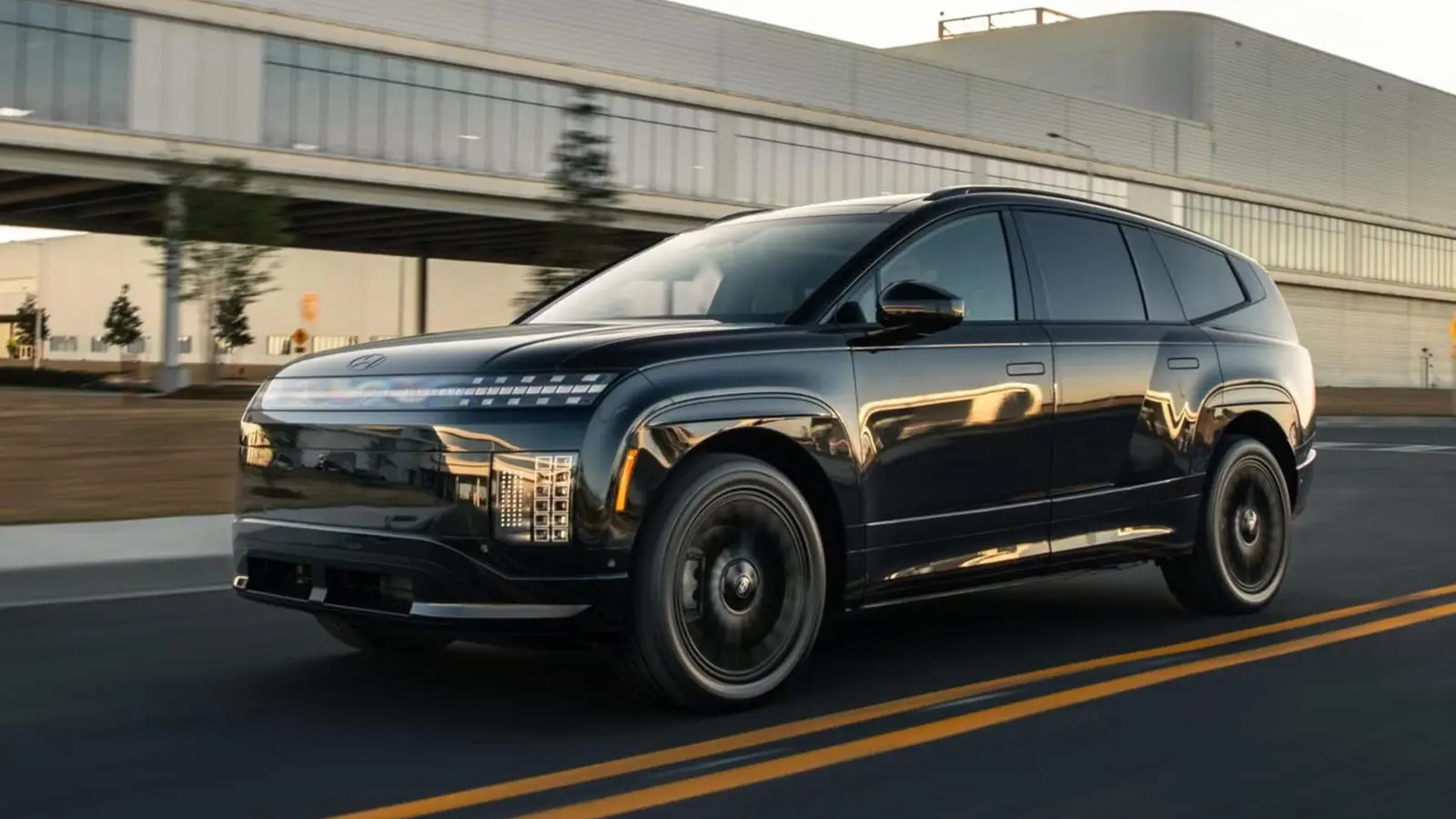
Picture a quiet city street. An electric car rolls by and, hidden behind its grille, a tiny turbine spins. Not a dramatic windmill. A discreet gadget harvesting a few watts where before there was only airflow wasted to nothing.
This is the idea Hyundai and Kia have just detailed in a patent filed with the United States Patent and Trademark Office. In collaboration with SHB, the two automakers propose embedding an electrical generator and a small turbine assembly behind the front grille of EVs to capture incoming air and turn it into usable electricity.
Wind in the grille: clever boost or clever complication?
The concept is simple on paper. Movable inlet flaps in the grille control how much air reaches an internal turbine. When the car is crawling through traffic, climbing a hill, braking, or otherwise moving at modest speeds, the flaps open and channel airflow to spin the turbine and drive the generator. The produced electricity can be routed to cabin systems — think climate control, infotainment, and driver-assist electronics — easing the draw on the main battery.
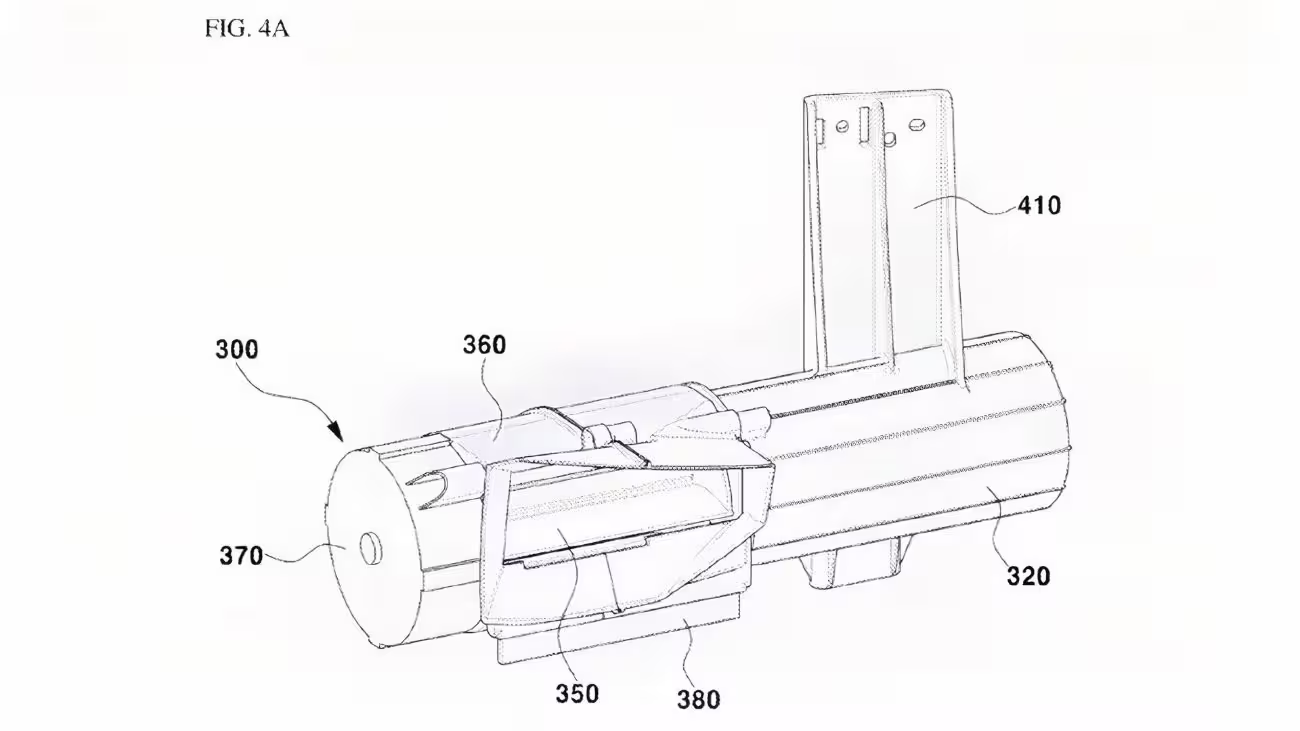 |  |
Engineers have thought about aerodynamics and efficiency from the start. At highway speeds the system closes the flaps to preserve clean airflow and avoid adding drag. And when the vehicle is parked, the grille can open to let natural wind trickle-charge the battery, a small but meaningful benefit for vehicles left outdoors.
It sounds like harvesting free energy. But there are trade-offs. Moving parts add weight and complexity. Exposed mechanisms must withstand mud, snow, salt, and road grit. Manufacturing costs rise when you add precision flaps and an integrated generator. And reliability becomes a concern when toys face winter roads and salty coastal climates.
Hyundai and Kia know these trade-offs well. They are no strangers to clever aero solutions; the company reduced drag on the Ioniq 6 with its Active Air System, proving that grille dynamics can work when engineered carefully. Still, scaling a turbine-and-generator package into mass-market models is another challenge entirely.
 |  |
Practical gain will matter most. The turbine won’t replace the battery. Instead, the likely role is supplementary: shave load off auxiliary systems, top up the battery a little in stop-and-go traffic, and improve overall efficiency in specific driving situations. Think of it as a range-friendly accessory rather than a game-changing power source.
Questions remain. How much net energy will the system deliver once its own weight and aerodynamic interactions are counted? How durable will the flaps and bearings be after years of road abuse? And will customers accept the added cost for incremental range and convenience?
Either way, the patent shows a larger trend: automakers are inventing around every watt. When margins on efficiency get thin, innovation moves into corners we used to ignore — the grille, the mirrors, even the underbody. Hyundai and Kia’s turbine-in-grille idea is part engineering, part imagination. It may end up as a niche feature, or it could seed more practical variants down the line.
For now, it’s an intriguing peek at how companies are squeezing more mileage — literally — out of airflow that used to be wasted. Whether it becomes common equipment or a clever footnote in EV history will depend on real-world tests, durability, and cost-performance math. Until then, the image of a tiny turbine quietly sipping wind from behind a grille is hard to forget.

“Cars are evolving faster than ever. I cover electric vehicles, smart mobility, and the future of transportation worldwide.”

Discussion
Leave a Comment
Comments (2)
Wow, tiny turbine in grille, cool idea! If it survives winters and salt, could be handy for AC and gadgets. curious about cost tho
Sounds neat but how much net gain after adding weight, moving parts, and drag? Feels like a gimmick for niche trims, not a real range saver.