
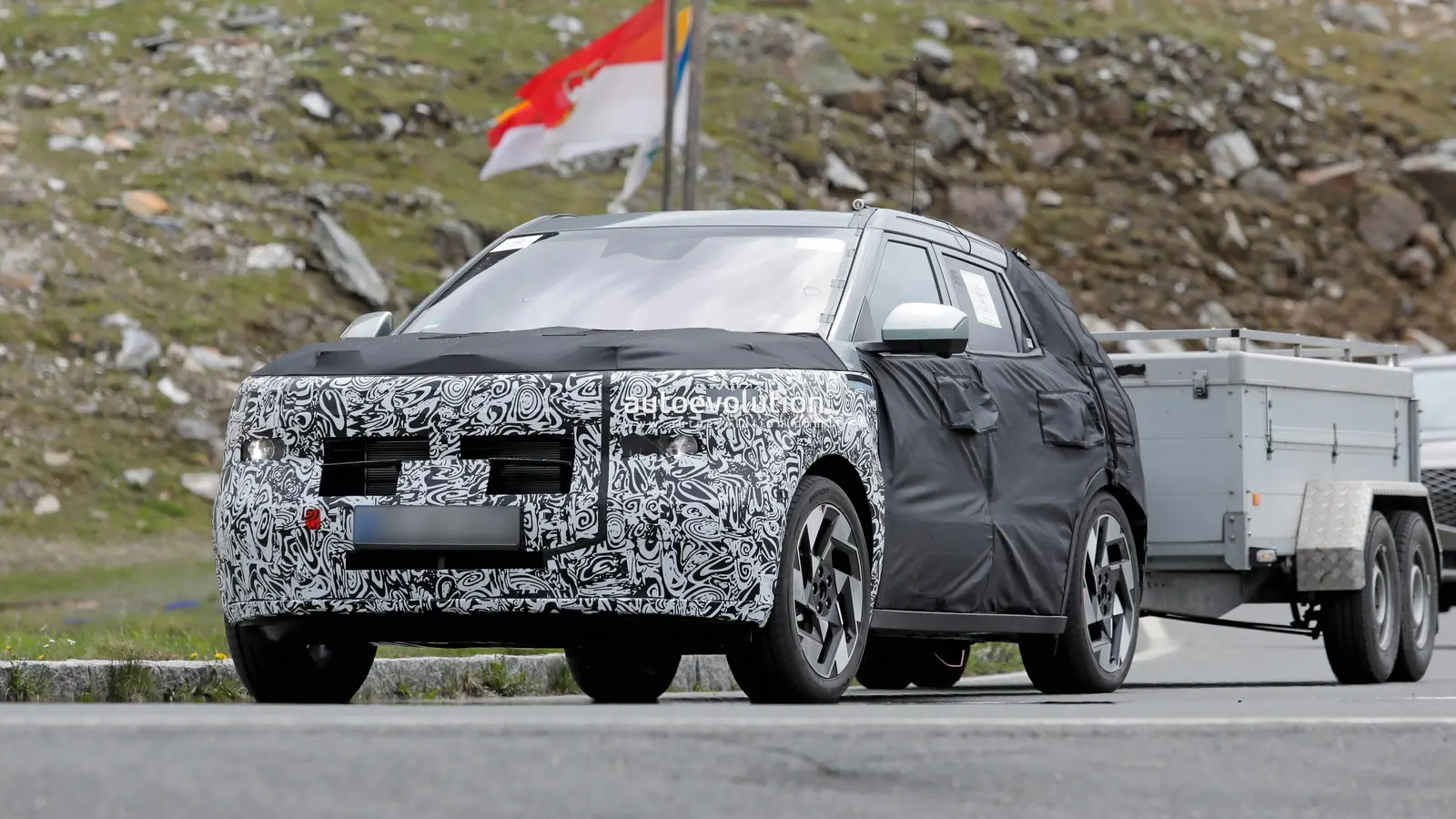
They caught it in the rain, wrapped like a bandaged prize-fighter, hauling a small trailer through a European backroad. Spy photographers closed in. Camouflage hid most of the shape, but not the story: this is not a tweak or a touch-up. Hyundai appears to be building a brand-new Kona.
Hyundai is skipping the usual mid-cycle facelift and replacing the Kona with a full third-generation model.
Why a clean-sheet Kona matters
Call it bold or call it sensible. Either way, ditching a conventional facelift for a ground-up redesign signals ambition. The prototype looks boxier than the current Kona. Think echoes of the Santa Fe and the Palisade, and a family resemblance to the newest Tucson. Big wheel arches. A beefy hood. Pronounced side skirts. The details point to a tougher silhouette, less toy-like and more grown-up.

Notice the split headlamp layout and the flush door handles. The rear is completely rethought under a fake hump on the test mule. Designers are clearly aiming for a stronger personality, one that could let Kona and Creta sit closer together without stepping on each other’s toes. In some markets they may even share a nameplate.
What else do these photos whisper? A new front fascia with eye-catching vinyl, a roof section left uncovered on purpose, and proportions that suggest more rear-seat space and a larger cargo area than today’s model. Practical upgrades, not just style changes.
Tech, platform and the powertrain lineup
Under the skin, expect an updated Hyundai-Kia K3 platform. It’s the same family the Kona already rides on, but revised. That means shared engineering with the Elantra, Accent, new i20 and other siblings, while still allowing fresh tuning and packaging.

Inside will arrive Hyundai’s Pleos infotainment system, an AI-infused interface paired with a compact digital gauge cluster. Materials are said to be upgraded across the board. Look for more rear legroom, smarter cargo packaging, and stronger safety hardware. Level 2 semi-autonomous driving features are likely to be part of the mix, joined by a broader suite of driver assistance systems.
Powertrains should include the hybrid unit already used by siblings: a 1.6-liter four-cylinder with electric assistance delivering roughly 151 horsepower. There may also be conventional 1.6 and 2.0 naturally aspirated options for markets that prefer them.

Timing is the lingering question. Hyundai seems ready to lift the curtain within months, with a launch that could carry a 2027 badge in some markets and a 2028 model-year tag in others. Either way, this Kona won’t look or feel like an updated second generation. It will feel like a fresh start.
So what should buyers expect? A Kona with sharper lines, better interior space, smarter tech, and hybrid power that aims to blend efficiency with everyday usability. Small SUV shoppers will have a new choice that’s clearly trying to be taken more seriously.

“Cars are evolving faster than ever. I cover electric vehicles, smart mobility, and the future of transportation worldwide.”

Discussion
Leave a Comment
Comments (2)
Is this even true? Spy shots hint at it, but sharing a nameplate with Creta? Sounds like brand confusion. Also, where's the EV Kona variant in this writeup? hmm
Whoa, Kona going boxy? Didn't expect Hyundai to go full reset. Looks tougher, hope they keep the quirky charm tho... rear seats + cargo better be real.