
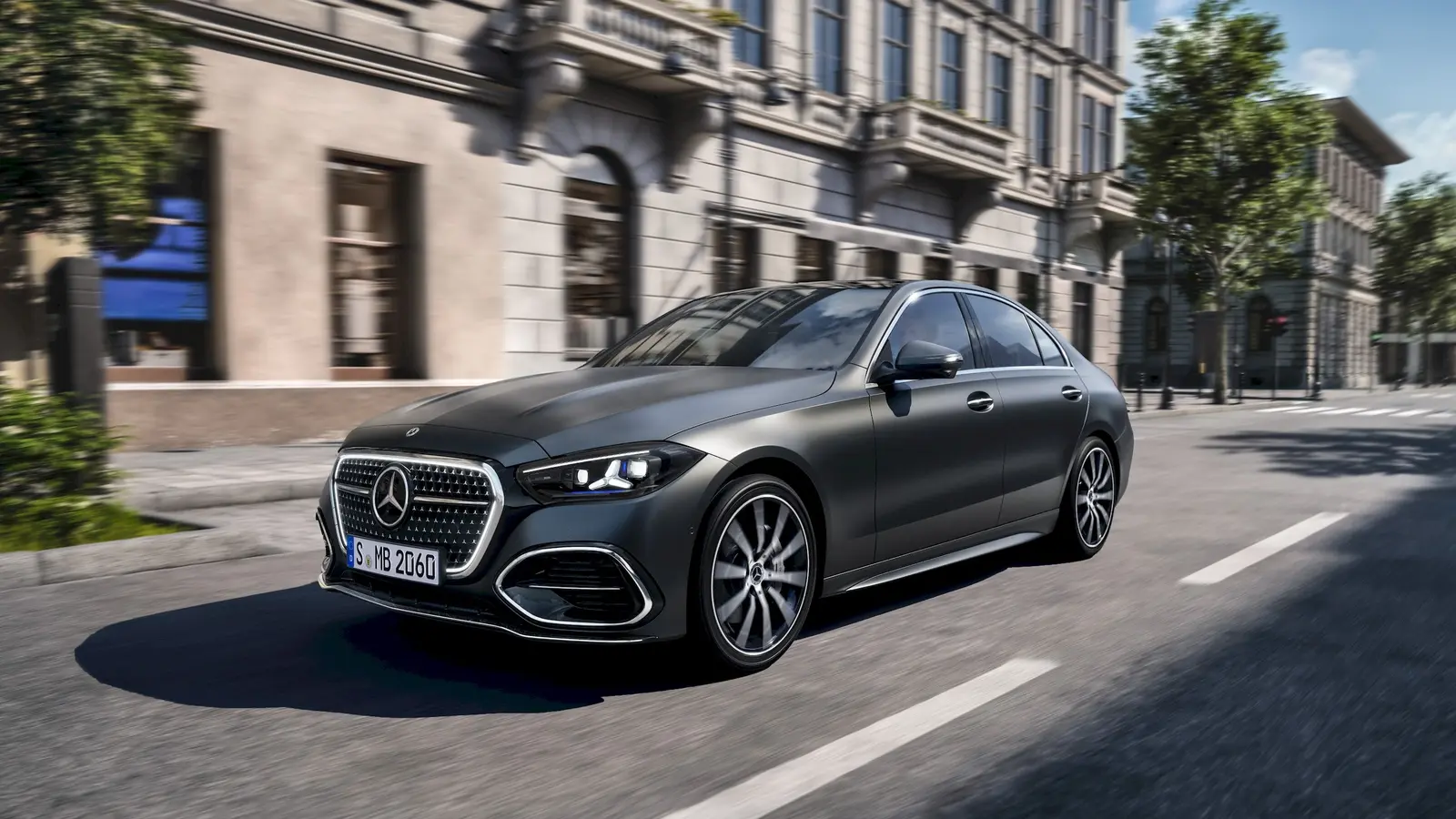
Walk up to the revised Mercedes C-Class and two things hit you first: the new, star-studded lighting signature and a grille that insists on being noticed. It borrows cues from its electric sibling, yes, but this is still very much a combustion car — only smarter and tighter than before.
A familiar shape, a deeper rethink
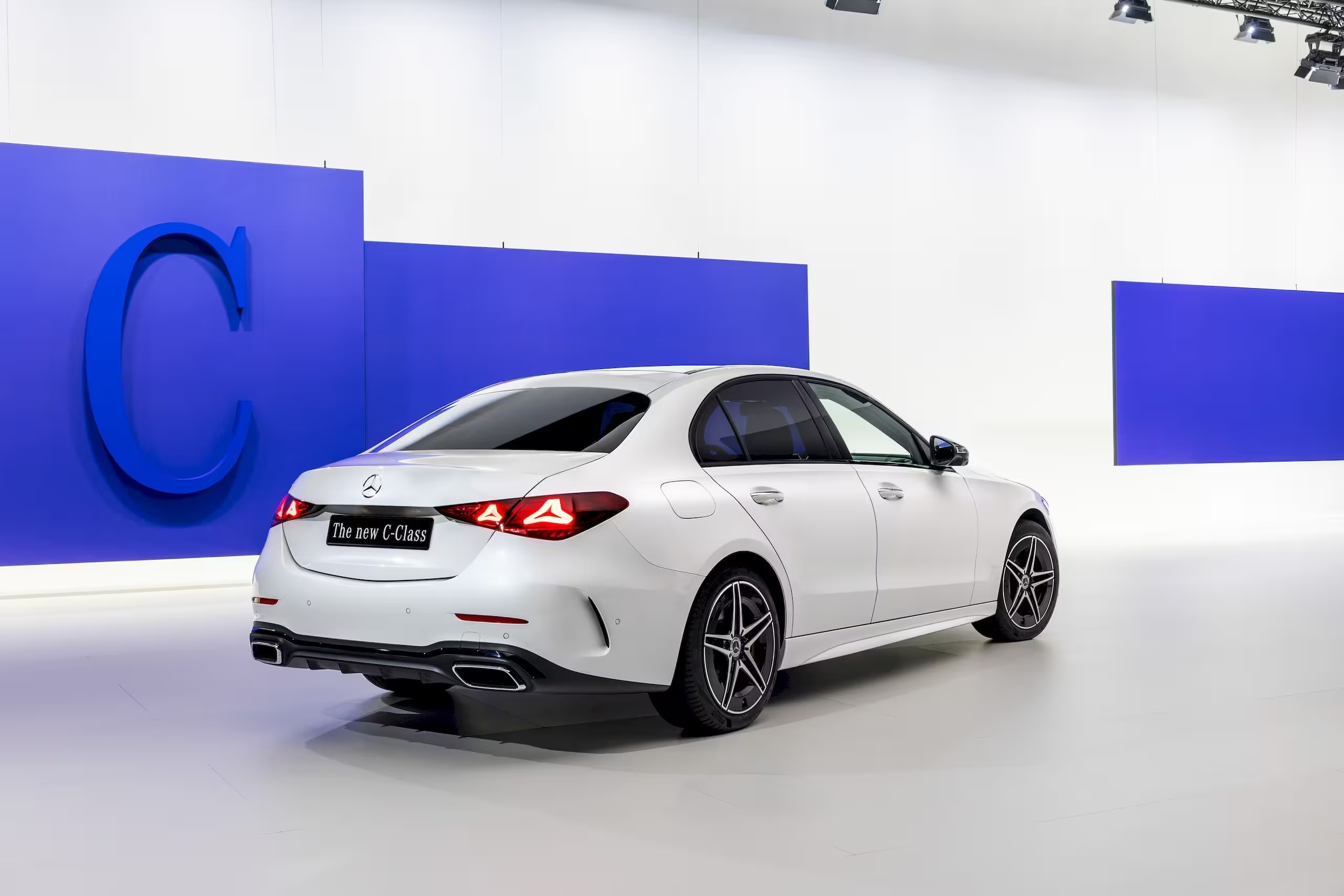
Design and chassis changes are subtle. The silhouette hasn’t been rewritten. What Mercedes has done is graft the electric C-Class' styling language and a software-first mindset onto the internal-combustion model. The result feels like a facelift that learned some new tricks.

Under the skin, the headline is software. Mercedes is rolling out MB.OS with a zonal electrical architecture that feels lifted straight from the software-defined vehicle playbook. Natural-language control is now standard, powered by an AI stack that taps leading models and search engines, so you can tell the car what to do instead of button-mashing. Updates arrive over the air for the entire vehicle, not just the screen. There’s also an app store for new functions — from navigation tweaks to fresh safety features. Navigation leans on Google Maps, and the MB.DRIVE package handles advanced driving and parking assistance.
What’s under the hood
The engine family carries over but has been carefully reworked to meet Euro 7 emissions rules. Each unit benefits from a 48-volt mild-hybrid system that powers an electric compressor for the turbocharger. The aim is simple: less turbo lag, quicker response and, Mercedes says, better overall efficiency.
- C 200 mild-hybrid: 174 hp
- C 250 mild-hybrid: 215 hp
- C 300 mild-hybrid: 255 hp (this is the only one planned for the US)
- C 400 e plug-in hybrid: 389 hp, electric range about 100 km (62 miles)
- Diesels retained: C 200 d (161 hp) and C 220 d (197 hp), compatible with HVO100, B10 and B20
Notably, the estate body remains a Europe-only offering; US buyers will see only the sedan and, among mild-hybrids, primarily the C 300.

Mercedes also says the chassis has been refined rather than rebuilt. Firmer bushings and retuned adaptive dampers reduce body roll and enhance composure through corners. Rear-axle steering up to 2.5 degrees helps the car feel nimbler in town and more assured on twisty roads.
So what does this refresh actually deliver for drivers? Better throttle response. Smoother transitions between electric assist and the engine. A more coherent digital experience that treats the car as a connected platform rather than a collection of modules. Small things, some big.

Will these changes change the C-Class' fate in markets where sales are tricky? That’s a fair question. The electric C-Class has showcased Mercedes’ new electrical architecture and impressed with its 800-volt design. Applying that styling and a software-first approach to the combustion model narrows the gap between old and new tech, and may help buyers who aren’t yet ready to switch to a pure EV.

This is the most tech-forward C-Class yet, bringing SDV-style updates and smarter hardware to the combustion lineup.
Expect the refreshed C-Class to appeal to buyers who want familiar combustion engineering but crave modern software, seamless updates and improved driving dynamics. It’s less about reinventing the wheel and more about teaching it new tricks.

“Cars are evolving faster than ever. I cover electric vehicles, smart mobility, and the future of transportation worldwide.”

Discussion
Leave a Comment
Comments (2)
Feels like a facelift married to software hype. Cool tech but will it save sales? if thats real then...
wow didnt expect the C to get this smart! star lights look pricey tho, OTA updates sound awesome, but privacy? hmm..