
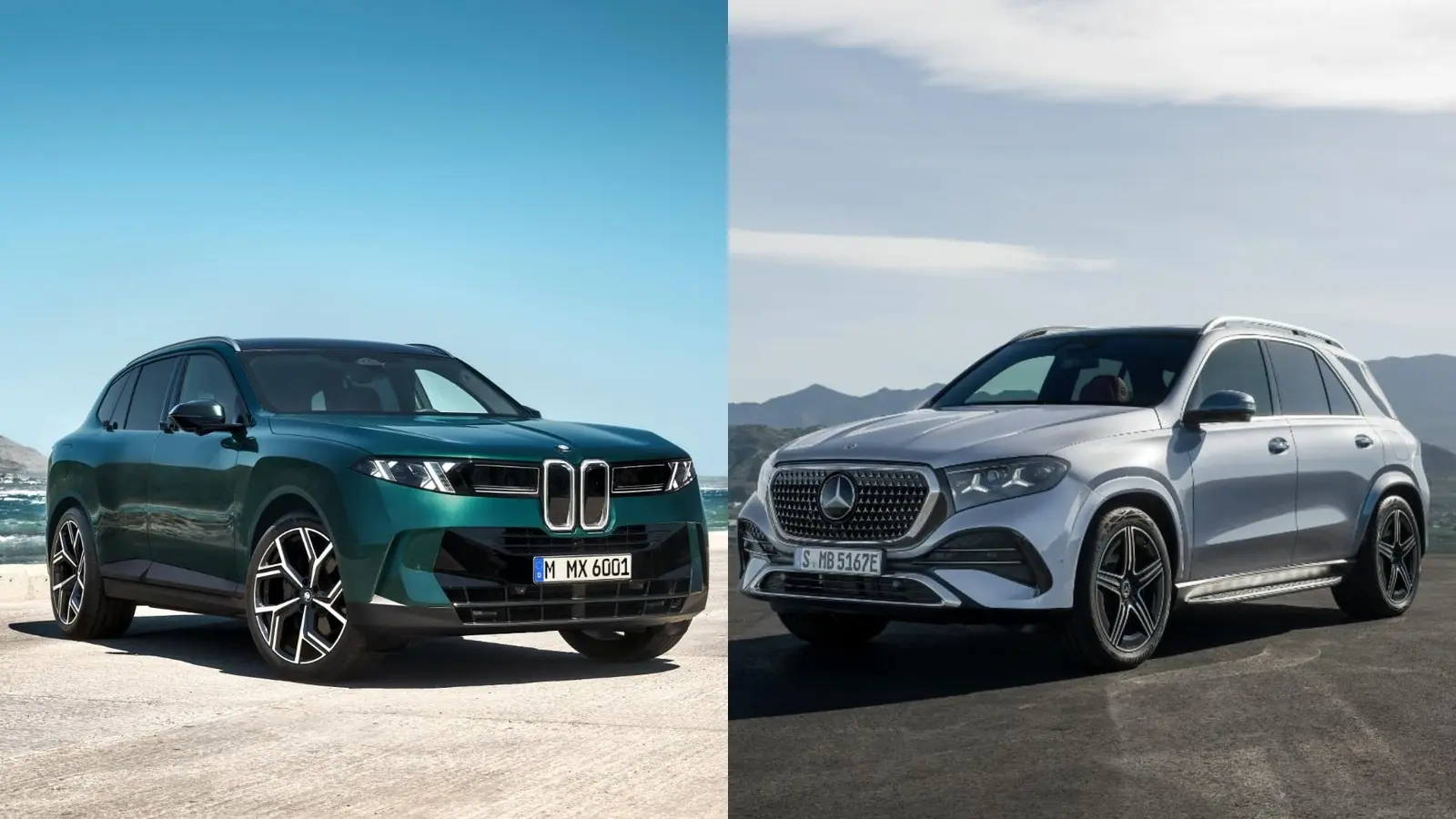
The moment you park a refreshed Mercedes GLE next to BMW’s all-new X5, you feel the rivalry. It is visual, mechanical and almost theatrical—two very different ideas of what a large luxury SUV should be, squaring off in a parking lot that smells faintly of new leather and ambition.
Familiar authority versus clean-sheet audacity
Mercedes has chosen refinement and muscle for 2027: the GLE wears a mid-cycle makeover like an armor upgrade. Bigger grille, bolder light signatures and a silhouette that still reads like a family SUV but with an unmistakable road presence. Up close, the Digital Light headlights are the story. They map the road farther and more efficiently than before, stretching visibility and adding a nocturnal persona few rivals can match.
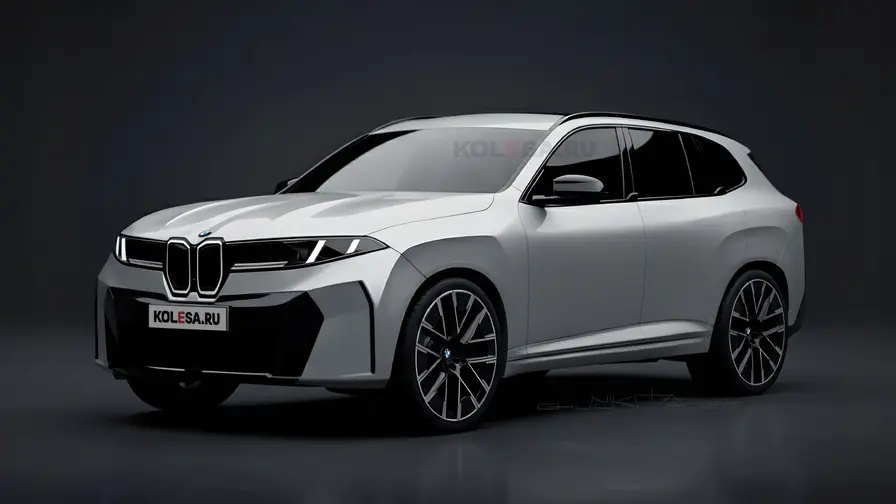
BMW took a different route. The new X5 is a manifesto of the Neue Klasse language—monolithic proportions, slimmer kidney grille and new double-X daytime running lights that can be switched back to more traditional graphics for the faint of heart. It feels less like an evolution and more like a reset, with cleaner horizontal surfaces that emphasize width and presence rather than height.
Inside, Mercedes leans on continuity polished into luxury. The latest MBUX Superscreen blankets the dash and keeps tactile buttons for critical functions, which many drivers will appreciate. The GLE's cabin is familiar but escalated: new seat surfacing, premium stitching and a standard sliding panoramic roof. BMW answers with a cockpit that feels freshly composed: a tilted central touchscreen, an optional passenger display and decorative glass or slate trims that are a first for production cars. Both interiors shout the future, but they whisper it in different languages.

Powerplay: one path upgraded, the other diversified
Here’s where the rivalry gets interesting. Mercedes treated the GLE like a proven recipe worth perfecting. The headline act is the GLE 580 4Matic: a 4.0-liter twin-turbo V8 now with a flat-plane crankshaft, producing roughly 531 horsepower and hefty torque. The tweaks target responsiveness, emissions compliance and a livelier exhaust note without sacrificing smoothness.
BMW answered with choice. The new X5 launches with five distinct powertrain philosophies under one hood—mild-hybrid petrol, mild-hybrid diesel, plug-in hybrid, a full-electric iX5 and, notably, a hydrogen-fed iX5 arriving in 2027. The combustion X5s favor refined inline-six packages, while the electric iX5 60 xDrive packs dual motors with about 570 horsepower and a massive battery that claims an 845 km WLTP range—an astonishing figure that changes the conversation about long-distance electric SUVs.
.avif)
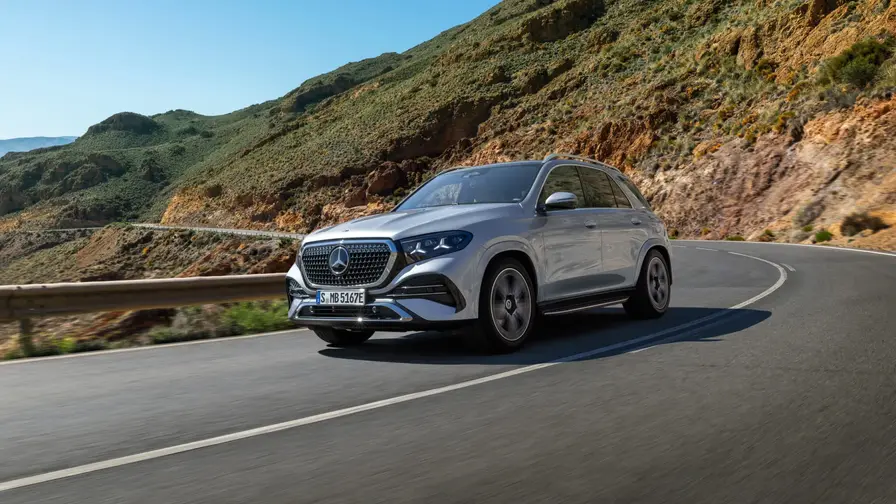
When you match like with like, the numbers often surprise. The Mercedes V8 and BMW’s charged inline-six hybrid (the M60e xDrive) both post similar 0–100 kph times in the mid 4-second range, yet their character diverges: one is rawer and more visceral, the other a torque-rich, electrically assisted sprint. On the plug-in front, the GLE 450e and BMW’s 50e trade blows—both deliver strong electric-only ranges in the 100 km neighborhood, but BMW tends to edge performance figures slightly thanks to aggressive electrification.

Diesel buyers still have options in regions where diesels remain relevant. Mercedes offers two mild-hybrid diesel variants, while BMW keeps a single diesel in the range. Real-world differences will come down to weight, torque delivery and how each system integrates with the chassis.
Short takeaway: Mercedes has optimized what it knows; BMW is betting on breadth and future fuels.
On handling, the refreshed GLE surprises with agility. Despite being the older architecture, its lighter curb weight and updated systems give it a nimbleness that can unsettle the longer, more monolithic X5—unless you spec BMW’s rear-wheel steering, which helps reclaim maneuverability.

Which one to pick, now and later
If you buy today for immediate satisfaction, the GLE’s refined combustion options and lower mass give it a subtle edge in driving feel and agility. It feels like a mature product that’s been carefully sharpened.
If you’re shopping with an eye on tomorrow, the X5’s strategy makes sense: electrified breadth, an electric flagship with extraordinary range and an experimental hydrogen variant that signals BMW’s intent to explore alternative zero-emission fuels. That means the X5 could pull ahead as infrastructure and regulations evolve.
There is no clean knockout. Brand loyalties, dealer experience and personal priorities—performance, efficiency, tech or future-proofing—will decide most buyers. For now, the GLE is the polished present; the X5 is a bold wager on multiple possible futures. Both are compelling. Both will sell. And the rivalry? It’s far from over.

“I cover automotive innovation, electric vehicles, and the future of mobility — where technology meets sustainability.”

Discussion
Leave a Comment
Comments (2)
845 km WLTP? seriously?? sounds like lab numbers, not road reality. anyone tested that long range in real conditions?
wow, that V8 note got me, actually. Mercedes feels planted and polished, BMW is like a bold sci-fi reboot. curious to drive both...