
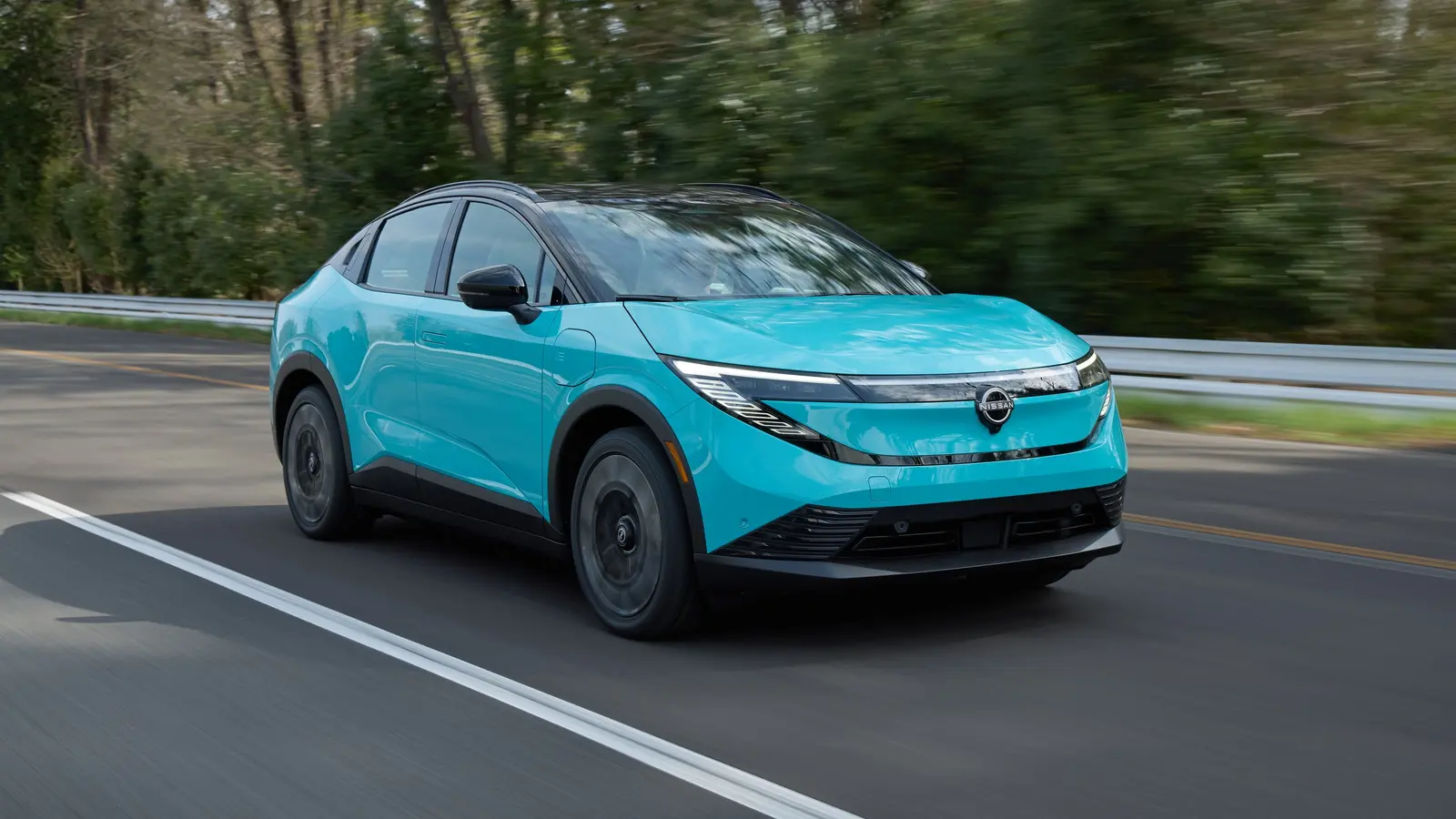
There is a strange comfort in seeing a familiar chassis dressed in new clothes. The new Eclipse Sportback feels like that: Mitsubishi borrowing a trusted foundation and trying to make it feel unmistakably its own.
Behind the headlines is the same platform that supports the third generation Nissan Leaf, the EV that arrived last summer and reset expectations for affordable electric hatchbacks. Mitsubishi has taken that architecture, wrapped it in fresh sheetmetal and a revived nameplate, and decided to send it across the Atlantic to North American dealerships later this year.

A familiar chassis, a new face
Expect styling and brand DNA, not engineering surprises.
The 2027 Eclipse Sportback is not a low-slung sports coupe like the original name suggested decades ago. The teaser photos point toward a crossover profile, a silhouette closer to today’s Eclipse Cross than to a two-door sportscar. But Mitsubishi has clearly gone to work on the details: different front and rear fascias, unique lighting signatures, and its own wheel designs. Small cues, big intention.
What Mitsubishi has not done yet is disclose the mechanical specifics. Official technical figures, pricing and exact on-sale dates will arrive nearer launch. That leaves plenty of room for questions: Will the battery size mirror the Leaf? Will power and range carry over unchanged? Or will Mitsubishi tune the powertrain for a distinct driving character?

For context, Nissan’s entry-level third-generation Leaf pairs a 75 kilowatt-hour battery with a synchronous electric motor rated at 215 horsepower and delivers a WLTP-equivalent range of about 488 kilometers. That package gives Mitsubishi a capable starting point, and it would be no surprise if the Eclipse Sportback ships with similar numbers—especially since the platform already exists and engineers can focus on refinement rather than reinvention.
There is method to this reuse. The Renault Nissan Mitsubishi alliance has long swapped platforms and technologies, sometimes with surprising results. For Mitsubishi, a brand that likes to remind buyers of its EV heritage, adopting a proven battery-electric underbody is a pragmatic shortcut: faster time to market, lower development cost, and a reliable baseline for customer expectations.

Looking ahead, the Eclipse Sportback is part of Mitsubishi’s Momentum 2030 plan, which promises at least one meaningful new or updated model each year through the decade. The next item on that list appears to be an off-road-focused Outlander derivative scheduled for early 2027. If the Sportback proves popular, expect Mitsubishi to lean further into shared architectures while carving out distinctive styling and brand-specific features.
So is this rebadge or rebirth? The honest answer sits somewhere in the middle. Mitsubishi didn’t invent the wheel here, but it may have found a clever way to rebuild its lineup quickly and credibly. For buyers, the appeal will come down to how much of Mitsubishi’s character they can see in a car built on someone else’s bones.


“Cars are evolving faster than ever. I cover electric vehicles, smart mobility, and the future of transportation worldwide.”

Discussion
Leave a Comment
Comments (2)
Looks neat, but is this just a rebadge job? If the battery and power arent tuned, meh. Mitsubishi needs more character, not just new trim.
Interesting move, sensible reuse of proven tech. But will buyers notice it’s basically a Leaf in new clothes? Curious about price and range.