
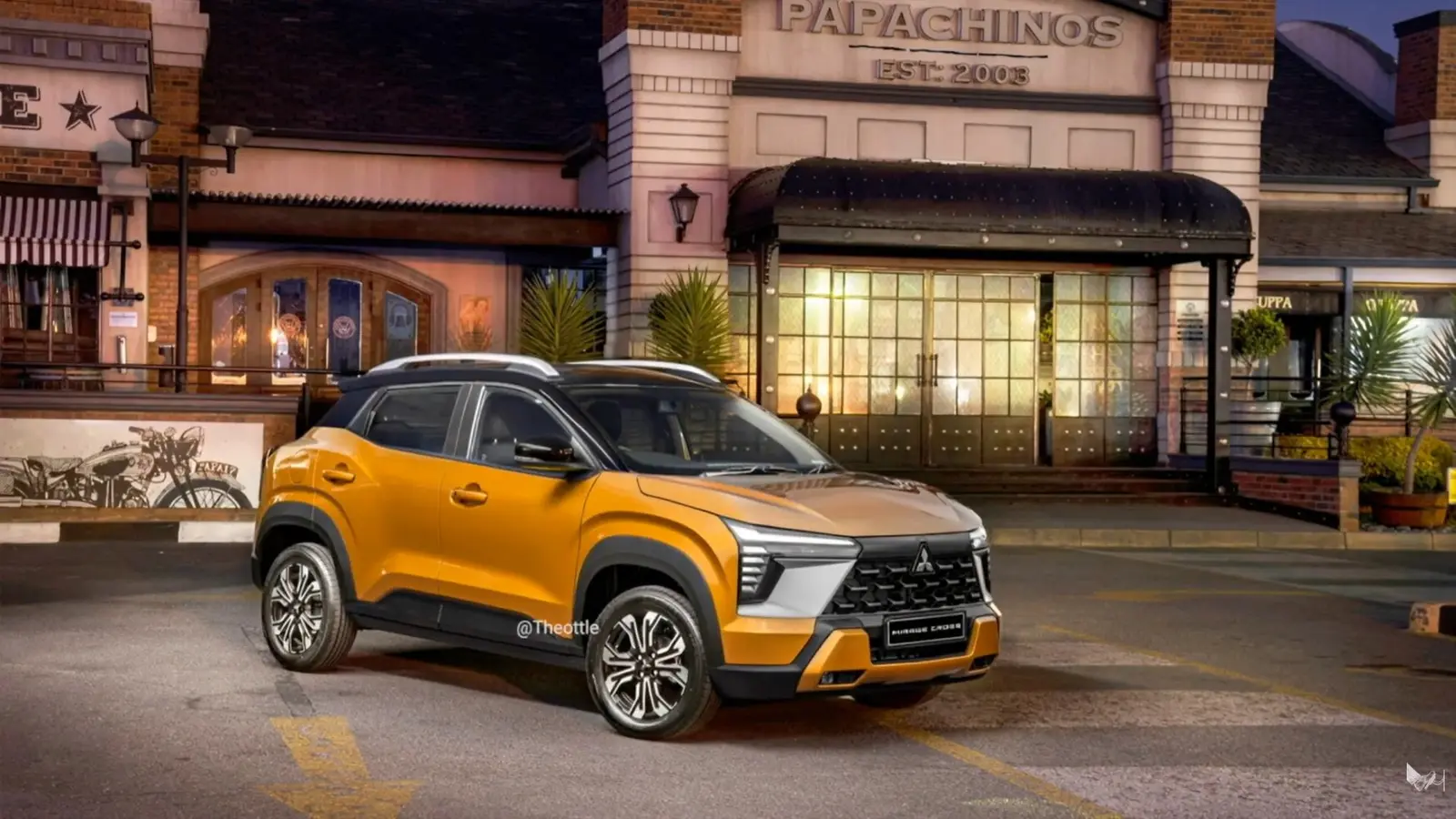
Picture a compact crossover that wears a confident, rugged face but fits into a city parking space with room to spare. That image is exactly what a digital artist known as Theottle set out to create when he grafted Mitsubishi styling onto a Renault Kiger canvas.
There is an odd poetry to it. Mitsubishi, once synonymous with rally-bred Lancers and globe-trotting Pajeros, now finds most of its lineup sharing platforms and DNA with Renault and Nissan. Some call it efficiency. Others call it identity erosion. Either way, the result is a parade of badge-engineered models that leave room for imaginative reinterpretation.
Small car, big questions
Theottle’s Mirage Cross concept is more than a Photoshop party trick. It imagines a subcompact crossover aimed squarely at the A-segment — the crowded, price-sensitive class where compact proportions and bold styling must coexist. He kept the Kiger’s bones, which means the CMF-A+ architecture underfoot, then reshaped the body into something tougher yet manageable for urban life.

Short sentences. Then a thought that lingers. The CGI car looks muscular without being cartoonish. The front end is chiselled. The wheel arches are purposeful. And the whole package reads like a pragmatic answer to buyers who want SUV attitude without SUV bulk.
Why does any of this matter? Because it exposes a tension that matters to Mitsubishi and its customers. On one hand, platform sharing reduces costs and speeds development. On the other, repeated rebadging blurs a brand’s unique reason for being. When enthusiasts think 'Mitsubishi', are they picturing a legacy of performance and off-road pedigree, or a predictable lineup stitched from alliance parts?

There are practical notes too. If a Mirage Cross ever reached production, it would likely inherit familiar mechanicals: small-displacement petrol or mild hybrid setups and the CMF-A+ underpinnings already proven under models like the Renault Triber and Nissan Magnite. That means acceptable packaging, a low-cost manufacturing footprint, and the type of simplicity that works in emerging markets — and possibly in European city fleets where compact crossovers are increasingly popular.

Beyond the hardware, Theottle’s render highlights what design can do for a tired badge. A coherent, purpose-driven aesthetic can shift perception. Swap bland for bold, and suddenly the smallest model in the lineup feels intentional, not incidental. Design is reputation in motion.
Will European buyers warm to a pint-sized Mirage Cross? It depends. If Mitsubishi leans into distinct styling, sensible interiors, and a clear value proposition, a tiny crossover could find an audience. If it arrives as a thinly rebadged import with no personality, it will be one more model lost in the shuffle.
At the very least, this CGI exercise is a reminder: even in an era of platform sharing, creative thinking still matters. Sometimes a few clever lines and a confident grille are enough to make people care again.

“I cover automotive innovation, electric vehicles, and the future of mobility — where technology meets sustainability.”

Discussion
Leave a Comment
Comments
No comments yet. Be the first.