
Security researchers say Meta's new AI assistant Muse exposes sensitive user data when conversations are shared via web links, because the service makes many shared links easy to discover.
How shared Muse links became discoverable
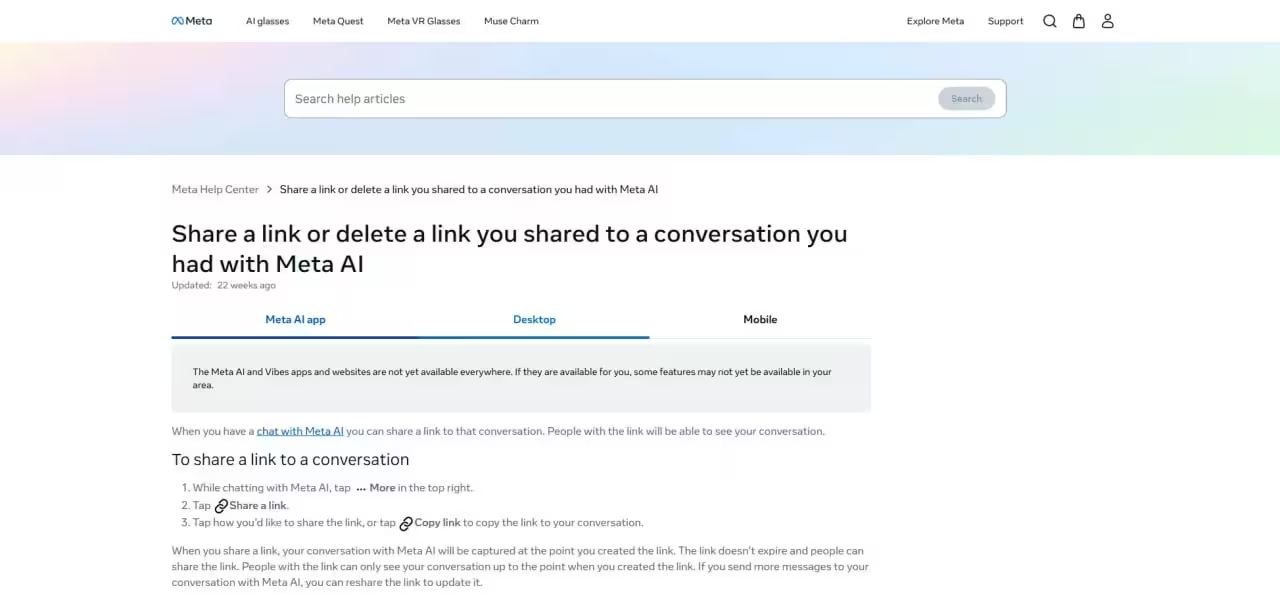
Muse lets users share searches, conversations, images and other content by creating a dedicated web link. Claroc security researchers report they were able to retrieve 6,800 links created by Muse users using a simple query. The links all use the domain cf.metaaiusercontent.com and include the conversation title and a short text string in the URL structure, which the researchers say makes the addresses easy to find and prone to recording in public internet records.
Claroc found that, once someone clicks a share link, the associated content is recorded in a searchable database. The researchers named the resulting pages "GhostShares" because they can be reached by people who were never sent a link but can locate them independently.
Examples of exposed content found by Claroc
After reviewing several hundred of the recovered links, Claroc reported that a range of sensitive or confidential information had been exposed without users intending public release. Examples include:
- Notes from a job applicant preparing for a confidential interview with a leading AI lab, including the lab's internal contact name and the scheduled time of the meeting
- An internal income review document for a marketing company
- A small business owner's loan application form including the requested amount
- A user's daily task list
- An internal performance report for a real estate investor
- A staff annual leave planning spreadsheet for an organization
Meta response and Claroc's guidance for users
Claroc said attempts to contact Meta were unsuccessful and that Meta has not responded to inquiries about the issue. The company noted that Mark Zuckerberg, Meta's CEO, has described Muse as 'designed from the ground up for privacy and security.'
Claroc's chief technology officer told the researchers that the behavior appears to be part of Muse's system design, and warned users that shared links are effectively public and can be traced with simple methods. Claroc recommends that users avoid sharing sensitive information with AI tools and delete previously created share links as soon as possible.


“I love exploring gadgets, apps, and trends that redefine how we connect, work, and play in a digital world.”

Discussion
Leave a Comment
Comments
No comments yet. Be the first.