
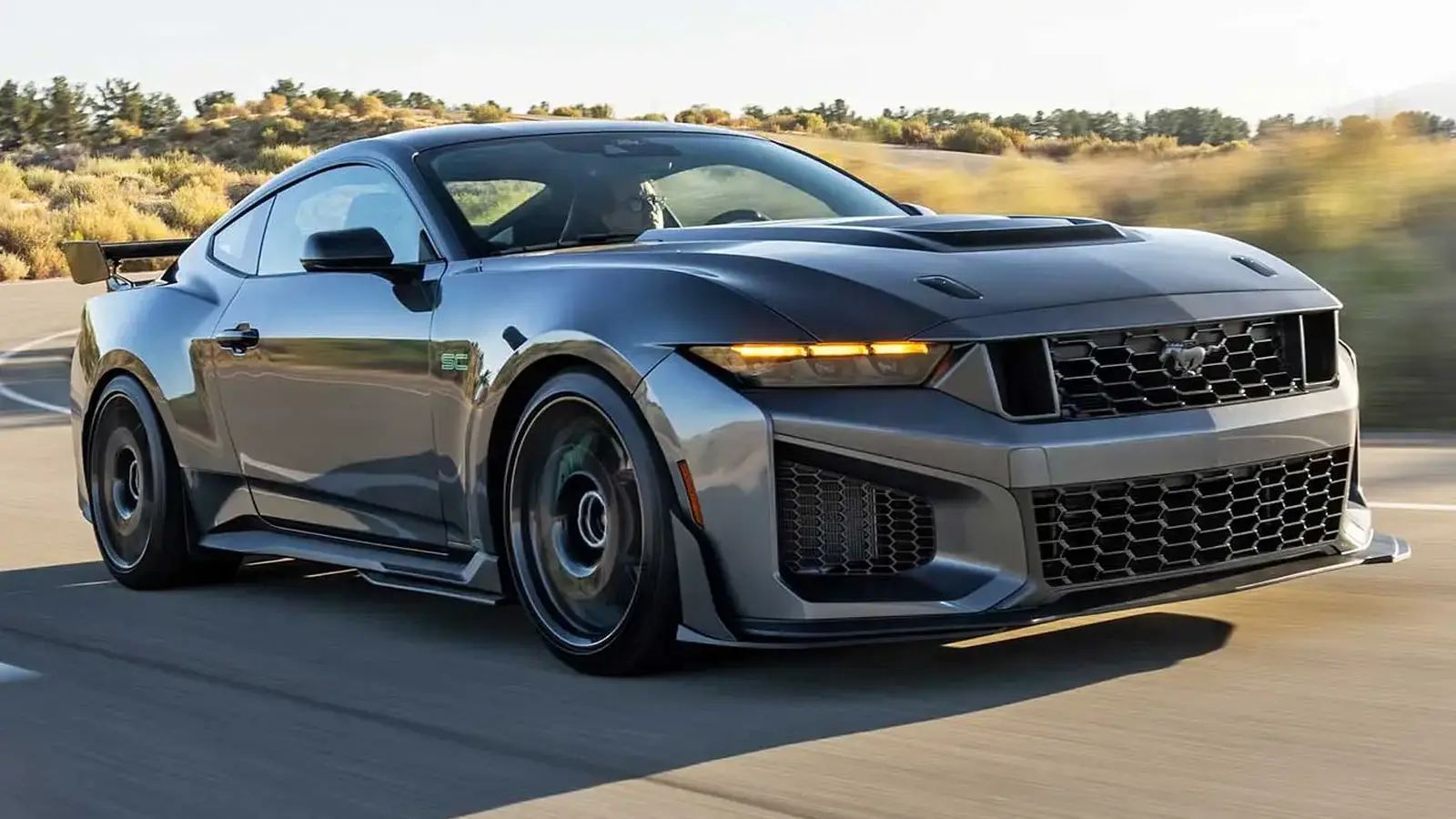
The Mustang Dark Horse SC recorded a 0 to 96 km/h time of 2.9 seconds in MotorTrend testing, a defining detail that immediately separates it from the familiar Shelby GT500 in straight-line performance.
MotorTrend’s acceleration and drag tests show the Dark Horse SC covering 0 to 160 km/h in 6.2 seconds and the 400-meter quarter mile in 10.8 seconds. Those figures place it well ahead of the fastest Shelby GT500 the publication has tested, which needed 3.6, 7.0 and 11.3 seconds for the same runs.
How Ford found the extra performance
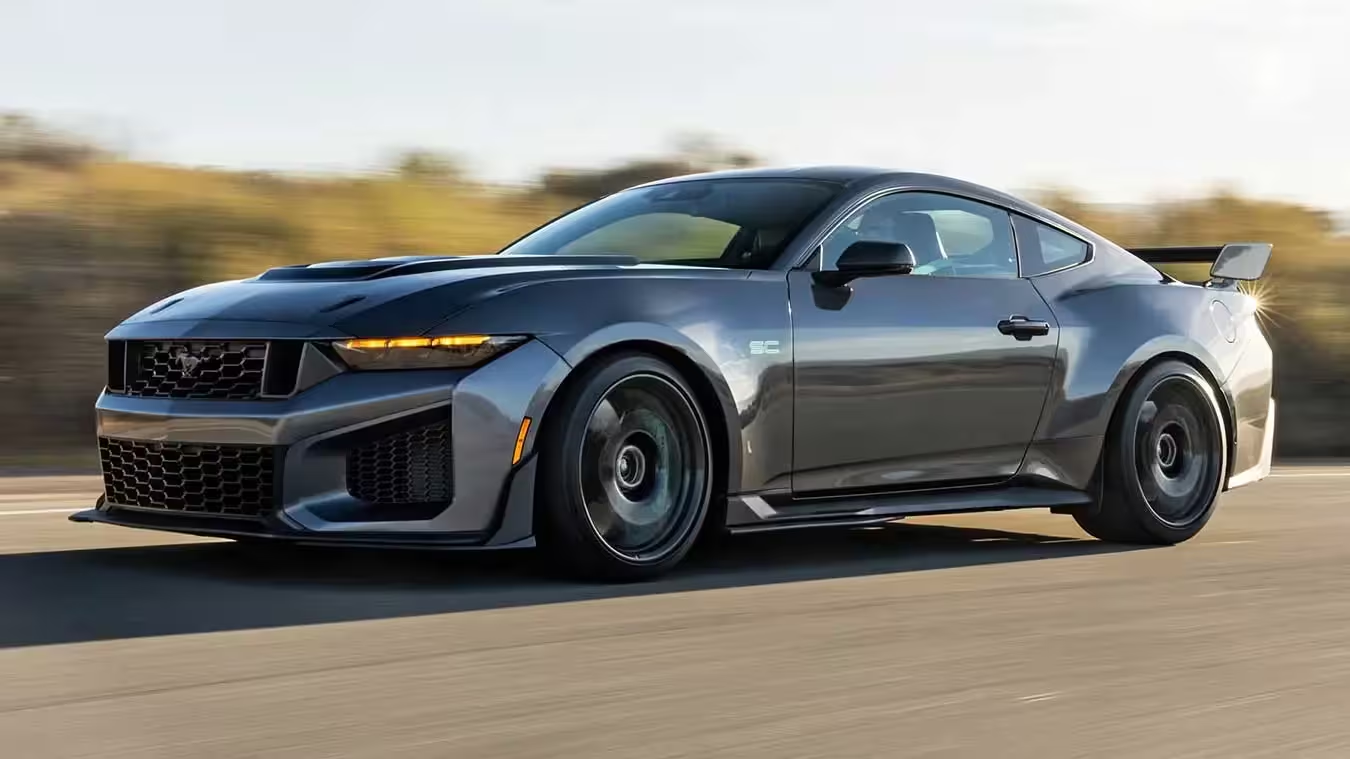
The Dark Horse SC uses Ford’s 5.2-liter supercharged V8 known as Predator, rated at 795 horsepower and 895 newton meters of torque, paired to a seven-speed dual-clutch transmission. That peak output is up from 760 horsepower in the GT500, a bump that would normally shave only about 0.3 second off a 0 to 96 km/h run. The decisive factor in the Dark Horse SC’s leap is a substantially improved launch-control strategy combined with track-focused hardware, not peak horsepower alone.
Where the GT500 struggled was not with peak numbers but with launching the engine through the seven-speed dual-clutch without excessive slip. Ford’s engineers addressed that in the SC with a straightforward user flow: select Drag mode via the steering-wheel buttons, enable launch control on the touchscreen and set the engine speed. The system defaults to 2,500 rpm but can be set lower; MotorTrend’s team found the best launches at 1,600 rpm. The procedural sequence used in testing was pressing both pedals, waiting one second for engine speed to stabilize, then releasing the brake, producing the dramatic V8 surge and tire howl that pushed the car off the line.
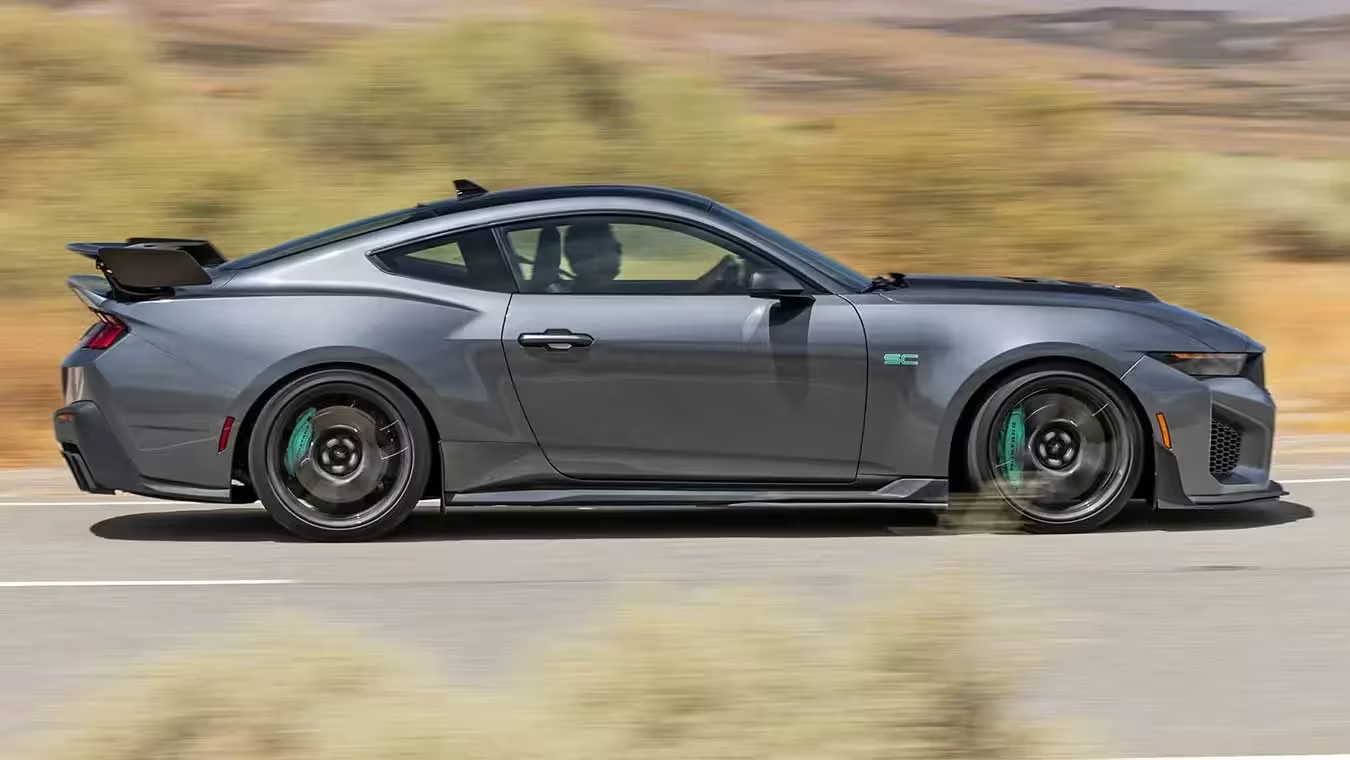
Hardware from Ford Racing also contributes. The tested Dark Horse SC rode on Michelin Pilot Sport Cup 2 R tires that were specifically tuned by Ford Racing and ran lightweight carbon-fiber wheels. Both items are part of a 36,500-dollar track package that Ford offers, and that package also brings measurable gains in braking and handling in the testers’ results.
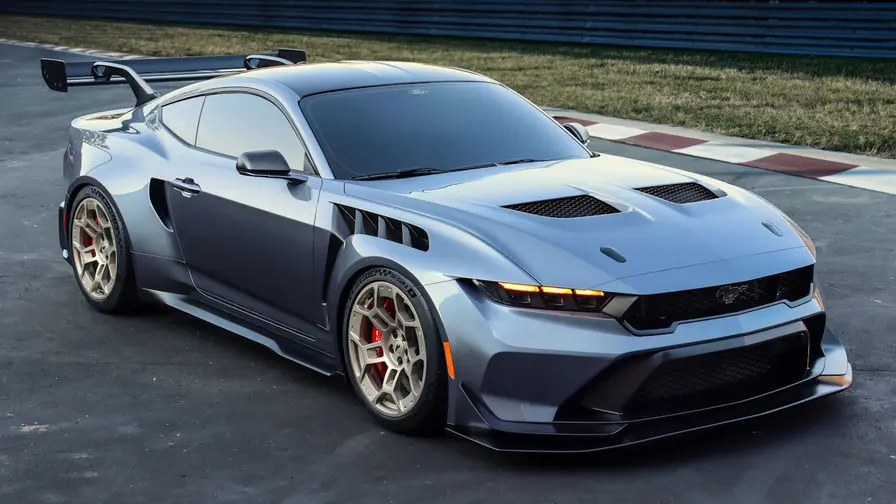
In the current muscle-car market the Dark Horse SC sits below Ford’s more extreme GTD but above the regular GT500. The GTD is the top-tier, high-cost variant with 895 horsepower and 900 newton meters of torque; in MotorTrend’s runs that $330,000 GTD posted a 0 to 96 km/h time of 2.7 seconds and a quarter-mile of 10.5 seconds. Comparisons to rivals outside Ford are limited — there is no direct Chevrolet or Dodge equivalent at the moment — but MotorTrend noted the mid-engine Corvette Grand Sport, despite being down about 260 horsepower on paper, hit 0 to 96 km/h in 2.7 seconds while the Dark Horse SC ultimately beat the Corvette by 0.2 second in the quarter mile.
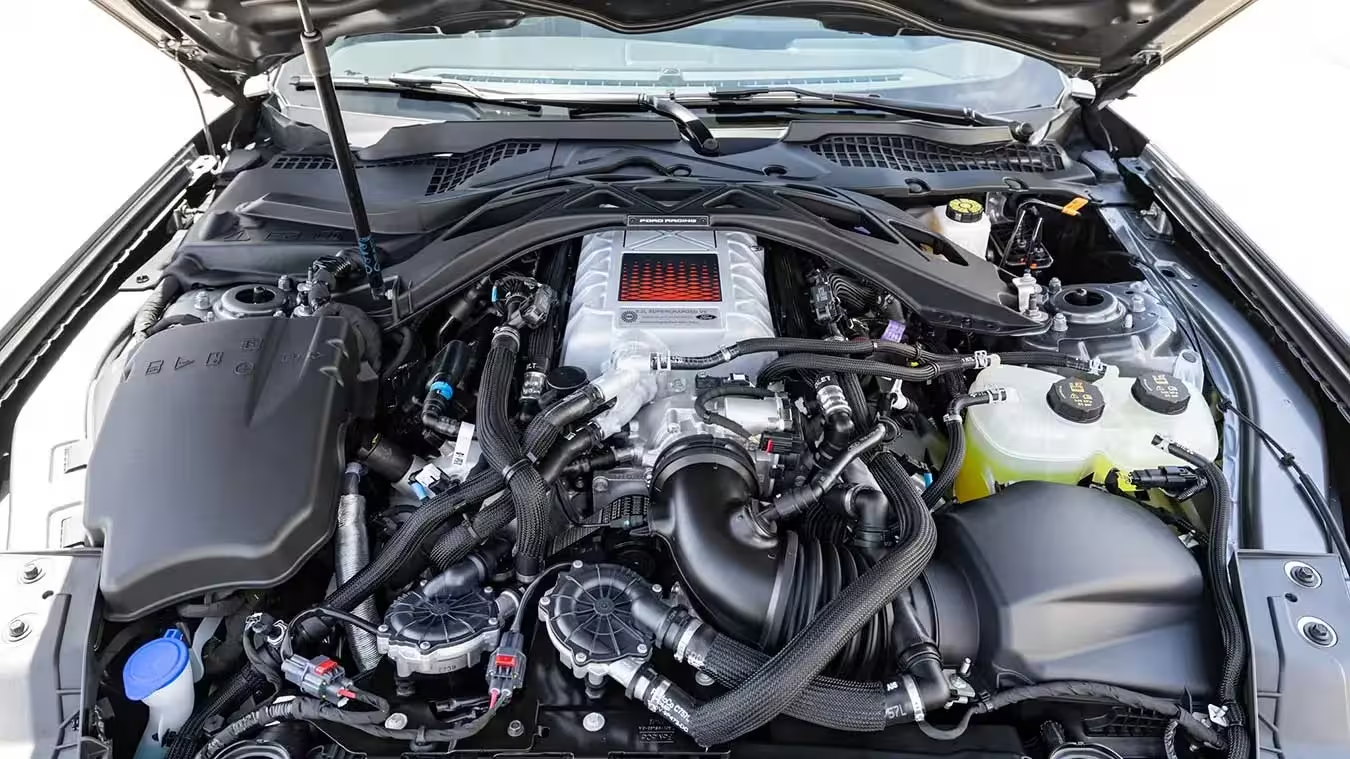
Critics had pointed out that the Dark Horse SC shares many components with the Shelby GT500 and that, on paper, the modest power increase alone did not justify the large step up in performance. MotorTrend’s testing indicates the answer lies in software and system calibration: refined launch control plus racing-oriented tires and lighter wheels in the track package yield a much more effective launch and quicker elapsed times than the GT500 could achieve with similar peak figures.
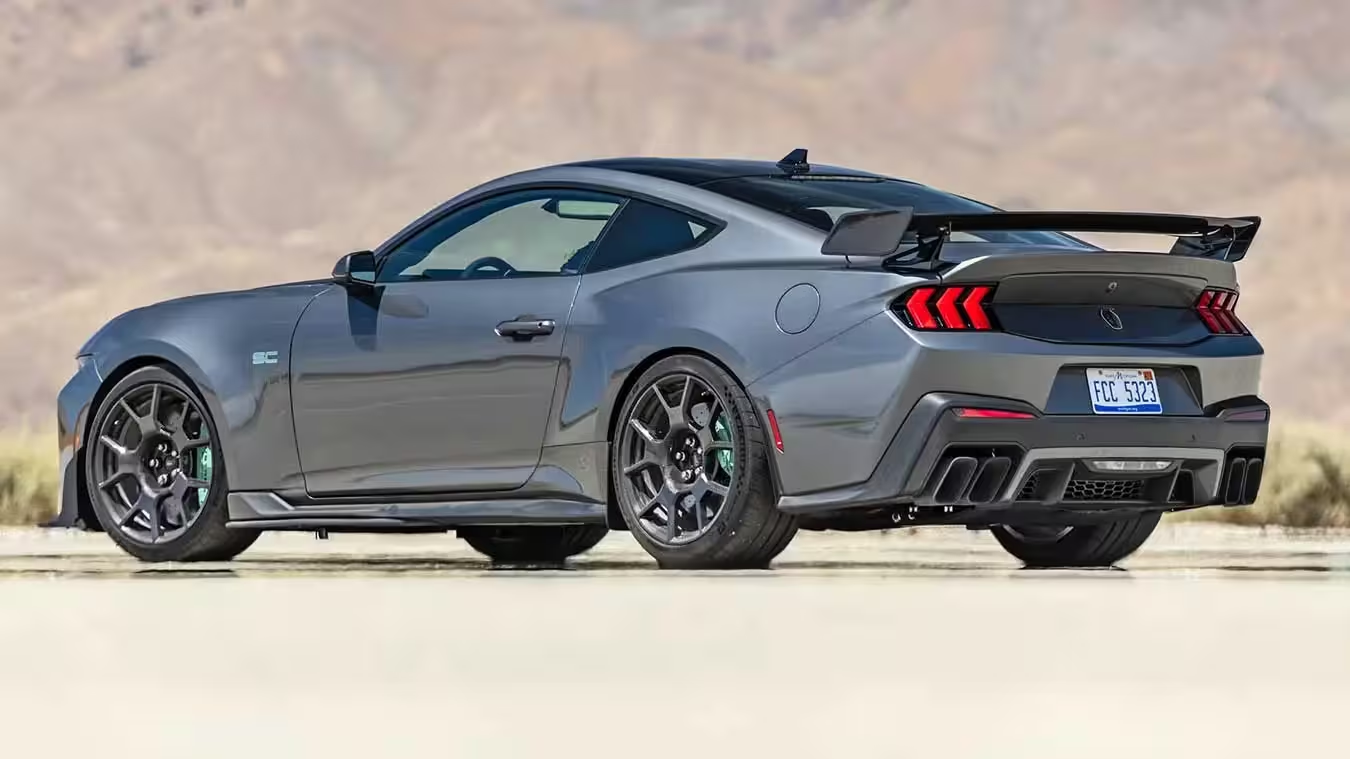
For clarity on key specifications: the Dark Horse SC is rated at 795 hp and 895 Nm, the GT500 at 760 hp and 850 Nm, and the GTD at 895 hp and 900 Nm. Both the Dark Horse SC and GT500 use seven-speed dual-clutch transmissions; the GTD uses an eight-speed dual-clutch. Curb weights reported in the comparison are 1,862 kilograms for the Dark Horse SC, 1,839 kilograms for the GT500 and 2,000 kilograms for the GTD.

“I cover automotive innovation, electric vehicles, and the future of mobility — where technology meets sustainability.”

Discussion
Leave a Comment
Comments
No comments yet. Be the first.